
Jharkhand Bill: Governor, CM get joint role in VC appointments
Ranchi, March 18: In a significant move to overhaul higher education governance, the Jharkhand Assembly on March 17 passed the Jharkhand…
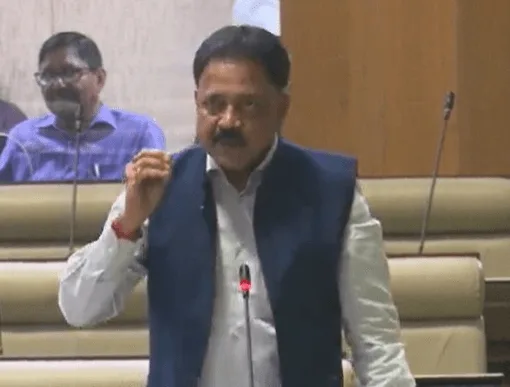
Higher Education Minister Sudivya Sonu speaking in the Jharkhand assembly.
Ranchi, March 18: In a significant move to overhaul higher education governance, the Jharkhand Assembly on March 17 passed the Jharkhand State Universities Bill, 2026, paving the way for a new framework for the appointment of Vice-Chancellors (VCs) and broader institutional reforms. The Bill will now be sent to the Governor for assent.
The legislation comes after an earlier version was returned by Raj Bhawan, which had raised concerns over provisions seen as curtailing the powers of the Chancellor in appointing Vice-Chancellors and Pro-Vice Chancellors. The revised Bill attempts to strike a balance, reworking the appointment mechanism while retaining a decisive role for both the Governor and the elected government.
A Reworked VC Appointment Model at the Centre of Reform
At the heart of the new law is a joint selection model for Vice-Chancellors. The Bill mandates that the Chancellor (Governor) and the Chief Minister will jointly select the VC from a panel recommended by a Search Committee.
The committee—comprising an eminent educationist, a representative from a nationally reputed institution, a UGC nominee, and a senior state official—will shortlist three to five candidates, ensuring the process remains merit-based and insulated from institutional bias. Notably, members must have no prior association with the concerned university.
If the panel fails to meet expectations, the provision allows for a fresh list—either from the same committee or a newly constituted one—reflecting lessons drawn from past procedural deadlocks.

Lessons from the Raj Bhawan Standoff
The passage of the Bill follows a period of friction between the state government and Raj Bhawan. The earlier draft had centralised greater control with the state, prompting objections from the Governor, who returned it, citing concerns over the dilution of the Chancellor’s authority.
The revised version now reintroduces shared decision-making, signalling a compromise designed to avoid future institutional conflict while ensuring administrative efficiency.
ALSO READ: IIT (ISM) Dhanbad director wins Om Prakash Bhasin Award 2023

Time-Bound, Transparent Selection Process
To address chronic delays in appointments, the Bill introduces a strict timeline:
- The VC selection process must begin six months before a vacancy arises
- Appointment must be completed at least one month before vacancy
The process will also be widely publicised, a move aimed at attracting high-calibre candidates and enhancing transparency.
Defined Tenure, Age Limits and Performance-Based Extension
The Bill standardises service conditions for Vice-Chancellors:
- Initial tenure: 3 years
- Extension: Up to 2 additional years based on performance
- Maximum age: 70 years
- Application eligibility: Below 65 years
A notable reform is the restriction on reappointment in the same university, although VCs may be considered for roles in other institutions.
Provision for Interim Leadership in Emergencies
To ensure continuity, the law allows the Chancellor and Chief Minister to jointly appoint an interim Vice-Chancellor for up to 12 months in cases of sudden vacancy, illness, or administrative delays.
Stricter Accountability and Political Neutrality
The Bill introduces detailed provisions for the removal of a Vice-Chancellor, including misconduct, incapacity, or criminal conviction. Importantly, it bars VCs from associating with political parties or engaging in political activity, underlining a push for institutional neutrality.
Expanding the Role of the Vice-Chancellor
Beyond administrative leadership, the VC is now tasked with driving financial sustainability, digital governance, accreditation, and academic efficiency.
The law emphasises:
- Timely conduct of examinations
- Mandatory participation in accreditation and ranking frameworks (NAAC/NBA/NIRF)
- Promotion of e-governance and digital learning systems
- Internal revenue generation for institutional self-reliance
A Wider Overhaul of University Governance
While VC appointments dominate the headlines, the Bill introduces a comprehensive restructuring of university administration.
It clearly defines a wide network of officers, including Pro-Vice Chancellor, Registrar, Controller of Examinations, Financial Advisor, and multiple specialised directors overseeing areas such as:
- Research, innovation, and industry linkages
- Digital learning and IT infrastructure
- Student affairs, inclusivity, and cultural activities
- Internship, placement, and skill development
The legislation also strengthens institutional bodies such as the Senate, Syndicate, and Academic Council, giving them defined roles in policymaking, finance, and academic standards.
Focus on Accountability, Quality and Industry Linkages
A key theme running through the Bill is alignment with industry and employability. It mandates:
- Introduction of market-relevant courses
- Integration of internships and apprenticeships
- Stronger university-industry collaboration
Simultaneously, it pushes for quality assurance mechanisms, requiring universities and colleges to pursue accreditation and maintain data-driven performance systems.
What Lies Ahead
With Assembly approval secured, the Bill now awaits the Governor’s assent—an important step given the earlier reservations from Raj Bhawan.
If approved, the Jharkhand State Universities Bill, 2026, is expected to reshape the governance of higher education in the state, balancing political oversight with institutional autonomy and placing renewed emphasis on transparency, accountability, and academic excellence.