34-yr fight, ₹100 pay gap: Retired Jharkhand officer waits for justice despite Supreme Court order
Ranchi, March 28: What began as a difference of just ₹100 in monthly pay has turned into a 34-year-long struggle for…
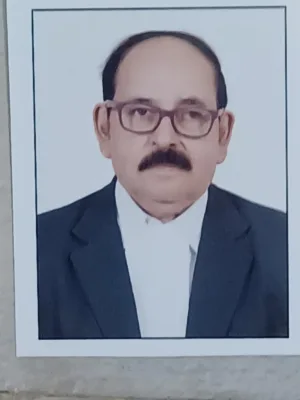
SANJAY UPADHYAY
Ranchi, March 28: What began as a difference of just ₹100 in monthly pay has turned into a 34-year-long struggle for Sanjay Kumar Upadhyay, a retired Industries Extension Officer from Jharkhand.
His journey began in 1985, when he appeared for a common competitive examination for 16 Class-III posts in undivided Bihar. After years of waiting, he was appointed in 1992 with a pay scale of ₹1400–2600.
Soon after, a discrepancy emerged. While several posts from the same examination were placed in a higher pay scale of ₹1600–2780, others—including his—were kept in a slightly lower scale of ₹1500–2750. The difference was marginal, but the principle was not.
First Victory in Patna, But No Relief
In 1993, the Patna High Court in Nagendra Sahani ruled that such disparity had no reasonable basis and directed that all 16 posts be given the same higher pay scale. The court also clearly stated that similarly placed employees should not be forced to approach courts individually.
Despite this, Upadhyay was not granted the benefit.

After Jharkhand was formed in 2000, his service was transferred to the new state. He submitted representations on April 1, 2001, and April 27, 2002, but his claim was rejected on September 13, 2004.
Jharkhand High Court and Continued Struggle
He approached the Jharkhand High Court in 2005. In 2011, a Single Judge ruled in his favour, directing the State to revise his pay scale and pay arrears.
However, in 2022, the Division Bench set aside the order, citing delay and other grounds.

Ironically, that same year—2022—he retired, without receiving the benefit he had fought for throughout his service.
Supreme Court Brings Hope in 2025
Upadhyay then approached the Supreme Court. On December 16, 2025, the Court delivered a significant judgment in his favour.
The Supreme Court held that:
The 1993 Patna High Court judgment is binding on Jharkhand under Section 34(4) of the Bihar Reorganisation Act, 2000.
The State cannot deny similar benefits to similarly placed employees once granted to others.
Pay-related claims are a continuing cause of action and cannot be rejected on grounds of delay.
Denial of equal pay violates Article 14 of the Constitution.
The Court set aside the Jharkhand High Court Division Bench judgment and restored the 2011 order, directing the State to grant the revised pay scale along with arrears within three months.
Around the same time, on January 27, 2026, the Jharkhand High Court passed another order in similar cases, reinforcing the same principle.
Victory on Paper, Silence on Ground
Despite clear directions, implementation has not been followed.
Today, the total arrears due to Upadhyay stand at approximately ₹7.95 lakh. According to him, the file is currently pending in the office of the Industries Secretary, awaiting approval.
Since the Supreme Court order, he has written multiple letters—this being his fifth representation. He wrote to the authorities on:
January 2026 (after High Court order)
Subsequent reminders through early 2026
Latest representation requesting urgent implementation
Too Costly to Fight Again
Now retired, Upadhyay says he cannot afford another round of litigation. Filing a contempt petition in the Supreme Court would require significant legal expenses.
“I am retired now. I cannot afford to go back to the Supreme Court,” he says.
A Fight Beyond Money
What started as a ₹100 pay difference has turned into a claim of ₹7.95 lakh—spread over decades of service.
But for Upadhyay, the issue is no longer just financial. It is about dignity, equality, and the right to receive what has already been granted by the highest court.
From the Patna High Court in 1993 to the Supreme Court in 2025, he has won every legal battle. Yet, the final step—implementation—remains incomplete.
More than 33 years after it all began, he continues to move from office to office, holding on to court orders that promise justice—but have yet to deliver it.