A mother, a ritual, and a girl child lost: Inside Jharkhand’s shocking human sacrifice case
Hazaribagh, April 2: On a festive evening meant for devotion and celebration, a 13-year-old girl walked with her family in a…
Hazaribagh, April 2: On a festive evening meant for devotion and celebration, a 13-year-old girl walked with her family in a Ram Navami procession in a quiet village in Jharkhand. Within hours, she would be dead—killed not by a stranger, but allegedly by those she trusted most.
What initially appeared to be a case of abduction and sexual assault has now unfolded into something far more disturbing: a ritual killing driven by superstition, desperation, and belief in occult practices.
A mother’s fear—and a fatal decision
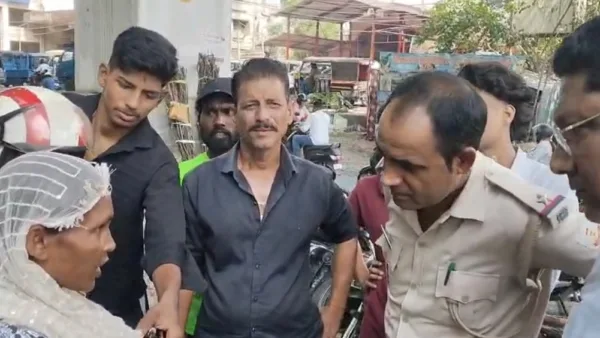
Police say the child’s mother, Reshmi Devi, had been struggling for over a year with her son’s physical and mental health issues. In search of a cure, she repeatedly turned to a local occult practitioner, Shanti Devi, known in the village as a Bhagatini—a spiritual healer.
Over time, that search for relief took a darker turn.
According to investigators, the Bhagatini convinced the mother that only a “sacrifice of a virgin girl” could permanently cure her son. She allegedly told her that a divine spirit resided within her younger daughter—and that sacrificing the child would bring relief and protection to the family.

At some point, belief overcame doubt.
ALSO READ: ED raids I-PAC premises in Hyderabad, Delhi, Bengaluru in Bengal coal scam probe
The night of the killing
On March 24, during the Mangala procession on Ram Navami, Reshmi Devi was seen moving with her children through the village. Later that evening, she returned—this time taking her youngest daughter to the Bhagatini’s house.

Police say the ritual began after 9:30 PM.
Inside a temple on the premises, the child was seated, marked with vermilion and kohl, and given offerings as part of the ceremony. She was then led to a bamboo grove nearby—a place locals say was often used for occult rituals.
What followed, investigators say, was a coordinated act of violence.
A villager, Bhim Ram, allegedly strangled the child while she struggled. Her mother is accused of holding her down.
By the time it was over, the girl was dead.
Her body was later found the next morning, March 25, near a bamboo thicket behind a local school.
A case that misled—and then shocked investigators
In the immediate aftermath, the mother filed a police complaint accusing local men of rape and murder. The brutality of the crime sparked outrage, with some calling it “Jharkhand’s Nirbhaya moment,” referencing India’s most infamous sexual assault case.
But as investigators dug deeper, the story began to unravel.
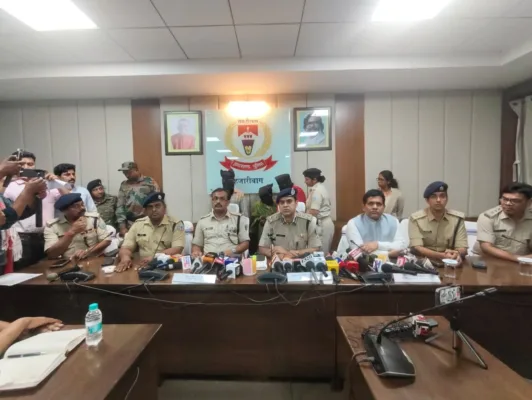
A Special Investigation Team (SIT), formed under senior police supervision, relied on technical evidence and interrogation to reconstruct the events. What emerged was not a case of sexual violence, but one of ritual killing.
Three people, including the mother and the Bhagatini, have now been arrested.
Top police step in amid public anger
The case drew widespread political and public attention, with sharp criticism from opposition leaders and growing pressure on the administration.
Amid the outrage, Director General of Police Tadasha Mishra personally stepped in to supervise the investigation, signalling the seriousness of the case.
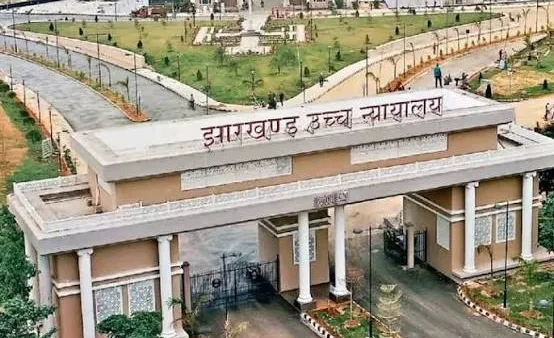
The developments also drew the attention of the High Court, reflecting the gravity and sensitivity of the crime.
A tragedy beyond crime
For many, this is not just a murder case—it is a story of how fear, illness, and blind faith can intersect with devastating consequences.
A child lost her life. A mother now stands accused of her daughter’s killing. And a community is left confronting uncomfortable questions about superstition, vulnerability, and the limits of belief.
As the investigation continues, the case serves as a stark reminder: when desperation meets unchecked faith, the cost can be irreversibly human.