Delhi High Court upholds Centre’s temporary ban on Telegram ahead of NEET-UG re-exam
New Delhi, June 19: The Delhi High Court has upheld the Central government’s temporary blocking of messaging platform Telegram ahead of the…
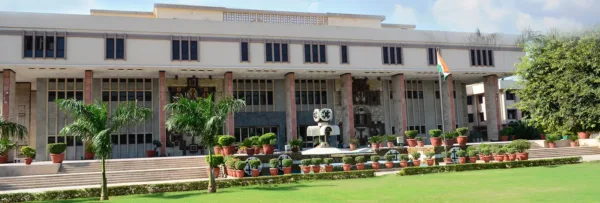
New Delhi, June 19: The Delhi High Court has upheld the Central government’s temporary blocking of messaging platform Telegram ahead of the NEET-UG re-examination, ruling that the Centre’s powers under Section 69A of the Information Technology Act, 2000 extend to blocking an entire intermediary platform and are not limited to individual posts or messages.
Justice Tejas Karia, hearing the matter during the court’s vacation, dismissed Telegram’s challenge to the government’s emergency blocking order, observing that the term “information” under the IT Act is broad enough to include software applications and digital platforms.

“The blocking power under Section 69A of the IT Act extends beyond individual pieces of content,” the court held.
Ban Imposed Over NEET Paper Leak Concerns
The case arose after the Ministry of Electronics and Information Technology (MeitY) issued an emergency order under Section 69A, directing the temporary suspension of Telegram’s services in India until June 22 amid concerns over the circulation of leaked examination material and unlawful content related to the NEET-UG re-exam.
Telegram argued before the court that it had proactively removed unlawful NEET-related content and had deployed artificial intelligence and machine learning tools to detect and take down objectionable material.
The platform also contended that the government had failed to apply its mind independently and that the designated officer had merely repeated allegations without adequate reasoning.

Court Finds No Procedural Lapse
Rejecting Telegram’s arguments, the High Court held that the emergency blocking order did not suffer from non-application of mind.
The court observed that the interim order contained sufficient reasons considering the urgent nature of the situation and that the statutory procedure prescribed under Section 69A and the Information Technology (Procedure and Safeguards for Blocking for Access of Information by Public) Rules, 2009 had been followed.

The court further noted that the final order, issued after granting Telegram a hearing, provided detailed reasons for continuing the block and complied with the legal framework governing emergencies.
“The Petitioners’ contention that the Final Order cannot supplement or supplant the reasons recorded in the Impugned Order is misconceived,” the court observed.
According to the judgment, the law specifically permits an interim blocking direction in emergencies, followed by a post-decisional hearing before a final order is passed.
Platform Can Be Blocked, Not Just Individual Content
A key issue before the court was whether Section 69A permits blocking of an entire platform.
The High Court rejected Telegram’s argument that the provision applies only to specific posts, channels, or messages.
Explaining its interpretation, the court observed that an application or platform is essentially software or a computer programme, which falls within the statutory definition of “information” under Section 2(1)(v) of the IT Act.
“In view of the express inclusion of ‘codes’, ‘computer programmes’ and ‘software’ within the definition of ‘information’ under Section 2(1)(v) of the IT Act, there is no reason to exclude an application or platform from the ambit of the said expression,” the court said.
Court Says Blocking Order Was Proportionate
The High Court also held that the temporary platform-wide ban met the constitutional test of proportionality.
The judgment noted that authorities had initially attempted less restrictive measures by directing Telegram to remove specific channels and accounts carrying objectionable content.
However, according to material placed before the government, those responsible for sharing such content repeatedly resurfaced through mirror channels, backup channels, bots, and altered handles, making channel-specific enforcement ineffective.
Given the scale of the examination and concerns over its integrity, the court found the government’s action justified.
Importance of NEET Re-Exam Cited
The court took note of the fact that nearly 2.2 million candidates were scheduled to appear for the NEET-UG re-examination.
Observing that maintaining the integrity of a nationwide examination was a matter of significant public interest, the court concluded that the temporary blocking order was a reasonable and lawful exercise of the government’s powers.