Jharkhand SIR Drive Begins: Palamu Records 13.35% Unmapped Voters, DEO Urges Calm and Participation
Daltonganj, July 1: The Special Intensive Revision (SIR) of electoral rolls began in Palamu on Tuesday with district authorities reporting a largely positive…
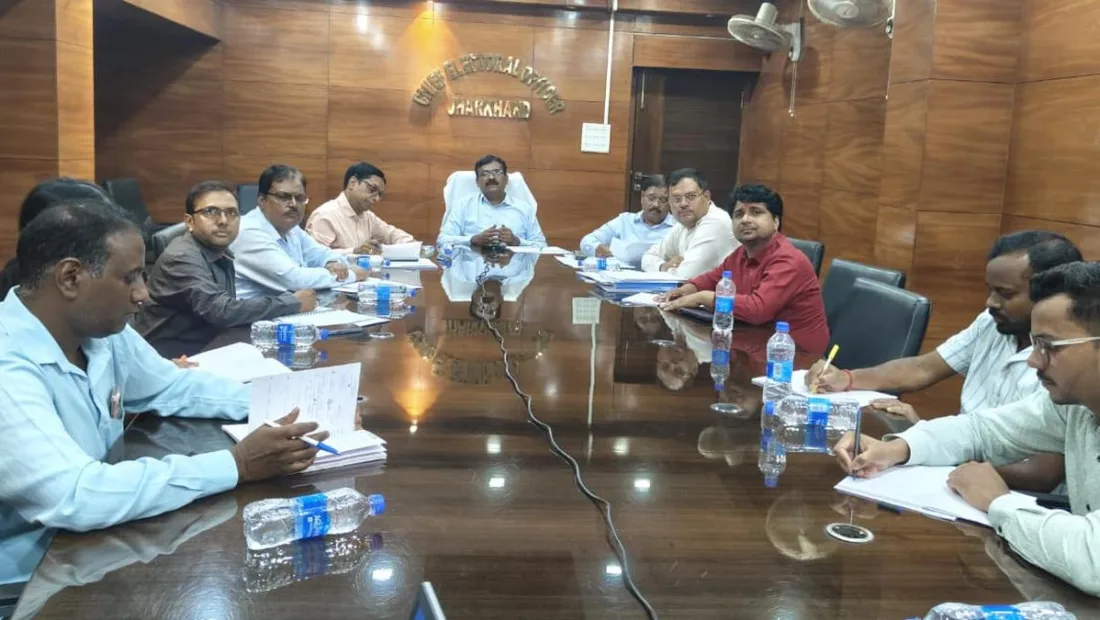
Daltonganj, July 1: The Special Intensive Revision (SIR) of electoral rolls began in Palamu on Tuesday with district authorities reporting a largely positive public response, even as official data showed that 13.35 per cent of the district’s electors remain unmapped and over 3.81 lakh voters have anomalies in their records.
Unlike the controversies witnessed during similar exercises in Bihar and West Bengal, electors in Palamu largely expressed confidence in the process, citing assurances from the district administration that the exercise would be transparent and that every eligible voter would have adequate opportunity to file claims and objections as per Election Commission of India (ECI) guidelines.
DEO Visits Polling Booths, Assures Eligible Voters
District Election Officer and Deputy Commissioner Dilip Pratap Singh Shekhawat visited several polling booths on the first day of the month-long exercise. He interacted with Booth Level Officers (BLOs) and electors, assuring them that no eligible voter should be concerned and that those facing discrepancies would have sufficient time to submit the required documents.
“SIR should be taken as an utsav (celebration). Be a positive participant in it. The Booth Level Officers are there to help the electors,” Shekhawat said.
He reiterated that the exercise is not intended to determine citizenship but to ensure that only eligible Indian citizens are enrolled as electors.
Over 2.35 Lakh Electors Yet to Be Mapped
According to official data, Palamu has 17,64,947 electors, of whom 15,29,246 had been mapped till June 29, taking the mapping percentage to 86.65 per cent.
This leaves 2,35,701 electors (13.35 per cent) yet to be mapped.
“We are all out to map the remaining electors during this month-long house-to-house enumeration,” the Deputy Commissioner said.
More Than 3.81 Lakh Electors Have Anomalies
Administrative sources said the number of electors with anomalies exceeds the number of unmapped voters.

Official figures show that 3,81,877 electors in Palamu have anomalies in their electoral records.
All five Assembly constituencies in the district have both unmapped electors and voters with anomalies.
Daltonganj Assembly constituency has the highest number, with 67,194 unmapped electors and 86,818 electors with anomalies.
Panki Assembly constituency follows with 38,002 unmapped electors and 83,901 electors with anomalies.
Nature of Electoral Roll Anomalies
According to an Election Commission note accessed by this correspondent, the anomalies largely relate to incorrect age differences in family linkages. These include instances where the age gap between an elector and the linked father is less than 15 years or more than 50 years, and cases where an elector is linked to a grandparent with an age gap of around 40 years.
The Deputy Commissioner advised electors to produce any of the 12 documents listed by the Election Commission.
“Aadhaar card alone will not suffice, although it is among the listed documents. An elector has to produce one more supporting document along with the Aadhaar card,” he said.
He added that electors should not panic and should instead furnish evidence for parental mapping, with date of birth and place of birth being the key criteria.
Citizenship Documentation Explained
Shekhawat explained that citizenship may be established by birth, descent, registration or naturalisation.
For persons born in India before July 1, 1987, any of the 12 approved documents establishing the elector’s date or place of birth is sufficient.
For those born between July 1, 1987, and December 2, 2004, documents relating to the elector as well as either the father or mother are required.
For persons born after December 2, 2004, documents relating to the elector, father and mother are required.
Survey Highlights Public Concerns
An oral survey conducted by The Jharkhand Story Network found several recurring concerns among electors during the first day of the exercise.
Young voters aged 18 to 22 largely depended on their parents to complete documentation. Families with members working outside the district or undergoing treatment for serious illnesses found it difficult to complete the enumeration process. Anxiety over being listed as unmapped was observed across both majority and minority communities.
The survey also found that fathers’ birth certificates were generally more readily available than mothers’. Many women electors expressed concern over changes in their names after marriage and the replacement of fathers’ names with husbands’ names in electoral rolls between 2019 and 2024.
Daily wage labourers in areas such as Sadiq Manzil, Kanni Ram More and Redma said their work schedules made it difficult to meet Booth Level Officers during house visits.
Many electors also said they were paying little attention to political campaigns around the SIR exercise, stressing instead that their primary concern was ensuring that their names remained correctly included in the electoral rolls and that their citizenship remained unaffected.