Sir Dorabji Tata: The man who built a nation before it was born
THE JHARKHAND STORY NETWORK Jamshedpur, August 26: There is a particular kind of greatness that does not seek public acclaim; it quietly…
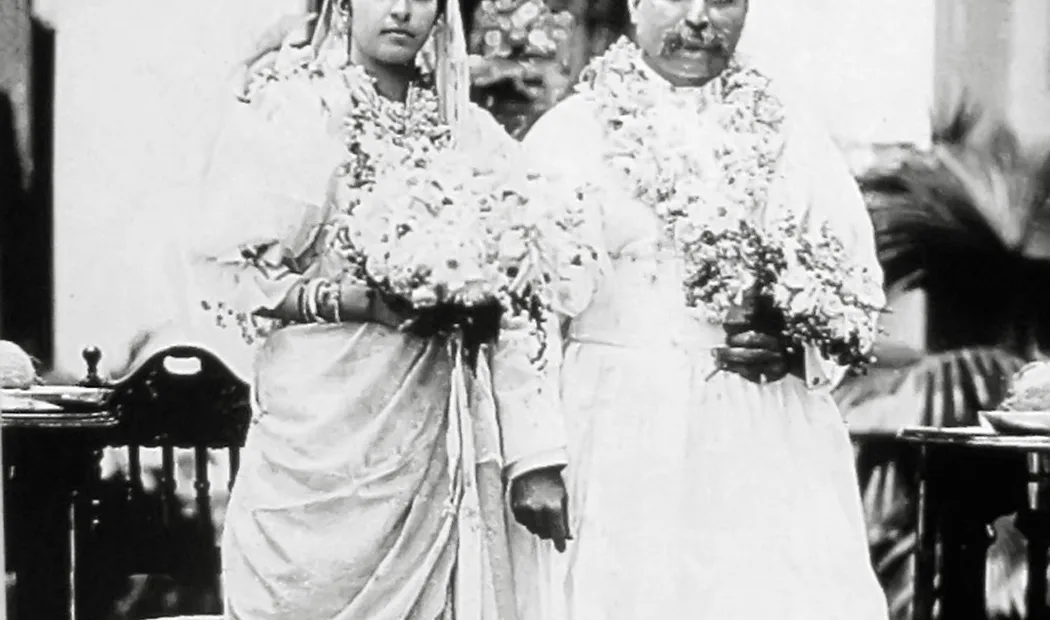
Sir Dorabji and Meherbai Tata
THE JHARKHAND STORY NETWORK
Jamshedpur, August 26: There is a particular kind of greatness that does not seek public acclaim; it quietly builds. Sir Dorabji Tata embodied this selfless spirit, transforming uncharted wilderness into a nation-building steel plant, establishing hospitals for the suffering, laboratories for scientific inquiry and sporting institutions for generations of aspiring athletes.
While Jamsetji Nusserwanji Tata envisioned a self-reliant India, he passed away before seeing that vision take shape. The monumental responsibility of carrying it forward fell on his elder son, Dorabji. The task might have overwhelmed a lesser man; instead, it forged Dorabji into an extraordinary leader.
As India approaches the centenary of the Indian Olympic Association (IOA) in 2027, Sir Dorabji Tata’s contribution to Indian sport deserves renewed recognition.
A passionate advocate of India’s participation in international athletics, Sir Dorabji personally financed and supported the country’s landmark participation in the 1920 Antwerp Olympics. His pioneering efforts contributed to the establishment of the IOA in 1927, with Dorabji serving as its first president.
For him, sport was more than competition. It was a vehicle for national pride, youth development and international recognition.

Tata Steel carries forward his sporting legacy
That vision continues through Tata Steel’s extensive sporting ecosystem. The company today supports 19 sporting disciplines through five world-class sporting academies, high-performance centres, the Tata Steel Adventure Foundation and 16 training and feeder centres spanning grassroots development to elite performance.
The Tata Football Academy (TFA) has trained more than 300 cadets, with 150 going on to represent the national team. Tata Steel Foundation’s football training centres have also emerged as an important talent pipeline, supplying most players for Jharkhand’s U-14 and U-16 boys’ teams.
Over 25 years, the Tata Archery Academy has trained more than 180 cadets and produced eight Olympians. The Naval Tata Hockey Academy operates three regional development centres and 32 grassroots centres.

Tata Steel also operates world-class academies in archery, hockey, sport climbing and rowing, besides organising major marathon and chess events to promote community participation in sport.
Drawing inspiration from Sir Dorabji Tata, the company continues to invest in and repurpose infrastructure to strengthen grassroots football and support the development of elite athletes.
Building India’s steel industry against the odds
Sir Dorabji’s nation-building vision extended far beyond sport.
Despite limited capital, difficult terrain and indifference under colonial rule, he played a decisive role in establishing India’s premier steel plant at Sakchi, which later became Jamshedpur.
The steel plant’s contribution became particularly significant during World War I, when TISCO supplied around 2.90 lakh tonnes of steel. Sakchi was subsequently renamed Jamshedpur in honour of Jamsetji Tata.
When the Tata enterprise faced severe economic turbulence, Sir Dorabji and Lady Meherbai Tata pledged their entire personal fortune, including the famed Jubilee Diamond, as collateral to save the business.
His leadership helped steer the enterprise through the crisis, leading eventually to a five-fold expansion. He also personally intervened to resolve a major workers’ strike in 1920, demonstrating a willingness to engage directly with employees during periods of industrial unrest.
From steel to power, science and social institutions
Sir Dorabji’s nation-building ambitions were not confined to industry.
He established three hydroelectric companies in the Western Ghats, laying the foundations for what became Tata Power. He also supported the Indian Institute of Science (IISc), Bengaluru, furthering the development of scientific education and research in India.
Through the Sir Dorabji Tata Trust, established in 1932, he helped create a lasting philanthropic legacy. The Trust supported pioneering institutions and initiatives, including the Tata Institute of Social Sciences (TISS), Tata Memorial Hospital, Tata Institute of Fundamental Research (TIFR) and the National Centre for the Performing Arts (NCPA).
A legacy that outlived an empire
Sir Dorabji Tata died in 1932, but his legacy continued to shape an India that was still years away from independence.
His contributions to steel, power, scientific research, philanthropy and sport reflected a single overarching idea: nation-building could begin long before a nation became politically free.
As his 167th birth anniversary is marked in August 2026, Sir Dorabji Tata’s life offers more than a historical memory. It is a reminder of what can be achieved when enterprise, philanthropy, sport and public purpose are brought together in service of something larger than oneself.