Ranchi international conference explores voter registration, electoral rolls and global best practices
THE JHARKHAND STORY NETWORK Ranchi, Sept 2: A two-day international conference on “Voter Registration and Voter Registers 2026” at the National University…
THE JHARKHAND STORY NETWORK
Ranchi, Sept 2: A two-day international conference on “Voter Registration and Voter Registers 2026” at the National University of Study and Research in Law (NUSRL), Ranchi, brought together election officials, academicians, researchers and experts on Wednesday to examine how voter registration and electoral roll management can be made more inclusive, accurate, transparent and credible.
The conference, organised by the Office of the Chief Electoral Officer (CEO), Jharkhand, in collaboration with the Central University of Jharkhand (CUJ), is focusing on voter registration from national and international perspectives, with discussions covering technology, electoral inclusion, migration, gender, voter awareness and global registration practices.
IIM Ranchi, NUSRL Ranchi and St Xavier’s College, Ranchi, are the knowledge partners for the conference.
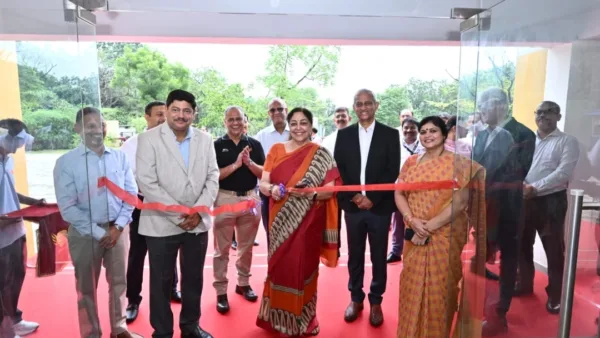
Principal Secretary of the Election Commission of India Arvind Anand attended the inaugural session as chief guest. Chief Electoral Officer K. Ravi Kumar, CUJ Vice-Chancellor Prof Sarang Medhekar, NUSRL Vice-Chancellor Prof (Dr) Ashok R. Patil and St Xavier’s College Principal Dr Father Robert Pradeep Kujur were among those present.
58 research papers selected after nationwide academic exercise
The conference seeks to look beyond the ongoing Special Intensive Revision (SIR) and examine the broader questions surrounding voter registration and electoral rolls.
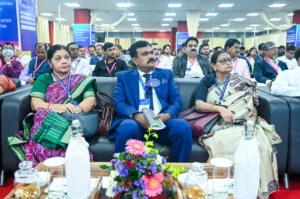
CEO K. Ravi Kumar said more than 800 universities and institutions were approached for the conference, generating 230 abstracts. An independent academic expert committee shortlisted 80 abstracts, from which 58 research papers were finally selected for publication and discussion.
Kumar said the conference provides an open academic platform to examine voter registration systems and learn from experiences across different democracies.

“Integrating practical election management experiences with academic research will help make voter list management more inclusive and credible,” he said.
He pointed out that countries across the world follow active, automated and hybrid voter registration systems, increasingly relying on population databases, civil registries, biometrics and continuous updating mechanisms.
India, he said, has a constitutional and legal framework supported by extensive field verification and participation of political parties and other stakeholders. The objective is to ensure that every eligible citizen is included in the electoral roll while preventing the inclusion of ineligible persons.
Technology to play key role in electoral roll management
Kumar said technology and database-driven verification were increasingly being used to identify discrepancies and improve the accuracy of voter records.
However, he stressed that electoral roll management also depends on field verification, participation of political parties and stakeholders, judicial review and the overall supervision and control of the Election Commission of India.
The research papers and key findings emerging from the conference will be preserved and published in both physical and free digital formats, creating a knowledge resource for future research and election administration.
ALSO READ: Ranchi hosts international conference on voter registration, electoral rolls
‘Electoral roll is gateway to democracy’
NUSRL Vice-Chancellor Prof (Dr) Ashok R. Patil described the electoral roll as the gateway to democratic participation, saying credible elections depend on an accurate, inclusive and regularly updated voter list.
He said electoral roll management must balance accuracy, inclusion, accessibility, transparency and accountability. While technology can improve operational efficiency, it should not replace human judgment and discretion.
The ultimate objective, he said, should be to ensure that no eligible citizen is left out and no ineligible person is included.
St Xavier’s College Principal Dr Father Robert Pradeep Kujur stressed the role of educational institutions in strengthening democracy through voter awareness, campus registration drives and civic education.
He highlighted challenges arising from migration, urbanisation and technological changes, while stressing the need to ensure the participation of residents and marginalised communities.
Kujur also raised concerns relating to data accuracy, privacy, accessibility, responsible use of technology and artificial intelligence, and the need to maintain public trust in the electoral system.
Migration, AI and voter awareness take centre stage
CUJ Vice-Chancellor Prof Sarang Medhekar said the partnership between the university and the CEO’s office had brought academic research and practical election-management experience together.
He noted that conducting elections in a country as large as India requires extensive logistical arrangements and trained professionals, while emerging technologies and artificial intelligence are creating both opportunities and challenges.
He expressed confidence that the conference would help bridge the gap between academia and election administration and generate practical recommendations for improving voter registration and electoral roll management.
Additional Chief Electoral Officer Subodh Kumar, in his welcome address, said citizens and voters were at the heart of the democratic process.
He stressed the need for continuous updating of electoral rolls in view of migration, urbanisation, demographic changes and the addition of young voters.
Referring to the ongoing SIR in Jharkhand, he said efforts were being made to ensure that no eligible citizen was excluded from the electoral roll and no ineligible person was included.
Panel examines global voter registration systems
On the first day, a panel discussion on “Voter Registration and Voter Register” was chaired by former Bihar DGP D.N. Gautam, with Prof Sandeep Shastri as co-chair.
The panel examined voter awareness, electoral inclusion, ease of voting, uniformity in EPIC and electoral rolls, women’s participation in elections, internal migration and public accountability.
Experts also discussed voter registration systems followed in different countries and considered global best practices that could help strengthen electoral roll management.
Six technical sessions cover emerging electoral challenges
Six technical sessions were held in parallel at three halls and lecture theatres at NUSRL.
The first session, “Voter Registration and Voter Register — Strengthening Democracy,” was chaired by Prof Sudhir Kumar Singh and co-chaired by Dr Pratima Sarangi. Discussions focused on citizenship, voter registration, the role of political parties and the relationship between registration and democratic participation.
The second session, “Voter Registration: Cross-Country Experience Across the Globe,” was chaired by Dr Mahesh Debta and co-chaired by Dr B.B. Biswas. Researchers examined registration systems in Estonia, Brazil, Australia, Canada, Denmark, Ghana and South Africa.
The third session, “Voter Registration: Theoretical Paradigm,” was chaired by Chaitanya Prasad and co-chaired by Prof Divanshu Srivastava. It explored theoretical dimensions of electoral inclusion, democratic strengthening and electoral roll management.
The fourth session, “Voter Registration and Voter Register — Social Media and Imperative of Awareness,” was chaired by Shiv Prasad Sharma and co-chaired by Prof Sanjay Kumar. The session focused on social media, multilingual voter awareness, electoral literacy and the use of artificial intelligence in voter registration.
The fifth session, again focusing on cross-country experiences, was chaired by Dr Anandkumar R. Shinde and co-chaired by Dr Arun Rai. Comparative presentations examined online registration and the use of modern technology in India and other democracies.
The sixth session, “Voter Registration and Voter Register: Gender and Migrant Issues,” was chaired by Dr Charvak Pati and co-chaired by Dr Honey Raj. Discussions focused on rural and marginalised communities, migrants and workers, and electoral participation in tribal and border areas.
Experts, researchers and students participate
Several national-level experts and academics participated as session chairs, co-chairs and presenters, including Dr Pratima Sarangi, Dr V. Vijayakumar, Dr Mahesh Debta, Prof Surendra Kumar, Prof Sudhir Kumar Singh, Prof Ishan Naskar, Chaitanya Prasad, Dr Rahul Verma, Prof Rekha Saxena, Prof Sandeep Shastri, Prof A.K. Verma, Dr Swapan K. Biswas, Shiv Prasad Sharma, S.K. Sethia and Dr Hari Charan Behera.
Additional CEO Subodh Kumar, State Training Nodal Officer Dev Das Datta, election department officials, national-level master trainers, academicians, researchers and students also participated in the conference.
Student volunteers from the participating institutions assisted in conducting the sessions.
Two conference volumes and a souvenir released
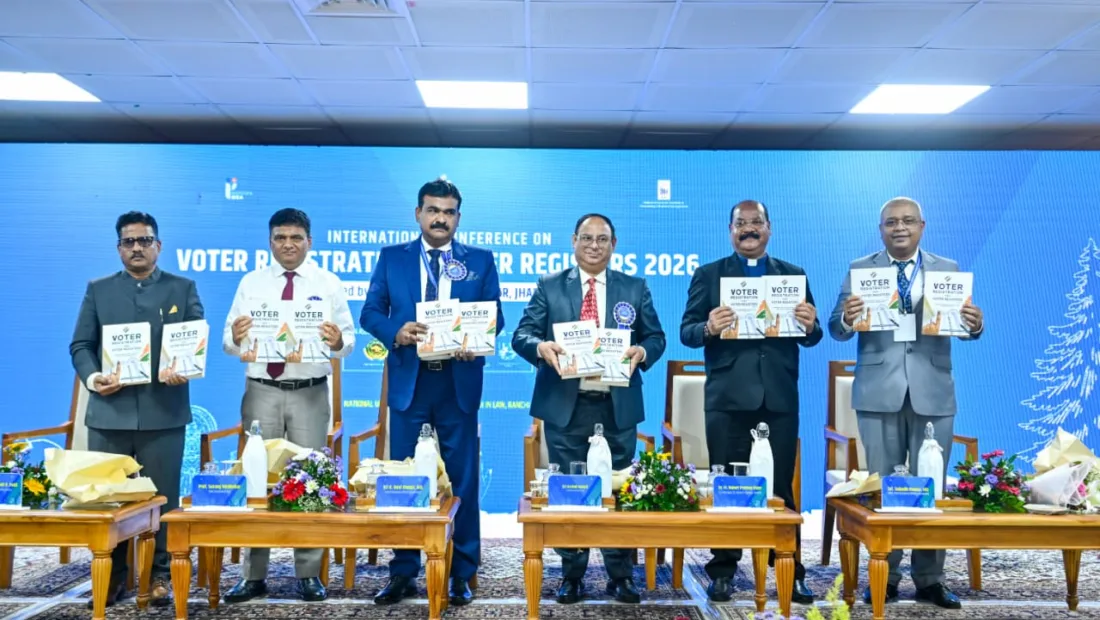
The inaugural session also witnessed the release of two conference volumes — “Voter Registration and Voter Registers: Foundations, Global Practice, and Legal Framework (Vol. 1)” and “Voter Registration and Voter Registers: Theory, Awareness, Inclusion, and Technology (Vol. 2)” — along with a souvenir.
The two-day conference is expected to generate research-based recommendations on improving voter registration, electoral roll accuracy and inclusion while addressing challenges linked to migration, gender, technology, artificial intelligence, data privacy and voter awareness.