
Palamu Tiger Reserve: Villagers voluntarily hand over 31 country-made guns
THE JHARKHAND STORY NETWORK Daltonganj, October 10: In a significant community-led initiative to protect wildlife, villagers in and around the Palamu Tiger…
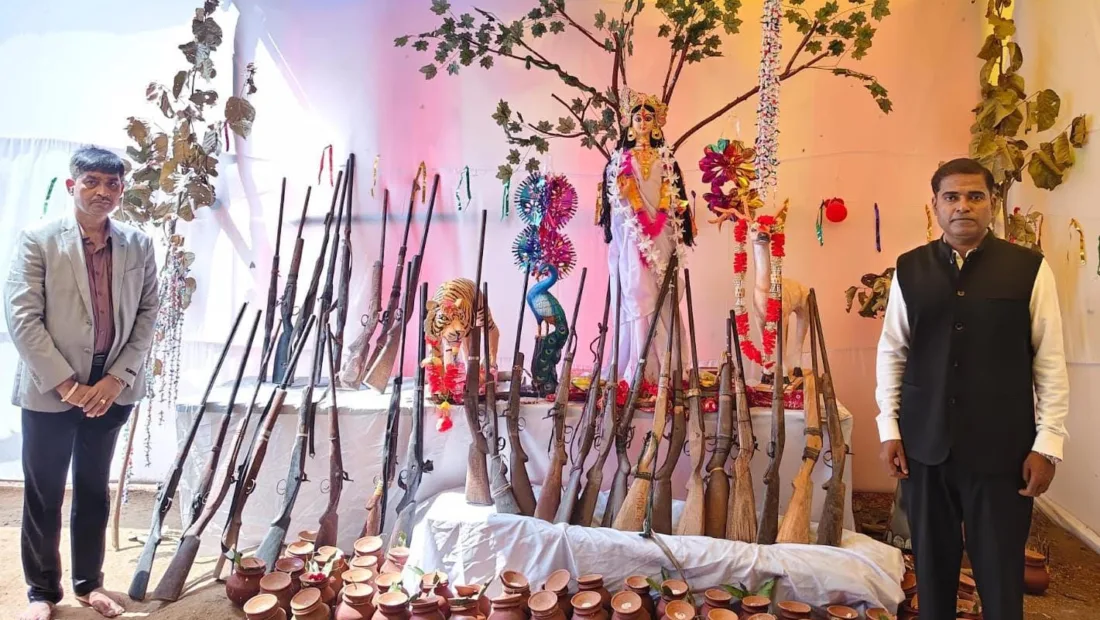
Villagers voluntarily hand over country-made muzzle-loading guns during Wildlife Week at Palamu Tiger Reserve on Friday. PTR South Division Deputy Director Kumar Ashish is standing on the right, wearing a black waistcoat.
THE JHARKHAND STORY NETWORK
Daltonganj, October 10: In a significant community-led initiative to protect wildlife, villagers in and around the Palamu Tiger Reserve (PTR) have voluntarily handed over 31 country-made muzzle-loading guns during this year’s Wildlife Week, up from 23 weapons collected in the same initiative in 2025.
The initiative, which began last year, reflects growing awareness among villagers of the need to protect wildlife and reduce the risks of using locally manufactured firearms, according to PTR officials.
Unlike conventional arms surrender programmes, the exercise has been described by forest officials as a voluntary effort by villagers to give up weapons that could pose a threat to wildlife. The identities of those who handed over the guns have not been disclosed.
Deputy Director of PTR’s South Division Kumar Ashish said villagers had handed over 31 country-made muzzle-loading guns during this year’s Wildlife Week, compared with 23 in 2025.
He said the initiative was not a ceremonial exercise but reflected a growing sense of responsibility among local communities towards wildlife conservation.

“It’s not a ceremony or a ritual, but a growing sense of attachment and concern among the villagers for wildlife to grow and multiply safely here,” Ashish said.
According to PTR sources, forest patrol teams had previously recovered such weapons during operations in villages in and around the reserve. Some villagers had reportedly justified keeping them as a means of protecting crops and homes from wildlife incursions.
However, a PTR tracker said such weapons were also sometimes used to hunt wild boar for consumption.

Around 190 Villages Face Wildlife-Protection Challenges
PTR sources said approximately 190 villages are located within the reserve, where the presence of country-made firearms has been a longstanding concern.
The exact number of such weapons in villages inside, outside and around the tiger reserve is not known.
A villager said the weapons were generally kept for practical purposes rather than as symbols of status or authority.
“Here, a muzzle-loading gun serves two mundane purposes: crop protection and the opportunity to hunt for food,” the villager said.
The voluntary handover initiative is significant because reducing hunting pressure and preventing the use of firearms can contribute to safer conditions for wildlife. However, forest officials have not suggested that the weapons collected so far represent the total number still in circulation.
PTR Field Director Welcomes Villagers’ Initiative
PTR Field Director S R Natesha praised the villagers who had handed over their weapons, describing the initiative as evidence of their concern for wildlife.
“Those who have brought country-made muzzle-loading guns to PTR have demonstrated their love and concern for the wildlife around them. PTR appreciates their noble concern,” Natesha said.
He added that the reserve authorities were in contact with law-enforcement agencies to ensure that the villagers who handed over the weapons did not face unnecessary inconvenience.
“We are in touch with the law-enforcement agencies to ensure that no harm or inconvenience comes to these people who have brought country-made muzzle-loading guns to PTR,” Natesha said.
Country-Made Weapons Pose a Continuing Challenge
PTR sources said several venomous snakes had been rescued in the reserve, and villagers had not used muzzle-loading guns in those cases. Nevertheless, the threat posed by locally manufactured firearms remains a concern.
Sources recalled that a tusker was killed using a muzzle-loading gun in the reserve in the early 2020s, underscoring the potential danger these weapons pose to large wildlife.
The continued availability of locally manufactured firearms also presents a challenge for conservation authorities. According to sources, such weapons can be assembled using materials including seasoned timber, iron pipes and triggers, sometimes within two to three days.
Officials have not ruled out the possibility that more weapons could be manufactured in the future.
The growing voluntary handover of guns during Wildlife Week offers a way to strengthen cooperation between forest authorities and local communities. Sustained awareness, community engagement and effective enforcement will remain important to ensure that wildlife in Palamu Tiger Reserve can thrive without the threat of illegal hunting.