PTR plans to strengthen Kutku range, key tiger corridor along Chhattisgarh border
THE JHARKHAND STORY NETWORK Daltonganj, November 24: The Palamu Tiger Reserve (PTR) plans to strengthen protection and conservation measures in its Kutku…
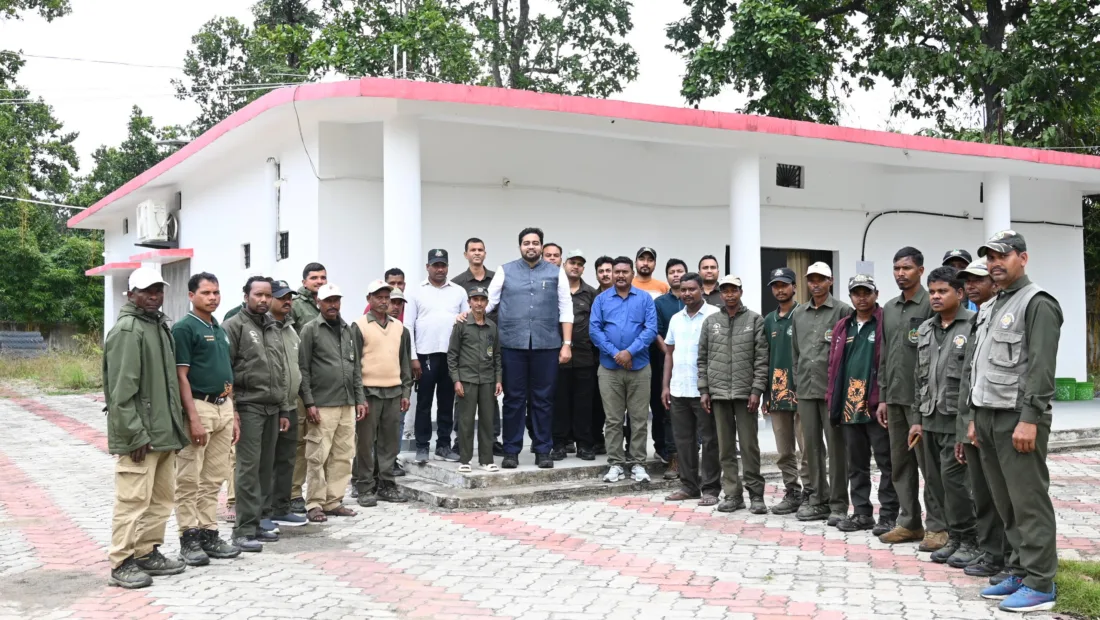
PTR North Division Deputy Director Sandeep Shinde interacts with forest personnel at Kutku range on Monday.
THE JHARKHAND STORY NETWORK
Daltonganj, November 24: The Palamu Tiger Reserve (PTR) plans to strengthen protection and conservation measures in its Kutku range, recognised as an important wildlife corridor linking the forests of Jharkhand with those of neighbouring Chhattisgarh.
The range, which falls under PTR’s North Division, is also believed to serve as a movement route for tigers entering the reserve from Chhattisgarh. Forest officials and local residents have reported occasional movement of these animals across the forest belt.
North Division Deputy Director Sandeep Shinde visited Kutku on Monday and interacted with forest personnel and local residents to understand the area’s ecological importance and conservation challenges.
“I had been to Kutku on Monday. It was my maiden interaction with the forests, forest personnel and forest dwellers there,” Shinde said.
Local accounts point to tiger movement
Shinde said he spent more time listening to residents than speaking during the interaction. Villagers shared accounts of tiger movement from the Chhattisgarh side and recalled instances of livestock or wild-animal kills attributed to visiting tigers.

PTR sources informally refer to these visiting animals as “NRT” or non-resident tigers.
Comparing Kutku with the more widely known Betla range and Betla National Park, Shinde said Kutku had its own ecological significance and appeal.
“Betla range and for that matter Betla National Park are domineering and overbearing nevertheless Kutku range has its own attraction and appeal,” he said.

He pointed out that Kutku has a cheetal enclosure and provides an important passage for large carnivores, including tigers and leopards.
‘Best-kept secret’ of PTR
Shinde described Kutku’s dense forests and greenery as one of its major strengths, calling it a “best kept secret” of the Palamu Tiger Reserve.
“It’s an inlet of tiger. Kutku range is as environmentally significant as Betla. For us there is no distinction among any of the four ranges that North division has,” he said.
PTR sources observed that Betla had gained greater public recognition through sustained publicity and tourism promotion, while Kutku’s attractions had received comparatively little attention.
Illegal tree felling and weapons possession under scrutiny
The Deputy Director acknowledged concerns over illegal tree felling in the range. He said some local residents had admitted to the practice during discussions.
“Necessary instructions have been given to the trackers, forest guards and other personnel to curb and contain such illicit activities,” he said.
The issue of locally made muzzle-loading firearms, allegedly used for hunting wild boar and hare, also came up during the interaction. Shinde said the forest department was considering involving Panchayati Raj Institution (PRI) representatives to persuade households possessing unauthorised weapons to surrender them voluntarily.
“We are mooting a plan to involve PRI (Panchayati Raj Institution) people to convince and ready households in possession of illicit arms to get disarmed themselves voluntarily,” he said.
Water availability and railway routes pose challenges
Shinde pointed out that the North Division of PTR was relatively drier than the South Division, which has greater moisture and humidity.
The proposed North Koel Water Reservoir, popularly known as Mandal Dam, could significantly improve water availability in the northern part of the reserve if it becomes operational, sources said.
The North Division also faces conservation concerns linked to railway infrastructure. The Chhipadohar and Hehegara railway stations, under East Central Railway, have been at the centre of a dispute over the proposed relocation of railway lines.
PTR officials have maintained that relocation is necessary to improve wildlife safety, particularly where animals cross three railway tracks — the up line, down line and reversible line. Local residents, however, have opposed the proposed relocation.
The strengthening of Kutku’s protection measures will therefore involve addressing not only illegal activities but also broader challenges relating to habitat connectivity, water availability and the movement of wildlife.