Food safety team tests frying oil at Daltonganj eateries, finds high TPM in samosa shop
THE JHARKHAND STORY NETWORK Daltonganj, October 12: Food safety officials have intensified inspections of eateries in Daltonganj, focusing on the quality of…
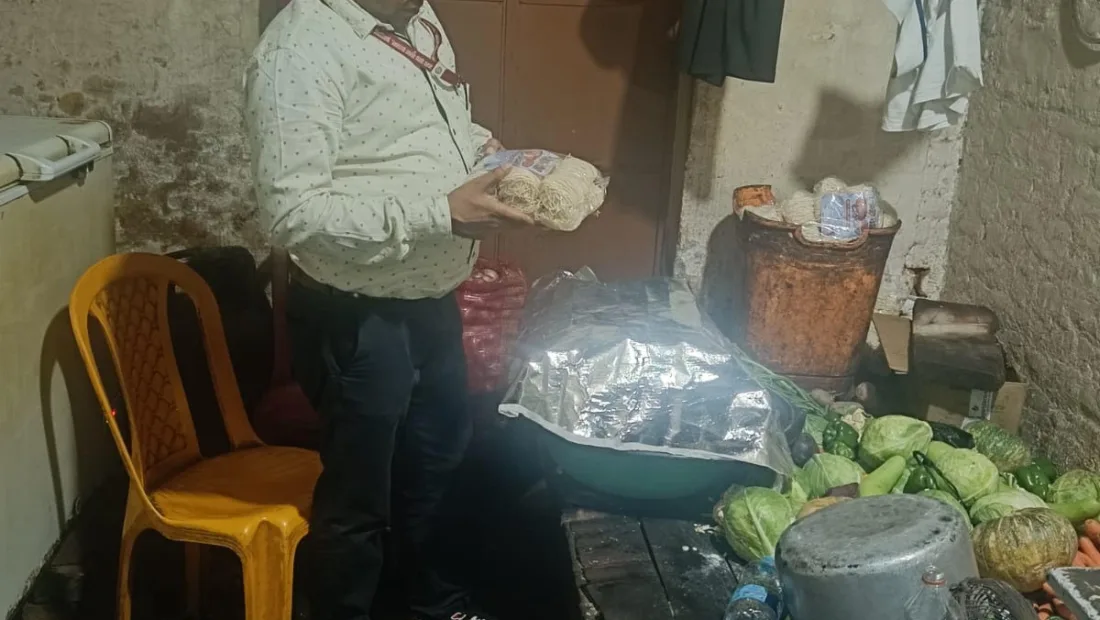
Palamu Food Safety Officer Law Kumar Gupta examines packaged food at an eatery in Daltonganj during a recent inspection.
THE JHARKHAND STORY NETWORK
Daltonganj, October 12: Food safety officials have intensified inspections of eateries in Daltonganj, focusing on the quality of cooking oil used to prepare popular snacks such as samosas and pakoras.
Palamu Food Safety Officer (FSO) Law Kumar Gupta said the team used a handheld digital device to test frying oil and assess its degradation after repeated heating.
According to Gupta, frying oil must stay below the prescribed threshold of 25 per cent total polar material (TPM), a measure used to assess oil deterioration during frying.
The test helps officials determine whether cooking oil has degraded to a level at which it should no longer be used for food preparation.
Samosa Shop Asked to Discard Used Oil
During a recent inspection, the food safety team checked the frying oil at Singhara Maharaj, an outlet near the government bus stand where singharas are prepared in large quantities.

The shop reportedly attracts customers who queue up to buy the popular snack.
Gupta said the digital test found the oil’s TPM level to be above 25 per cent. The residual frying oil was subsequently poured down the drain, and the shop management was warned to use good-quality edible oil.
Sources close to the establishment, however, said the management preferred packaged edible oil sold in tins rather than loose oil. They suggested that if the packaged oil had deteriorated, the manufacturer could also be asked to explain the issue.

The source of the oil’s degradation was not independently established.
ALSO READ: Sona Devi University Marks World Mental Health Day, stresses student well-being
Food Safety Compliance Under Scrutiny
The inspections have also prompted questions about compliance with other food safety requirements, including pest control and water quality documentation.
Civil society activist Ravindra Kumar Singh urged officials to extend their scrutiny to Mukhymantri Daal Bhaat Kendras, asking whether these establishments possessed the pest control certificates required during inspections of restaurants and hotels.
Gupta acknowledged that pest control documentation was often missing from food establishments.
He explained that pest control measures were intended to prevent insects and rodents from contaminating food and damaging stored ingredients.
The FSO also identified water quality test reports as another important requirement that was frequently unavailable during inspections.
He said drinking water quality testing in Daltonganj was carried out by the Drinking Water and Sanitation Department.
According to Gupta, many ready-to-eat food establishments lacked the necessary water quality documentation, partly because operators were unaware of the requirements.
Activist Calls for Wider Monitoring
Singh said food safety enforcement in Jharkhand appeared to be gaining momentum and referred to Maharashtra, where senior IAS officer Tukaram Mundhe has attracted attention for his work in public administration and food safety.
He called for consistent inspections across different categories of food establishments rather than concentrating only on conventional restaurants and snack shops.
The concerns highlight the importance of ensuring that food safety standards are applied consistently, particularly at establishments serving large numbers of customers.
Hygiene Standards Vary Across Eateries
Gupta said some establishments maintained better hygiene standards than others. He cited Marwari Basa as an example of an eatery where cleanliness and hygiene were given particular attention.
Meanwhile, local residents expressed concern about the possibility of sudden inspections and the difficulties small food businesses could face in meeting multiple compliance requirements.
Anuradha, a resident whose elder son sells chilli chicken from a roadside stall, said small food vendors were often anxious about inspections.
The concerns underline the need for a balanced approach that combines effective enforcement with greater awareness among food business operators about safe cooking practices, clean water, pest control and the proper handling of edible oil.
Regular inspections and adherence to food safety standards remain essential to protect consumers and ensure that popular street foods and ready-to-eat meals are prepared under hygienic conditions.