Palamu launches Khet Bachao Abhiyan, but farmers say river erosion threatens thousands of acres
THE JHARKHAND STORY NETWORK DALTONGANJ, November 28: The Palamu district administration has launched the Khet Bachao Abhiyan (Save Farming Campaign) alongside the…
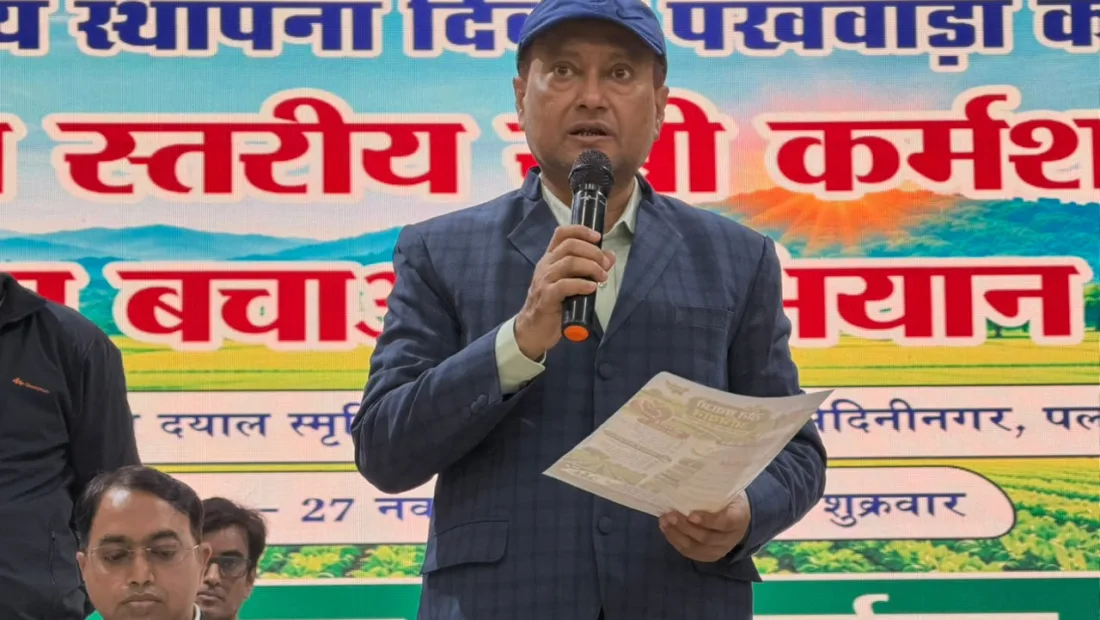
Deputy Development Commissioner Sadat Anwar at the Khet Bachao Abhiyan programme at Pandit Deendayal Upadhyaya Smriti Bhavan in Daltonganj on Friday.
THE JHARKHAND STORY NETWORK
DALTONGANJ, November 28: The Palamu district administration has launched the Khet Bachao Abhiyan (Save Farming Campaign) alongside the Rabi 2026 initiative, but farmers have questioned the programme’s timing and focus, alleging that some of the biggest threats to agriculture in the district remain unaddressed.

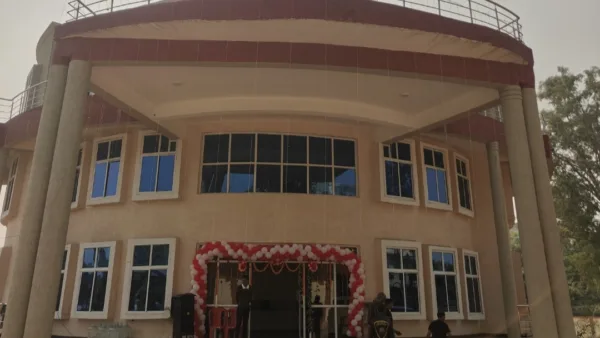
Officials organised the one-day campaign at Pandit Deendayal Upadhyaya Smriti Bhavan in Daltonganj on Friday, November 27. Deputy Development Commissioner Sadat Anwar inaugurated the programme in the presence of District Agriculture Officer Deepak Kumar Verma.
The campaign is part of a nationwide initiative launched jointly by the Union Ministry of Agriculture and Farmers Welfare, the Indian Council of Agricultural Research and Krishi Vigyan Kendras. The 40-day programme began on October 22 and is scheduled to conclude on November 30.
Farmers question delay in organising campaign
Administrative sources acknowledged that the district agriculture office could have organised the programme earlier instead of holding it just three days before the campaign’s scheduled conclusion.
Farmers also questioned whether the initiative adequately addresses the ground realities affecting cultivation in Palamu, particularly the large-scale erosion of agricultural land along the Sone River and damage to standing crops caused by wild animals.

Sone River eroding agricultural land in Hussainabad
Farmers in Hussainabad subdivision, particularly those living along the southern and eastern stretches of the Sone river, are among the worst affected by recurring land erosion during the monsoon.
Progressive farmer and political figure Vinod Singh said nearly 30 km of agricultural land between Dangwar village and Mohammadganj was facing severe erosion every year as the river swells during the rainy season.
“It’s almost a 30 km stretch of farming land across the Sone River, beginning at Dangwar village up to Mohammadganj, where erosion of farming land in huge measure is the inevitable destiny and misery of the farmers every rainy season,” Singh said.

He added that farmers were losing acres of cultivable land with every monsoon, leaving their holdings progressively smaller.
“With every rainy season, farmers’ land across the river Sone gets shorter and shorter by acres and acres following farming land confronting with a kind of water burial,” he said.
Questioning the focus of the campaign, Singh said the administration should prioritise the problem of agricultural land erosion instead of limiting the initiative to rhetoric.
“Khet Bachao Abhiyan should focus on the issue of erosion of farming land instead of making rhetoric of it,” he said.
He warned that the continuing loss of land could turn farmers with multi-bigha holdings into marginal farmers.
“Such is the scale of erosion of farming land that days are not far off when a multi-bigha farmer will become a marginal farmer,” Singh said.
Wild animals destroy standing crops
Another farmer, Kishore Pandey, alleged that the campaign had failed to address the damage caused to crops by nilgai, monkeys and wild boars.
“This Khet Bachao Abhiyan is a farce in Palamu. Here farming land is destroyed by Nilgai, monkeys, wild boar, etc,” Pandey said.
He claimed that many farmers had stopped cultivating vegetables because wild animals repeatedly destroyed their crops.
“Many farmers have left growing veggies as it’s finished by Nilgai, monkeys and wild boars. The agriculture department has no concern for such a loss of standing crop and veggies,” he said.
Campaign focuses on soil health and crop diversification
In a press note issued after the programme, the district administration said the campaign focused on soil health, organic farming, crop diversification and environmentally friendly crop-residue management.
The Rabi 2026 initiative also encouraged farmers to increase the cultivation of pulses such as pigeon pea and lentil, citing their potential for remunerative returns.
Satbarwa block in Palamu was identified as a suitable area for pigeon pea cultivation, locally known as rahar dal.
Sources also pointed out that farmers in Palamu generally do not burn crop stubble, unlike practices reported in Punjab and Haryana.
More than 24,000 hectares of barren land remain a concern
The campaign also did not address the issue of reclaiming barren land, which, according to sources, accounts for more than 24,000 hectares in Palamu.
The district has approximately 1.73 lakh hectares of net cultivable land and depends on the Southwest Monsoon for rainfall.
District Agriculture Officer Deepak Kumar Verma was contacted twice by this correspondent on Saturday for his response but did not answer the calls.
The concerns raised by farmers underline the need for agricultural initiatives to address not only soil health and crop diversification but also the recurring loss of cultivable land and damage to standing crops that directly affect farm incomes in Palamu.