







SUMAN K SHRIVASTAVA
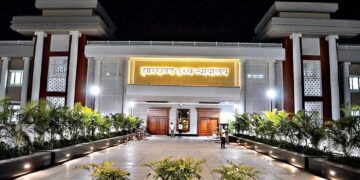
Ranchi, March 11: The Jharkhand High Court has ruled that delay in trial or long incarceration cannot by itself be a ground for granting bail in cases investigated by the National Investigation Agency, particularly when allegations involve serious offences under anti-terror laws.
Delivering the judgment while rejecting the bail appeal of an accused in a coalfield terror conspiracy case, a division bench of Justice Sujit Narayan Prasad and Justice Gautam Kumar Choudhary observed that in offences involving threats to national security or public order, courts must give due weight to the statutory restrictions contained in the Unlawful Activities (Prevention) Act.
The bench held that when accusations appear prima facie true based on investigation materials, the law places strict limitations on granting bail, and a delay in trial alone cannot override those statutory safeguards.

Case Linked to Violent Attack in Coal Mining Area
The case originated after police received information about armed assailants setting vehicles on fire and firing near a check post close to a coal colliery in the Balumath area.
Several vehicles were burnt during the incident, and civilians were injured. Investigators also recovered bomb fragments, cartridges and pamphlets threatening transporters and coal companies operating in the mining belt.
Following the seriousness of the allegations and their possible wider implications, the Union Ministry of Home Affairs directed the National Investigation Agency to take over the investigation.
Allegations of Harbouring and Arms Supply
During the investigation, the NIA alleged that the appellant was associated with members of a criminal gang involved in extortion from coal transporters and contractors.
ALSO READ: From Jharkhand, ZKTOR experiments with surveillance-free social media
Investigators claimed that the accused helped arrange a flat in Ranchi where gang members allegedly stayed and conducted activities linked to the conspiracy.
The agency further stated that arms and ammunition were recovered during a police raid at the premises, where the accused was present at the time of arrest.
According to the investigation, the accused was also tasked with supplying weapons to gang members and providing shelter to an absconding suspect involved in the conspiracy.
Court Rejects Delay Argument
The defence argued that the accused had remained in custody for a prolonged period and that the trial might take time because of the large number of witnesses.
However, the High Court rejected this argument, stating that mere delay in trial cannot automatically justify bail in cases involving grave offences under special laws such as the anti-terror statute.
Referring to recent Supreme Court rulings, the bench noted that the gravity of allegations, the role attributed to the accused and the strength of the prima facie case must be examined before considering bail.
The court observed that when offences allegedly threaten the sovereignty, security or public order of the state, delay cannot be treated as a decisive factor for release.
Parity with Co-Accused Not Applicable
The appellant also argued that some co-accused persons had been granted bail and sought similar relief.
The High Court rejected the plea, holding that the principle of parity applies only when the role and allegations against the accused are identical.
In the present case, the court noted that the recovery of arms and the alleged role attributed to the appellant distinguished his case from other accused who had been granted bail.
Trial Progressing, Says NIA
The NIA informed the court that the trial was already progressing and a substantial number of witnesses had been examined.
The agency also warned that granting bail at this stage could create the risk of witness intimidation, evidence tampering or absconding, which might affect the fairness of the trial.
Bail Appeal Dismissed
After examining the investigation records and earlier court orders rejecting bail, the High Court held that no new circumstances had emerged to justify interference with the special court’s decision.
The bench concluded that the allegations against the accused appear prima facie true under the anti-terror law, and therefore, the statutory bar on bail remains applicable.
The appeal was consequently dismissed, with the court clarifying that its observations are limited to the bail proceedings and will not affect the trial.
