





THE JHARKHAND STORY NETWORK
Jamshedpur, Nov 17: A special film screening programme was organised at Karim City College, Jamshedpur, in collaboration with Samuday ke Saath and the PG Department of Mass Communication.
The event brought together filmmakers, faculty members, students, and representatives from Tata Steel’s community initiative for an engaging afternoon of documentary cinema and critical discussion.
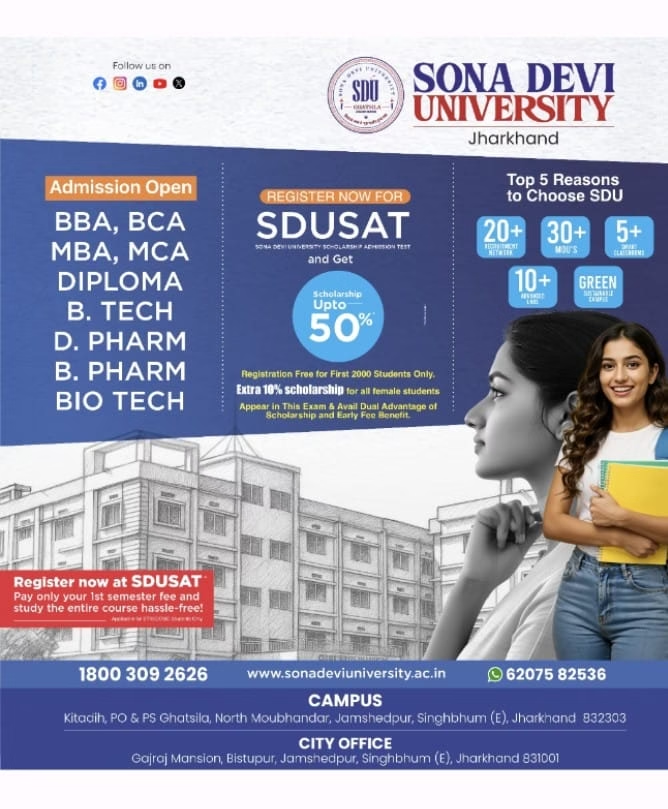
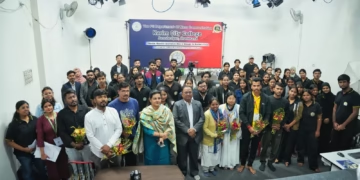
The programme opened with a welcome to filmmakers Abhishek Chauhan, Roshni Chauhan, Sandip Bhati, and Sanjeev, along with guests from Tata Steel Samuday ke Saath—Praveen Tudu, Kumar Gourav, Nitish Kumar, and Lena Pegu. Principal Dr Mohammad Reyaz extended greetings to the team, followed by a brief introduction to Samuday ke Saath and the three films selected for screening.
Also Read- Supreme Court to hear CBI plea on Jharkhand Assembly recruitment scam on Nov 18
Dr Reyaz, in his address, highlighted the importance of documentary viewing for media students, emphasising its role in shaping perspectives, understanding real-life narratives, and developing a deeper sense of social responsibility. He also formally introduced the filmmakers, recognising their contributions to socially meaningful cinema. A ceremonial bouquet presentation by Principal Dr Reyaz marked the formal welcome of the guests.
The screening began with Mhari Topli Ma Kekda (What’s in My Basket – Crab), a documentary exploring traditional crab-hunting practices, their cultural relevance, and the environmental impact of unsustainable methods.
The second film, Mhari Topli Ma Pitlaji (What’s in My Basket – Brown Flowered Ipecac), offered a compelling look at how certain communities continue to depend on natural forest produce, often leading healthier lifestyles than many in modern society.
The final screening, Stranger’s Call, examined human behaviour in moments of crisis, portraying how silence and inaction can perpetuate crime and suffering.
Also Read- Golden jubilee celebration of BIT Sindri’s Mining Engineering Department concludes
A panel discussion between students and filmmaker Sandip Bhati followed, covering topics such as the pre-production and shooting timeline—which captured diverse seasons like Holi, the monsoon, and winter for Kekda—along with the motivation behind choosing subjects like crab and Pitlaji for documentaries.
Students also discussed logistical challenges, accommodation, budgeting, and the role of Axis Bank Foundation in funding the films. Questions on animation software, team coordination, and challenges faced during and after filming provided valuable learning for the audience.
The event concluded with a vote of thanks by H.O.D Neha Tiwari, who expressed gratitude to filmmakers Abhishek Chauhan, Roshni Chauhan, Sandip Bhati, and Sanjeev; the Samuday ke Saath team; and all students and volunteers.
