






MARY PRIYANKA
Ranchi, June 25: Not all stars twinkle in the sky — some shine on screen, and others even closer to home.
On June 20, Sitare Zameen Par, a heartwarming family comedy-drama, made its theatrical debut. Directed by R.S. Prasanna and produced by Aamir Khan, the film tells the story of an arrogant coach tasked with training neurodivergent adults for community service. Initially driven by prejudice, the coach’s worldview gradually transforms as his players help him see life through a more compassionate lens.
The film is gaining widespread attention not only for its engaging storyline but also for its inclusive casting of neurodivergent actors — a first in mainstream Indian cinema.

What Does ‘Neurodivergent’ Mean?
The term neurodivergent refers to individuals whose brains function, process, and perceive the world differently from what is considered neurotypical. This includes those with autism, ADHD, Down syndrome, intellectual differences, and other developmental conditions.
Also Read: Jharkhand News: Two minor girls abducted from Jamshedpur
Neurodivergence is not a defect — it is simply a different way of experiencing life. It brings with it unique perspectives, abilities, and strengths that deserve to be recognised and embraced.
Koshish Foundation: Ranchi’s Own Stars
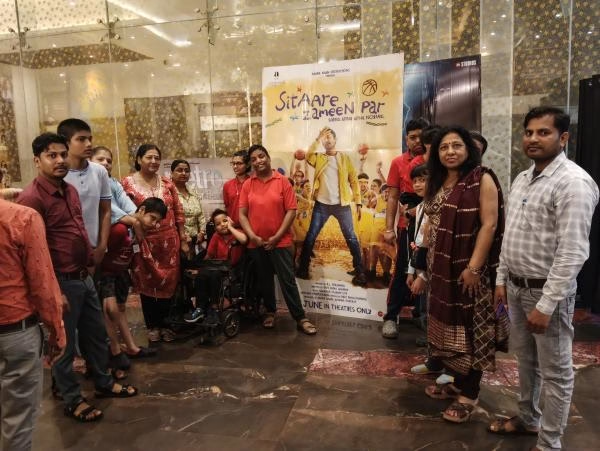
While Sitare Zameen Par lights up screens across the country, Ranchi is home to its very own constellation of stars — the students of Koshish Foundation.
Founded in 2015 by the Jharkhand Parent Association, the Koshish Foundation operates the Koshish Special School, which supports children and adults with neurodivergent profiles. Through tailored education, therapy, skill-building, vocational training, behavioural support, and parent counselling, the school fosters independence and self-worth in its students.
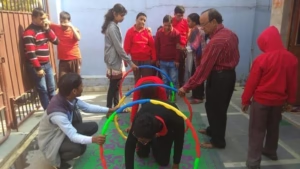
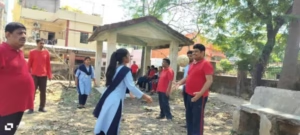
The curriculum is both structured and nurturing, ranging from academic lessons and yoga to drawing, games, and group activities. Fridays are reserved for non-fire cooking sessions, a highlight that encourages creativity and life skills.
A Mother’s Voice, A Community’s Commitment
In an exclusive conversation, Nita Roy — a core member of the Jharkhand Parent Association and mother to a neurodivergent son — shared how profoundly the film resonates with her.
“Sitare Zameen Par reflects what we live every day,” she said. “Currently, we support around 40 individuals, from children to adults. Some of our students have even sat NIOS board exams from Class 2 to 5.”
Her message to society is clear and urgent:
“Don’t keep them at home. Let them step out and experience the world. Enrol them in schools that understand their needs — send them to us. They are more than capable of learning skills. It may take time, but their discipline is unmatched. With the right guidance, love, and care, they don’t just learn — they thrive.”
She describes the students at Koshish as deeply compassionate: “They give love freely and ask only for love and a little understanding. Don’t judge their differences as limitations.”
More Than a Film — A Call to Action
As Sitare Zameen Par continues to shine on the silver screen, one line from the film lingers in hearts and minds:
“Everyone has their own normal.
What’s usual for one person might be different for another.
And that’s okay.”
At the Koshish Foundation in Ranchi, this isn’t just a cinematic line — it’s a lived reality.
