Jharkhand HC calls for stronger child protection after 10 years of JJ Act
THE JHARKHAND STORY NETWORK Ranchi, August 30: The Jharkhand High Court has called for stronger coordination, better infrastructure and more effective implementation…
THE JHARKHAND STORY NETWORK
Ranchi, August 30: The Jharkhand High Court has called for stronger coordination, better infrastructure and more effective implementation of child protection measures as the state reviewed a decade of the Juvenile Justice (Care and Protection of Children) Act, 2015.
The call came during a state-level consultation organised by the Juvenile Justice-cum-POCSO Committee of the High Court of Jharkhand in collaboration with the Judicial Academy, Jharkhand, UNICEF Jharkhand and the Department of Women, Child Development & Social Security.
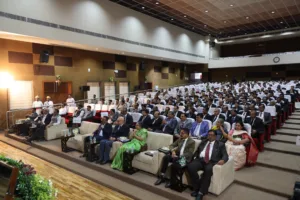
Held at the Dr A.P.J. Abdul Kalam Auditorium of the Judicial Academy, the consultation brought together judges, judicial officers, government and police officials, members of Juvenile Justice Boards and Child Welfare Committees, child rights experts and other stakeholders to assess the implementation of the Act over the past 10 years and chart the way forward.
Justice Sonak stresses child restoration and mentorship
The programme was inaugurated by Chief Justice of the Jharkhand High Court Justice Mahesh Sharadchandra Sonak, along with Justice Sujit Narayan Prasad, Judge and Chairperson of the JJ-cum-POCSO Committee.
Justice Sonak described the Juvenile Justice Act as a framework of trust that is essential for building a compassionate society. He emphasised the need for careful and coordinated efforts in child restoration and mentorship, stressing that protecting and preparing children is essential to building a developed India.

He also invoked the thoughts of Wordsworth and Roosevelt to underline the enduring importance of children as the foundation of society and the collective responsibility to prepare them for the future.
Focus on rehabilitation instead of punishment
Justice Sujit Narayan Prasad highlighted that the Juvenile Justice Act, 2015 prioritises reform, rehabilitation and vocational training over punishment.
He pointed to continuing challenges, including child-on-child offences and inadequate infrastructure, and called for faster disposal of cases and stronger Juvenile Justice Boards and Child Welfare Committees.

Justice Prasad, who is also the Executive Chairman of the Jharkhand State Legal Services Authority (JHALSA), stressed the need to make the juvenile justice system more responsive to the needs of children.
UNICEF stresses reaching vulnerable children
Dr Kaninika Mitra, Chief of Field Office, UNICEF Jharkhand, emphasised the need to reach children in vulnerable communities and involve children in decisions concerning them.
She called for identification of gaps in the existing child protection system and stronger linkages between Child Welfare Committees and Panchayati Raj institutions.
The next decade, she said, must focus on ensuring that the system works for every child, reaches the most vulnerable and helps children return to mainstream society.
Experts identify gaps in child protection system
Three thematic sessions were held during the consultation under the chairmanship of Justice Sujit Narayan Prasad, Justice Anubha Rawat Choudhary and Justice Sanjay Prasad.
Experts including Bharati Ali, Child Rights Expert; Dr Onkar Nath Tiwari, retired Professor of Law, GLA University, Mathura; Bijay Kumar Sinha, Director, JSCPS; Y.S. Ramesh, DIG, SCRB; Ranjana Asthana, Member Secretary, JHALSA; Shashi Ranjan, State Project Director, JEPC; Prof. Dr Amool Ranjan Singh, Head of the Department of Clinical Psychology, RINPAS; Ananya Mittal, CEO, JSLPS; Utkarsh Singh, Solution Architect, NIC, Ministry of Women and Child Development, Government of India; and Priti Srivastava, Child Protection Specialist, UNICEF Jharkhand, shared their expertise.
The discussions focused on effective monitoring and assessment, child-friendly policing and legal services, education and reintegration, health and psychosocial support, family- and community-based care, and stronger data management through the Mission Vatsalya Portal.
Participants also stressed the need for greater coordination, accountability and convergence among different agencies dealing with children.
Children’s performance highlights need for action
A skit followed by a musical presentation by children under the guidance of the Ashiyana Foundation was among the highlights of the consultation.
The performance brought the issues surrounding child protection to the centre of the programme and reinforced the need to bridge the gap between the principles of the Juvenile Justice Act and their implementation on the ground.
Publication on decade of JJ Act released
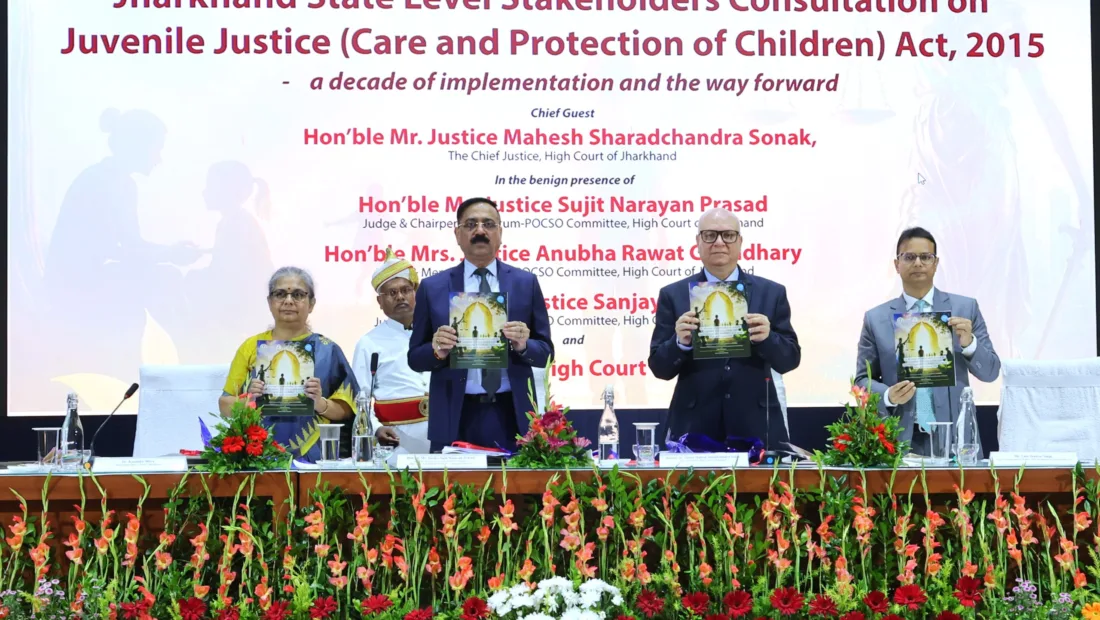
During the programme, the dignitaries released “A Decade of Implementation of the Juvenile Justice (Care and Protection of Children) Act, 2015 and the Way Forward.”
The publication showcases the progress made across relevant departments during the past decade and identifies areas requiring greater attention in the years ahead.
The consultation concluded with an emphasis on building a child-centric, rights-based and rehabilitation-oriented juvenile justice system, with stronger institutional coordination and accountability to ensure that children receive timely protection, care, rehabilitation and opportunities for reintegration.