Jharkhand HoFF Sanjeev Kumar calls for ‘Haryali and Khushhali Together’
Daltonganj, April 24: Jharkhand’s Principal Chief Conservator of Forests and Head of Forest Force (HoFF), Sanjeev Kumar, has emphasised that “hariyali…
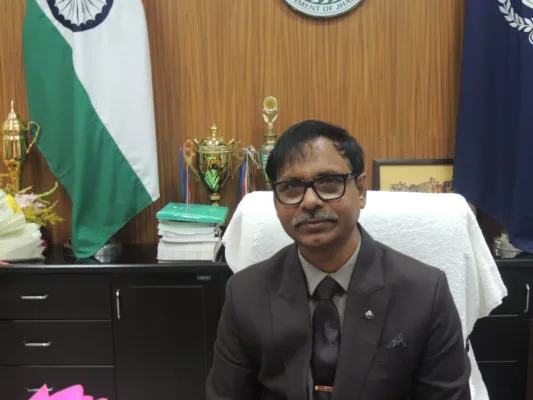
Principal Chief Conservator of Forests and Head of Forest Force Sanjeev Kumar (file photo)
Daltonganj, April 24: Jharkhand’s Principal Chief Conservator of Forests and Head of Forest Force (HoFF), Sanjeev Kumar, has emphasised that “hariyali (greenery) and khushhali (prosperity) must go together,” underlining the need to link afforestation with livelihood generation.
He said that while large-scale plantation drives are important, they must also support local livelihoods. He recommended planting trees such as Mahua, Arjun, Aasan, and Kusum, which provide economic benefits to communities.
Highlighting ongoing efforts, Kumar said the state forest department undertakes 1 to 2 crore plantations annually and constructs around 1,000 check dams. However, he cautioned that these measures alone are insufficient without active community involvement in forest conservation.
Community Participation and River Rejuvenation Key
On water conservation, the HoFF noted that Jharkhand is home to the origin of several major rivers, including Subarnarekha, Damodar, North Koyel, Barakar, Sankh, Mayurkashi, Kharkai, and Brahmani. Rejuvenating these rivers could yield significant environmental and economic benefits, he said.
Kumar also stressed the cultural and ecological importance of forests, describing them as sacred living entities essential for human survival. He added that Indian traditions—from Vedic to tribal—are deeply intertwined with forests and cannot be separated.

Climate Change a Growing Threat
Addressing climate change, he warned that rising global temperatures pose a serious threat. Referring to the 1.5°C global warming target, he said failure to achieve it could push the world toward disaster. He also pointed out that India is becoming increasingly vulnerable, with frequent heatwaves and heavy rainfall predicted by the meteorological department.
Meanwhile, a brief interaction with college students, particularly those in the botany and geology streams, revealed a lack of awareness of Earth Day and its 2026 theme, “Our Power, Our Planet.”
One student remarked that International Women’s Day receives more attention, often driven by political narratives rather than genuine empowerment.

Earth Day passed largely unnoticed in the region, with only a few private schools organising limited activities.
Responding to this, Kumar said, “Environmental protection is our everyday responsibility. Earth Day is only a symbolic occasion to re-energise and remind ourselves to keep the Earth safe and livable.”