Linseed and safflower, which have medicinal value, are crops of future: ICAR Director General
THE JHARKHAND STORY NETWORK Advertisement Ranchi, Sept 10: Linseed and safflower are the crops of future and need to be made…
THE JHARKHAND STORY NETWORK

Ranchi, Sept 10: Linseed and safflower are the crops of future and need to be made glamorous because they not only fill the belly but also have immense health benefits, said Dr ML Jat, Director General of the Indian Council of Agricultural Research (ICAR).
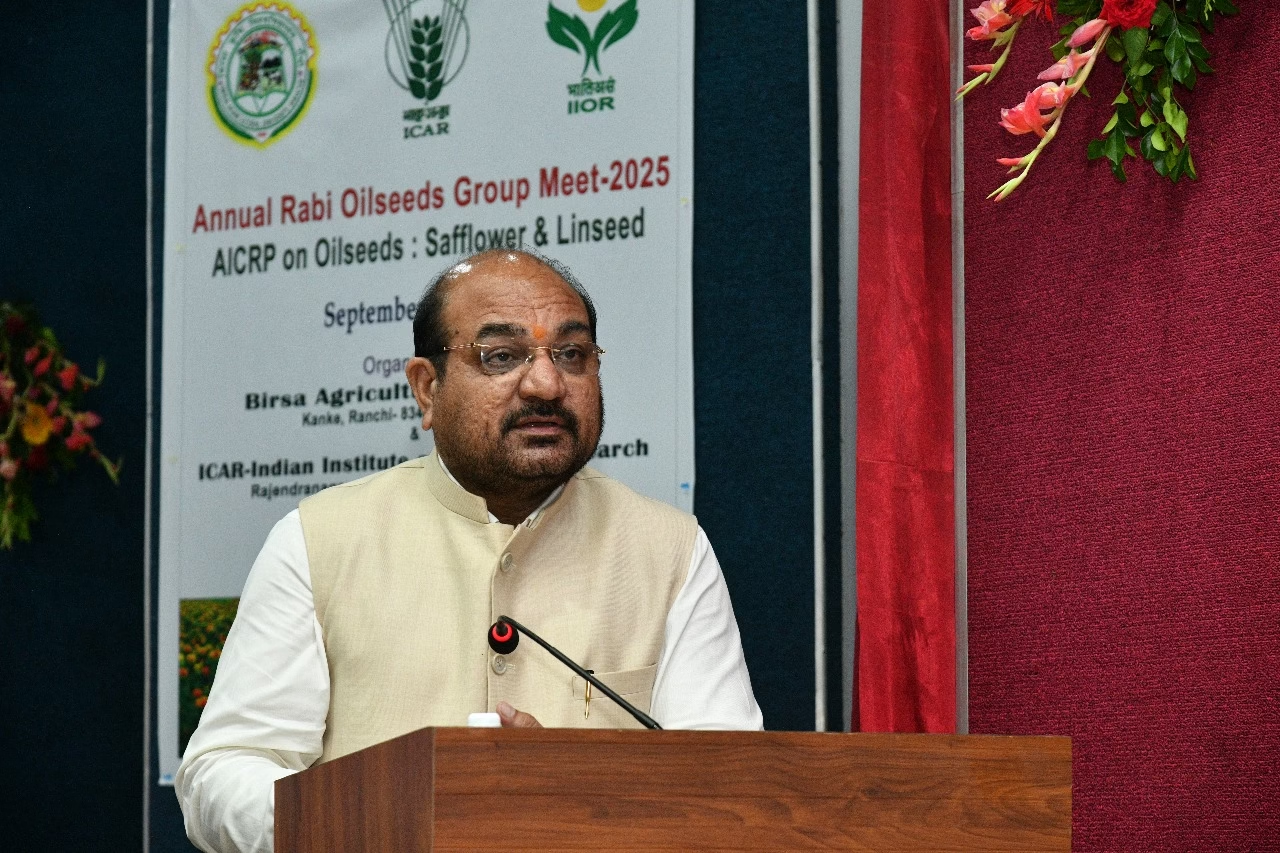
Addressing the plenary session of the two-day Annual Rabi Oilseeds Group Meet- 2025 at Birsa Agricultural University (BAU) on Wednesday, he said small crops like linseed and safflower can play big role as they have the potential to counter the challenges posed to health by glamorous and fancy crops.
“It has been part of local food system for a long. These days, everything is driven by money, profit and economic competitiveness, but everything does not work everywhere. A sizable part of the country’s 12 million hectare rice fallow area, mainly in Bihar, West Bengal, Odisha and Assam can be brought under this crop by sustainable intensification as these crops are climate resilient and require low input and water,” the ICAR Director General said.
Also Read- Union Cabinet approves two major connectivity projects for Bihar
“Average productivity of linseed in the country is around 633 kg per hectare but average productivity under front line demonstrations across the states has been reported 1000 kg. The yield harvested under research experiments indicate that productivity can be increased up to 2 tonnes with use of quality seed, proper management practices, required infrastructure and policy support. Need of the hour is to raise the morale of the scientists and farmers associated with these crops. If one’s morale is high, he/ she can do anything and everything”, Dr Jat asserted.
Prior to taking over as ICAR DG in April this year, Dr ML Jat had served the world’s leading research and development institutions like ICRISAT, CIMMYT, CGIAR, United Nation’s FAO, ISPA etc in leadership roles.
Dr DK Yadava, DDG (Crop Science), ICAR, said not only productivity but oil content, quality of oil, fibre quality and dual-purpose utility should also be taken into consideration while intensifying research efforts on these crops.

BAU Vice Chancellor Dr SC Dubey, ADG (Oilseeds & Pulses) Dr Sanjeev Gupta and Director of Indian Institute of Pulses Research, Hyderabad Dr RK Mathur dwelt on the present scenario and challenges of these crops. Director Research Dr PK Singh proposed a vote of thanks.
Also Read- Anatomy of Manatu encounter: How much clinical, how far prejudicial?
For linseed, the workshop recommended streamlining of wilt screening under disease nurseries and wilt sick plot, strengthening of national crossing programme for specific traits, evaluation of reference germplasm set for anti-nutritional compounds (Phytic acid etc), and identification of specific biochemical markers for budfly resistance and exploring prototypes for fibre extraction and intensifying assessment of fibre quality.
In safflower, strengthening of the national crossing programme for target traits, initiating population improvement programme and developing a model safflower village with self-sustaining seed system, demonstrations of the best technologies and value addition were recommended.