






THE JHARKHAND STORY DESK
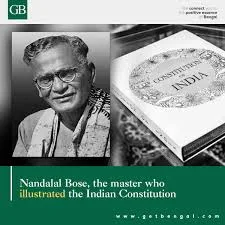
New Delhi, April 6: The Supreme Court has allowed the 88-year-old grandson of noted artist Nandalal Bose, who illustrated the Indian Constitution, to approach an appellate tribunal after his name was deleted from the electoral roll during the Special Intensive Revision (SIR) in West Bengal.
A bench comprising Chief Justice of India Surya Kant and Justices Joymalya Bagchi and Vipul Pancholi was informed about the matter by Senior Advocate Jaideep Gupta, appearing for the applicant.

The court directed that the tribunal should decide the matter expeditiously. Senior Advocate Dama Seshadri Naidu, representing the Election Commission of India (ECI), assured that necessary assistance would be provided to facilitate the process.
The court had earlier allowed Congress candidate Mohtab Sheikh, whose name was also deleted from the rolls, to approach the tribunal. Reports indicate that his appeal has since been allowed.
Guidelines for Appellate Tribunals
Hearing petitions related to the SIR exercise, the Supreme Court also issued directions to streamline the functioning of appellate tribunals handling voter roll disputes in West Bengal.
ALSO READ: BJP’s Jharkhand drift: Time for introspection, not celebration
The bench emphasised the need for uniform procedures, proper infrastructure, and speedy disposal of appeals. It noted that 19 tribunals, headed by former Chief Justices and senior judges, have been constituted for this purpose.
The court said grievances related to deletion or inclusion of names — including lack of reasons for rejection — should be raised before these tribunals. It also asked tribunals to examine the full records and arrive at independent conclusions.
To ensure consistency, the court requested the Chief Justice of the Calcutta High Court to form a committee of three former senior judges to lay down a uniform procedure for all tribunals. The committee has been asked to submit its framework promptly.
The court further noted that infrastructure for the tribunals is in place and directed that honorarium for former judges heading them be paid without delay. For offline appeals, it said receipts should be issued through the District Magistrate’s office, with nodal officers available at designated centres.