

• Latest
Waqf is a form of donation, not mandatory Islamic practice: Centre tells SC

Waqf is a form of donation, not mandatory Islamic practice: Centre tells SC

21 May 2025
Jharkhand assembly

Security, teacher recruitment, and civic issues raised in Jharkhand Assembly

9 March 2026
IIT-ISM Dhanbad trains tribal women in millet farming

IIT-ISM Dhanbad trains tribal women in millet farming

9 March 2026
Jharkhand HC summons home secretary, seeks guidelines for Nomadic groups

Jharkhand HC defers JNAC illegal construction case as SC stay continues

9 March 2026
Jharkhand Cabinet forms displacement commission, clears 66 proposals

15 Jharkhand State civil service officers promoted to IAS

9 March 2026
Noted English Professor S C Mishra passes away in Daltonganj

Noted English Professor S C Mishra passes away in Daltonganj

9 March 2026
Jharkhand HC summons home secretary, seeks guidelines for Nomadic groups

Jharkhand HC grants bail to gangster Aman Srivastava in UAPA Case

9 March 2026
The Jharkhand Story
  • Privacy Policy
  • Terms & Conditions
  • Advertise with us
  • About Editor
  • About Us
  • Contact
Tuesday, March 10, 2026
  • Home
  • Election
  • Politics
  • Judiciary
  • Governance
  • Crime
  • Industries & Mining
  • Health
  • Tribal Issues
  • Education
  • Sports
  • More
    • Life Style
    • Jobs & Careers
    • Tourism
    • Opinion
    • Development Story
    • Science & Tech
    • Climate & Wildlife
    • Corruption
    • News Diary
No Result
View All Result
The Jharkhand Story
No Result
View All Result
Home Breaking

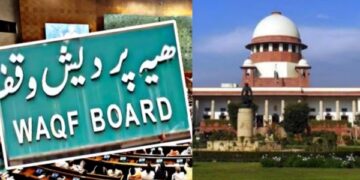
Waqf is a form of donation, not mandatory Islamic practice: Centre tells SC

Jharkhand Story by Jharkhand Story
21 May 2025
in Breaking, Governance, Judiciary
Waqf is a form of donation, not mandatory Islamic practice: Centre tells SC
Share on FacebookShare on Twitter

THE JHARKHAND STORY DESK


New Delhi, May 21: The Central government on Wednesday told the Supreme Court that Waqf is not an essential practice of Islam but merely a form of charitable donation, which exists in other religions as well.

Representing the Centre, Solicitor General Tushar Mehta argued that Waqf Boards perform secular functions and can be managed by individuals from any community. He emphasized that, unlike temples which are purely religious institutions, Waqf Boards operate beyond religious boundaries.

Waqf Not Mandatory in Islam

Mehta, addressing a bench comprising Chief Justice B.R. Gavai and Justice Augustine George Masih, stated that while waqf may be an Islamic concept, it is not mandatory under Islam.

He stressed that the idea of donation is common across faiths—be it Hinduism, Sikhism, or Christianity—and reiterated that the functioning of Waqf Boards is secular in nature.

Also Read- Jharkhand ACB files FIR against ex-excise secretary, commissioner in liquor scam

Centre Defends Amendments to Waqf Law

Defending the recent amendments to the Waqf Act, the Centre said these changes aim to resolve long-standing issues that remained unaddressed during both colonial rule and post-Independence governance.

The government noted that it is trying to solve a problem pending since 1923, which has seen 36 joint parliamentary committee meetings and received 96 lakh responses.

‘Waqf-by-User’ Not a Fundamental Right

The Centre also justified the removal of the “waqf-by-user” provision, which allowed land to be declared waqf solely on the basis of religious use without valid documentation.

Mehta clarified that no one can claim ownership of government land and that waqf-by-user is not a fundamental right. Now, only registered waqf claims and pre-designated properties will be considered.

SC Says Strong Case Needed for Interim Relief

During Tuesday’s hearing, when senior advocate Kapil Sibal began arguments for the petitioners, Chief Justice Gavai remarked that every law is presumed constitutional. He added that a strong case must be presented for the court to consider granting interim relief.

Also Read- Jharkhand News: Fake Facebook profile created in name of East Singhbhum DC

Centre Seeks to Narrow Scope of Hearing

The Centre requested the Supreme Court to confine the scope of the hearing to three key issues: the validity of waqf-by-user, the appointment of non-Muslim members to Waqf Boards, and the identification of government land as waqf.

However, petitioners have urged the court to approach the case with a broader constitutional perspective and examine all related aspects.

Tags: Central GovtSolicitor General Tushar MehtaSupreme CourtWaqf (Amendment) Act
ShareTweetShareSendSendShare
Next Post
CJI-appointed Supreme Court team probes Justice Yashwant Varma’s residence

Supreme Court refuses to entertain plea for FIR against Justice Yashwant Varma

  • Privacy Policy
  • Terms & Conditions
  • Advertise with us
  • About Editor
  • About Us
  • Contact
Mail us : thejharkhandstory@gmail.com

© 2025 The Jharkhand Story

No Result
View All Result
  • Home
  • Election
  • Politics
  • Judiciary
  • Governance
  • Crime
  • Industries & Mining
  • Health
  • Tribal Issues
  • Education
  • Sports
  • More
    • Life Style
    • Jobs & Careers
    • Tourism
    • Opinion
    • Development Story
    • Science & Tech
    • Climate & Wildlife
    • Corruption
    • News Diary