5 children contract HIV after blood transfusions at Jharkhand hospital; HC orders probe
PINAKI MAJUMDAR Jamshedpur, Oct 26: A shocking Jharkhand hospital HIV case has rocked the state’s healthcare system after five children, including a seven-year-old boy,…
PINAKI MAJUMDAR
Jamshedpur, Oct 26: A shocking Jharkhand hospital HIV case has rocked the state’s healthcare system after five children, including a seven-year-old boy, were found to have contracted HIV following blood transfusions at Sadar Hospital in Chaibasa, West Singhbhum district.
What began as a single suspected infected blood transfusion has spiralled into a full-blown public health crisis, raising urgent questions about blood safety in India and the effectiveness of government oversight in rural hospitals.
Taking suo motu cognisance of the incident, the Jharkhand High Court has ordered an urgent probe into the Chaibasa hospital HIV scandal and sought a detailed report from the state health department. The court has directed officials to take strict accountability measures and prevent any further lapses.
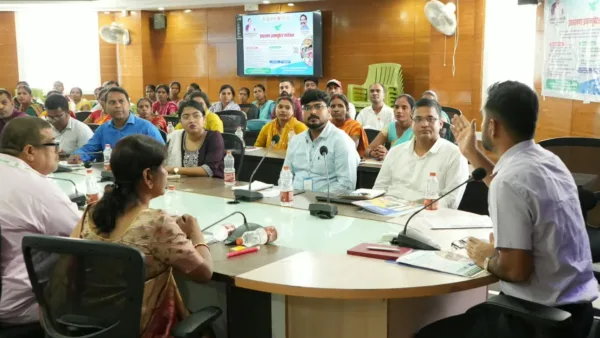
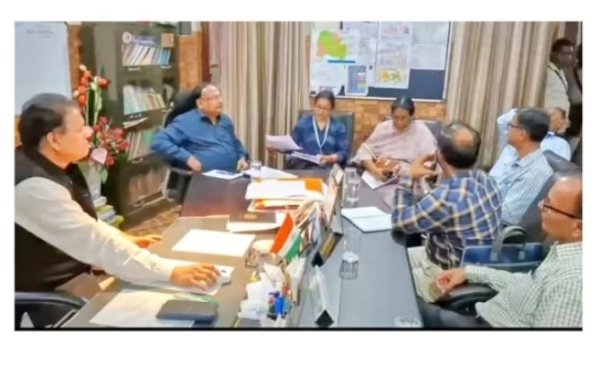
Following the court’s directive, a high-level medical investigation team from Ranchi visited Chaibasa on Saturday to inspect the hospital’s blood bank and related facilities.

Five Thalassemia Patients Test HIV-Positive
During the inspection, the Ranchi medical team discovered that five children suffering from thalassemia, a condition requiring regular blood transfusions, had tested HIV-positive.
Initially, only one infection was confirmed, but four more cases surfaced as further screening continued. Officials have warned that the number could increase as more samples are tested.
Grave Lapses in Blood Screening
According to the investigation team led by Dr. Dinesh Kumar, Director of Health Services, serious irregularities were uncovered in blood screening procedures and quality control at the Chaibasa blood bank.
Preliminary findings indicate that poor testing protocols, lack of supervision, and procedural negligence may have allowed contaminated blood to be used for transfusions — a failure that has endangered several young lives.

“This situation is deeply alarming,” Dr. Kumar said. “Critical deficiencies have been identified, and the hospital has one week to correct them. A full report will be submitted to the top health authorities for immediate action.”
Blood Bank Under Emergency Restrictions
In response, the Chaibasa blood bank has been directed to operate on an emergency-only basis while corrective steps are implemented. The inspection team included Dr. Dinesh Kumar, Dr. Shipra Das, Dr. S.S. Paswan, Dr. Bhagat, and West Singhbhum Civil Surgeon Dr. Sushanto Kumar Manjhi.
Public Outrage and Demands for Accountability
The medical negligence in Jharkhand has sparked widespread anger across local communities. Public health experts have labelled it one of the most serious blood safety failures in India in recent years.
Civil society groups, child rights advocates, and health professionals have demanded strict punishment for those responsible and a statewide review of blood safety protocols in all government hospitals.
Experts emphasise that every unit of blood must be mandatorily screened for HIV, Hepatitis B, and Hepatitis C before transfusion — a safeguard that appears to have been compromised in this case.
As the Jharkhand High Court probe continues, this tragedy serves as a stark reminder of the fragile healthcare infrastructure and systemic negligence that persist in many parts of rural India.