Certified seeds key to combating viral plant diseases, says expert at BAU lecture
THE JHARKHAND STORY NETWORK Ranchi, April 27: Highlighting the vital role of quality inputs in agriculture, Dr VK Baranwal, National…
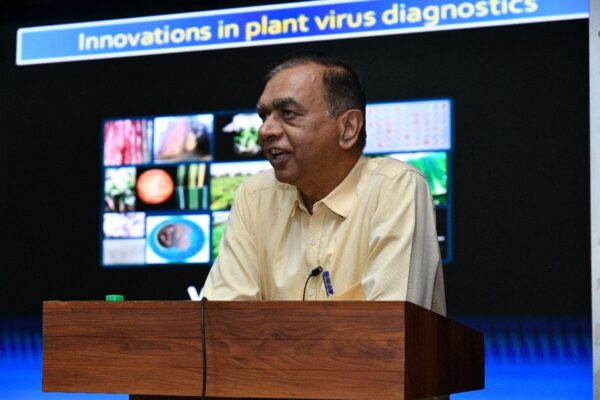
Dr VK Baranwal
THE JHARKHAND STORY NETWORK
Ranchi, April 27: Highlighting the vital role of quality inputs in agriculture, Dr VK Baranwal, National Professor at the Division of Plant Pathology, Indian Agricultural Research Institute (IARI), New Delhi, emphasised the use of certified seeds and planting materials to curb the spread of seed-borne viruses and boost productivity.
Delivering an invited lecture on ‘Diagnosis and Management of Viral Diseases Using Modern Diagnostics’ at Birsa Agricultural University (BAU) on Saturday evening, Dr Baranwal underscored that prevention is always preferable to cure, especially in managing plant viruses.
Modern Tools for Virus Screening
Dr Baranwal stressed the importance of employing advanced tools and techniques for virus screening. He pointed out that seed treatment and mulching are effective methods to control viruses and airborne insect vectors, particularly in vegetable crops, where high temperatures alone cannot suppress viral activity.

He revealed that research institutes worldwide have recognised over 10,000 viruses, with approximately 4,000 identified as plant viruses. These pathogens are transmitted both horizontally and vertically, often hitching a ride via seeds, propagation material, and insect vectors. Contact-transmitted viruses, such as the devastating tobacco mosaic virus, continue to pose significant challenges for farmers.
Advances in Diagnosis and Management
Dr Baranwal outlined major innovations and persistent challenges in plant virus diagnostics, discussing various methods used for detection and the etiology of emerging rice diseases. Among the breakthrough diagnostic tools developed over the last five decades are Enzyme-Linked Immunosorbent Assay (ELISA) and Polymerase Chain Reaction (PCR), both crucial for the routine analysis and detection of single or multiple viral species.

He noted that while plants can suffer from multiple viral infections, these viruses do not transmit to humans. Sequencing technologies, he added, are now the ultimate tool for detecting and characterising both known and unknown viruses.
The Global and National Response
Comparing global practices, Dr Baranwal cited the United States’ stringent laws on plant virus management, where even a single infected sample in a lot of 3,000 leads to the rejection of the entire consignment. He stressed that any diagnostic programme must be underpinned by robust infrastructure and highly trained personnel to be successful.
In India, the government has allocated ₹1,800 crore in the current financial year towards the Clean Plant Programme. The Advanced Centre for Plant Virology in New Delhi is spearheading coordination and management efforts under this initiative, Dr Baranwal added.
The event was chaired by BAU Vice-Chancellor Dr SC Dubey, who lauded the insights shared during the session.