
Forest lease rights behind rising human-elephant conflict in Jharkhand
Jamshedpur, March 3: The allotment of forest lease rights (Van Patta/Forest Rights) to traditional forest dwellers is emerging as a major…
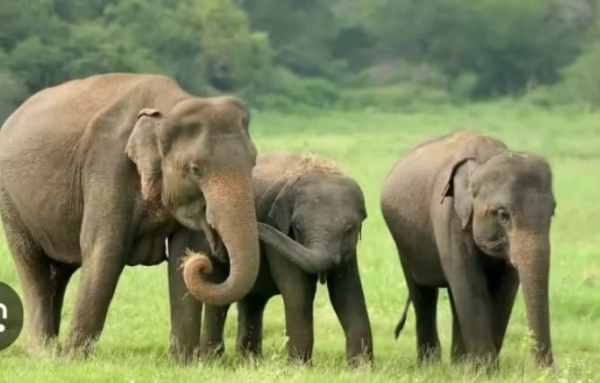
Jamshedpur, March 3: The allotment of forest lease rights (Van Patta/Forest Rights) to traditional forest dwellers is emerging as a major reason behind the rising human-elephant conflict and trampling deaths in Jharkhand.
Under the existing system, forest lease rights are allotted to those who have been using forest land for earning their livelihood. As more and more traditional forest dwellers (TFDs) apply for Ban Patta, the authorities concerned continue to distribute forest rights even in the face of diminishing forest cover.
What makes the matter more concerning is that in several districts, TFDs create cultivable land by resorting to tree-felling. Worse, neither the forest department nor any political party nor the local bodies oppose the destruction of forests.
As a result of the forest cover getting thinner continuously, wild animals, especially elephants, are falling victim to this situation.
Elephants Straying, Casualties Rising
With insufficient food and shelter in their natural habitat, wild elephants tend to stray into human habitations or become increasingly aggressive within forest limits. This has led to loss of human lives as well as destruction of kaccha houses and crops.

In recent months, 27 people, including children, have been trampled to death by wild elephants in Jharkhand. Significantly, 20 of these deaths occurred in West Singhbhum district alone.
In view of the rising trampling deaths, Chief Minister Hemant Soren stated that he has zero tolerance so far as trampling deaths are concerned. He also instructed forest department officials to ensure that elephant movement is restricted to forest areas only. However, ironically, such a grave situation involving the Ban Patta practice appears to have slipped off his mind.
Forest Rights Act and Vote Bank Politics
Undoubtedly, the Ban Patta practice and the unabated, systematic tree-felling are linked to vote bank politics. This is the reason political parties as well as the forest department, remain tight-lipped over the situation, allowing TFDs to create more and more cultivable land inside forests.

The Forest Rights Act, 2006, which became effective in 2008, provides for the allotment of Ban Patta to traditional forest dwellers, generally tribals, to obtain forest land for cultivation. As per the Act, any individual forest dweller is entitled to apply for forest land if he or she had been cultivating it till December 13, 2005.
Applications for Ban Patta are approved by the district-level committee after passing through the sub-divisional committee and the Gram Sabha (village council).
At present, over 10,000 applications for forest rights are pending at different levels. These applications are subject to scrutiny even though wild elephants are compelled to survive within the dwindling forest cover.