
Jharkhand HC grants bail to gangster Aman Srivastava in UAPA Case
Ranchi, March 9: The Jharkhand High Court on Monday granted bail to Aman Srivastava, an alleged gang leader accused of running…
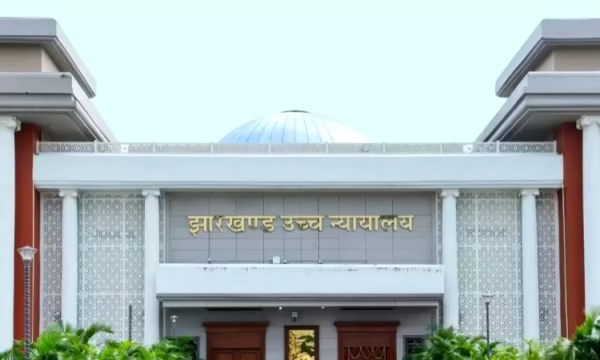
Ranchi, March 9: The Jharkhand High Court on Monday granted bail to Aman Srivastava, an alleged gang leader accused of running an extortion network linked to coal traders and contractors in Jharkhand.

A division bench comprising Justice Rongon Mukhopadhyay and Justice Pradeep Kumar Srivastava allowed the criminal appeal. It set aside the earlier order of the Special Judge, CID/ATS, Ranchi, which had rejected his bail plea in December 2025.
Allegations under IPC and UAPA
The case stems from ATS Police Station Case No. 10/2023, in which investigators claimed members of the Aman Srivastava gang were transporting extortion money collected from traders and contractors.
According to the prosecution, a Scorpio vehicle was intercepted in Ranchi in July 2023, leading to the arrest of two alleged associates. During the search, police recovered ₹49.83 lakh in cash, which was suspected to be extortion money.
The case was registered under Sections 385, 386 and 34 of the IPC, along with Sections 16, 17, 20 and 21 of the Unlawful Activities (Prevention) Act (UAPA).

Court notes weak direct evidence
The High Court observed that Aman Srivastava was not present at the spot when the arrests and cash recovery were made. The bench also noted that the primary evidence linking him to the case consisted mainly of confessional statements by co-accused persons.
The judges said the appellant’s role appeared to be based on “vague and unsubstantiated assertions”, distinguishing his case from other accused who were directly apprehended with the recovered cash.
Bail granted with conditions
Taking note of the fact that Srivastava has been in custody since August 11, 2023, and that some witnesses are still yet to be examined, the court allowed the appeal.

The High Court directed that Aman Srivastava be released on bail on furnishing a bond of ₹10,000 with two sureties, and ordered him to remain present before the trial court on every hearing date unless exempted for valid reasons.
The bench also clarified that the observations made in the order should not influence the ongoing trial.