JPSC-JSSC protest: Students reach assembly gate no. 1 despite lathi-charge, tear gas; Khiangte arrest fails to dampen agitation
SUMAN K SHRIVASTAVA Ranchi, August 10: Jharkhand witnessed an unprecedented show of student anger on Monday as thousands of JPSC and JSSC…
SUMAN K SHRIVASTAVA
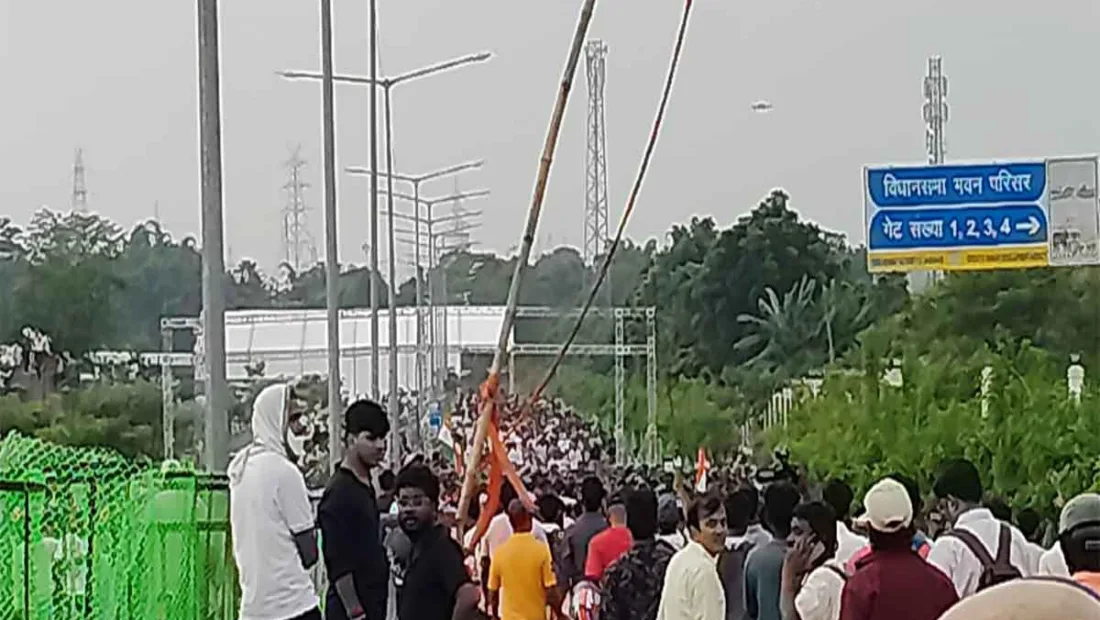
Ranchi, August 10: Jharkhand witnessed an unprecedented show of student anger on Monday as thousands of JPSC and JSSC aspirants marched towards the state Assembly, breached multiple layers of barricading and reached Gate No. 1 for the first time in the history of the ongoing agitation. Even as police fired tear gas shells, used water cannons and resorted to lathi-charge to stop them, the protesters refused to retreat and continued raising slogans, eventually camping near the Assembly premises.
The intensity of the mobilisation was evident from the sheer number of students who poured into Ranchi from across the state. Carrying the Tricolour, posters and banners, aspirants from different districts converged on the capital and marched towards the Assembly, turning their long-running agitation over alleged irregularities, paper leaks and lack of transparency in recruitment examinations into one of the most significant student protests Jharkhand has witnessed in recent years.
Khiangte Arrest Comes as Students Move Towards Assembly
In a development that added another dramatic dimension to the agitation, the CID arrested former JPSC chairman L. Khiangte on Monday in connection with alleged irregularities in recruitment examinations. The arrest came on the very day thousands of students were marching towards the Assembly and after weeks of mounting pressure on the government.
The timing of the arrest inevitably fuelled speculation that the government and investigating agencies were attempting to take some of the heat out of the agitation by acting against one of the senior-most officials associated with the commission. But if the objective was to weaken the intensity of the movement, the events on the ground suggested otherwise.
Far from being deterred, the students pushed forward.

Lathis, Tear Gas and Water Cannons Fail to Break Students’ Resolve
The administration had erected multiple layers of barricades and deployed a large police contingent to prevent the protesters from reaching the Assembly. But the students repeatedly broke through the barriers.
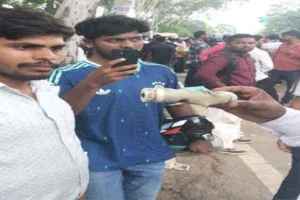
At Yogda College, protesters reportedly dismantled seven to eight barricades before resuming their march. As they advanced towards the Assembly, police used water cannons and subsequently resorted to tear gas and lathi-charge. Several students were reportedly injured, including one who suffered a minor head injury and had his wound bandaged with a gamchha by fellow protesters.

Yet the protest did not collapse.
Students continued to raise slogans and regrouped after every confrontation. Some even stood in front of the water cannons rather than retreating, turning what was intended to be a dispersal operation into another display of defiance.
Discipline Stands Out Amid Confrontation
What has particularly stood out in Ranchi is the discipline maintained by a large section of the protesting students despite the increasingly tense situation.
The contrast with the kind of scenes witnessed during several high-profile student protests elsewhere, including at Delhi’s Jantar Mantar, was striking. In Ranchi, even when confronted with lathi-charge, tear gas and water cannons, thousands of aspirants largely remained focused on their central demand—accountability and reform in the recruitment system.
There were reports of stone-pelting and injuries to police personnel during the clashes, and some protesters were accused of assaulting policemen. But the broader mobilisation remained overwhelmingly centred on reaching the Assembly and making the students’ demands heard.
For the First Time, Protesters Reach Assembly Gate No. 1
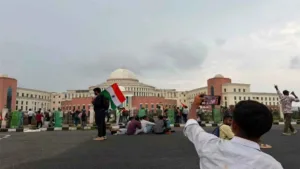
The biggest symbolic breakthrough for the protesters came when they reached Gate No. 1 of the Jharkhand Assembly.
This is the first time in Jharkhand that students have managed to reach the Assembly gate in such large numbers despite an unprecedented security cordon. The administration had imposed restrictions around the Assembly and erected extensive barricading to prevent the protesters from entering the high-security zone.
The students are now camping near the Assembly, with large numbers continuing to remain at the site. A section of the protesters began a sit-in on the road following an appeal by JLKM leader Jairam Mahto, while others remained seated along the roadside.
For a movement that began with demands related to recruitment examinations, the sight of thousands of young aspirants camping outside the state legislature has acquired a larger political significance.
Three Rounds of Talks Fail to End Agitation
Monday’s confrontation came after three rounds of talks between student representatives and the government failed to produce a breakthrough.
The government has maintained that it has accepted around 98 per cent of the students’ demands and has urged them to withdraw the agitation. The protesters, however, say their key demands remain unresolved, particularly their demand for a CBI investigation into alleged irregularities and paper leaks.
Students have also questioned the government’s proposal to cancel only a limited number of examinations, maintaining that their demand covers a wider set of recruitment tests.
The agitation has now entered its 17th day, with several students continuing their hunger strike.
A State With a Long History of Movements Sees a New Wave of Anger
The intensity of the current agitation carries particular significance in Jharkhand, a state whose political history is deeply intertwined with long struggles and mass movements for a separate identity and statehood.
For a generation of young people preparing for government jobs, however, that history has acquired a new dimension. Repeated allegations of paper leaks, examination irregularities and manipulation of recruitment processes have fuelled a growing perception among aspirants that government jobs—the primary source of secure employment for many young people—are being compromised or even allegedly “auctioned”.
For students who spend years preparing for competitive examinations, a leaked paper or a compromised recruitment process is not merely an administrative lapse. It can mean losing years of preparation, money and opportunity.
That accumulated frustration appears to have transformed the JPSC-JSSC agitation from a conventional recruitment protest into a much broader expression of anger among Jharkhand’s youth.
Government Under Mounting Pressure
The Assembly siege has now placed the Hemant Soren government under its most serious pressure yet on the recruitment issue. The arrest of the former JPSC chairman, the resignation of three JPSC members on Sunday and the continuing student agitation have pushed the controversy into a new phase.
The crucial question now is whether the government can find a political and administrative solution acceptable to the protesting students—or whether the unprecedented scenes outside the Assembly will mark the beginning of an even larger confrontation.
For now, the students have made their position unmistakably clear: they have reached the Assembly gate, and they are not ready to leave.