IIT (ISM) researchers develop eco-friendly sand substitute from fly ash and plastic waste
THE JHARKHAND STORY NETWORK Dhanbad, August 13: Researchers at IIT (ISM) Dhanbad, in collaboration with experts from Poland, have developed an eco-friendly…
THE JHARKHAND STORY NETWORK
Dhanbad, August 13: Researchers at IIT (ISM) Dhanbad, in collaboration with experts from Poland, have developed an eco-friendly alternative to natural sand used for backfilling underground mines by converting fly ash and plastic waste into a synthetic aggregate.

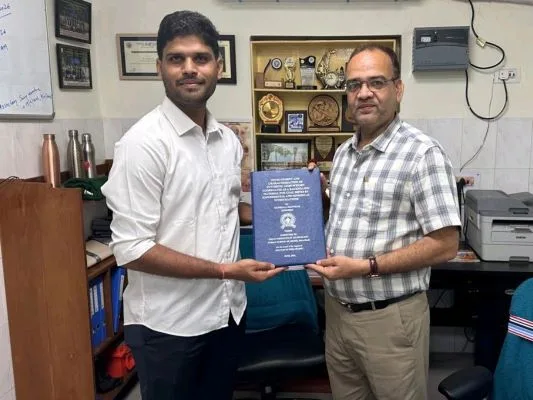
The research team, led by Prof. Bhanwar Singh Choudhary, Head of the Department of Mining Engineering at IIT (ISM) Dhanbad, developed the material as part of a Ministry of Coal-funded project. Research scholar Dr Munipala Manohar was also part of the team.
Fly ash and plastic waste turned into mining material
The research addresses two major challenges facing the mining industry: the growing shortage of natural sand and the increasing volume of fly ash and plastic waste.
Natural sand is widely used for filling voids in underground mines, but rising demand from the mining and construction sectors has put pressure on supplies. At the same time, fly ash generated by coal-based power plants and plastic waste, particularly high-density polyethylene (HDPE), pose significant environmental challenges.
To address both problems, the researchers developed Fly Ash–Plastic Aggregates (FPA) by thermally binding 80% fly ash with 20% HDPE waste.
“Instead of seeing waste as a burden, our goal was to turn it into a building block for sustainable mining,” Prof. Choudhary said.
FPA shows strong potential as sand substitute
Laboratory tests showed that FPA particles have characteristics similar to natural sand and performed well in several key areas.
The aggregates demonstrated high durability, good permeability and low specific gravity. Their low density could make them easier to transport through slurry pipelines during underground mine backfilling operations.

Microscopic analysis also showed that the FPA particles have a rough and angular surface. According to the researchers, this structure allows the particles to interlock more effectively, an important characteristic for backfill materials.
Mechanical testing further indicated that the material can withstand pressure and resist deformation. The aggregates recorded an internal friction angle of more than 40 degrees, indicating strong shear resistance and favourable geotechnical properties.
Potential use in hydraulic stowing
The researchers said the new material could potentially replace natural sand and unmodified fly ash in hydraulic stowing, a mining technique in which waste or other suitable materials are transported underground in slurry form to fill mined-out areas.
Backfilling helps support underground mine workings, improve stability and reduce the risk of ground movement.
The development could therefore offer a dual benefit: reducing dependence on natural sand while providing a productive use for industrial and plastic waste.
International collaboration strengthens research
The study was carried out in collaboration with researchers from Poland, including Dr Krzysztof Skrzypkowski of the Faculty of Civil Engineering and Resource Management, Mickiewicz University; Dr Kryzstof Zagorski of the Faculty of Mechanical Engineering and Robotics, AGH University of Krakow; and Dr Anna Zagorska of the Institute of Geological Sciences, Polish Academy of Sciences, Krakow.
The researchers believe the technology could contribute to more sustainable mining and waste-management practices by converting two problematic waste streams into a useful engineering material.
“This innovation has the potential to transform how we look at industrial byproducts,” Prof. Choudhary said. “What was once considered waste can now play a key role in sustainable mining and help protect our planet.”