Jairam Mahto-Police row: Is the abuse debate hiding the extortion question?
SUMAN K SHRIVASTAVA Ranchi, August 26: The escalating confrontation between Dumri MLA and Jharkhand Loktantrik Krantikari Morcha (JLKM) chief Jairam Mahto and…
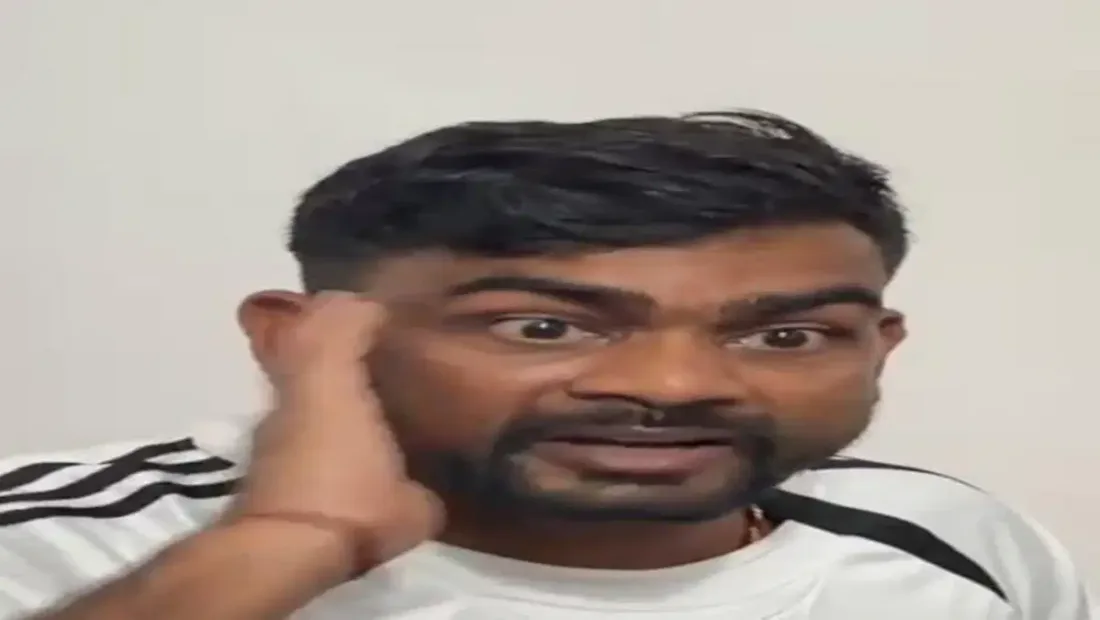
Jairam Mahto
SUMAN K SHRIVASTAVA
Ranchi, August 26: The escalating confrontation between Dumri MLA and Jharkhand Loktantrik Krantikari Morcha (JLKM) chief Jairam Mahto and Barwadda police station officer-in-charge Ravi Kumar has become a controversy about abusive language, political authority and the dignity of the police force.
A purported audio recording of a conversation between Mahto and Kumar has gone viral, with the MLA allegedly heard using abusive and objectionable language. The police officer subsequently lodged a complaint, while police associations have demanded action against the legislator and threatened agitation.
There is little room for ambiguity on one point: an elected representative cannot be given a licence to abuse, threaten or intimidate a police officer. If the allegations are established, Mahto should face the consequences prescribed by law.
But there is another question which risks disappearing beneath the uproar over the audio.
What about the allegations of illegal collections from sand-carrying vehicles?

That question has received far less attention.
From a police station dispute to a political storm
The controversy began with a dispute in the Badapichri Panchayat area under Barwadda police station.
A complaint was lodged by panchayat mukhiya Yashoda Devi alleging that her signature, seal and letterhead had been forged to obtain caste, residential and genealogical certificates. Police registered a case and detained a JLKM leader, Ganesh Das, for questioning.

Mahto subsequently reached the police station with supporters. Police alleged that the gathering created a disturbance and obstructed official work. FIRs followed, including one against Mahto and others. A separate complaint was lodged by the police station in-charge over the alleged abusive telephone conversation.
The controversy escalated further when the purported audio recording of Mahto’s conversation with Kumar surfaced on social media.
Mahto has disputed the version being circulated, claiming that the original conversation lasted around 11 minutes and that only selected portions were released. He has also alleged that the recording was edited or manipulated, including through artificial intelligence. No independent technical evidence establishing that claim has so far been made public.
ALSO READ: Ursuline Convent hosts eye donation drive in Ranchi, experts bust myths
Police association turns the issue into a question of dignity
The matter has now moved beyond Mahto and the individual officer.
The Jharkhand Police Association has demanded action against the MLA and threatened a statewide agitation, while the police men’s association has also sought an apology. The police side has alleged that Mahto threatened and abused the officer and that his supporters created a disturbance at the police station.
The police have a legitimate institutional interest in protecting their personnel from intimidation and abuse.
But institutional credibility does not come merely from demanding respect for police officers. It also depends on demonstrating that police personnel are themselves accountable when allegations of corruption, extortion or misuse of authority arise.
And this is where the present controversy gets complicated.
The allegation nobody wants to discuss
Mahto has alleged that illegal collections are being made from sand-laden vehicles passing through police station jurisdictions.
The allegation reported so far is that vehicles were being made to pay around ₹5,000 for passage through certain areas. These allegations have not been independently established and should not be treated as proven facts.
But according to Mahto’s version of the confrontation, the immediate dispute also involved an alleged demand of ₹30,000 per sand tractor rather than ₹5,000.
That ₹30,000 figure is an allegation by the MLA and requires independent verification. It should neither be accepted as fact nor dismissed merely because it emerged during a heated confrontation.
If such a demand was actually made, however, the matter would be far more serious than a political argument over an abusive phone call.
It would raise questions about who allegedly demanded the money, whether such collections are systematic, how many vehicles are affected, where the money goes and whether anyone higher up in the chain is aware of it.
Those are questions that can be answered only through an impartial investigation.
Abuse is visible. Extortion is harder to see
There is a peculiar imbalance in the current controversy.
The alleged abusive words are easily circulated. An audio clip can go viral within hours, prompting outrage, political statements and demands for action.
An alleged extortion mechanism, by contrast, is far more difficult to establish. It requires checking vehicle movements, statements of transporters and drivers, CCTV footage, phone records, financial trails and the functioning of checkpoints or police station jurisdictions.
That may explain why the language controversy has become the headline while the alleged illegal collection remains largely a footnote.
But the difficulty of proving corruption cannot become a reason for not investigating it.
If Mahto’s allegation is false, a credible investigation would establish that and remove the cloud over the police personnel concerned.
If it is true, those responsible should face criminal and departmental action.
Babulal Marandi raises the larger accountability question
Interestingly, Leader of Opposition Babulal Marandi has also questioned whether the debate should remain confined to the MLA’s alleged language.
While saying that both elected representatives and police officers should maintain courtesy and decorum, Marandi asked whether such standards should apply only to public representatives. He also questioned complaints of alleged misconduct by police personnel and the recording and circulation of a private conversation.
That is an important institutional question.
The police wield considerable authority over ordinary citizens. A truck driver, sand transporter or small trader confronted by a police officer is rarely in a position to challenge that authority on equal terms.
Therefore, allegations of unofficial payments or coercive collections deserve attention irrespective of who raises them.
Jairam Mahto’s politics thrives on confrontation
The personality of the MLA cannot be separated from the controversy.
Mahto’s political rise has been unusually rapid. He emerged from youth and language politics, became associated with the Jharkhandi Bhasha Sangharsh Samiti, and built a political identity around issues such as local employment, language, displacement, the 1932 Khatiyan issue and Jharkhandi identity. His JLKM eventually entered the Assembly in 2024, with Mahato winning the Dumri seat.
His politics has often depended on direct confrontation with the establishment.
That style has helped him cultivate a strong image among sections of young voters who see him as an outsider challenging an established political order. But it also carries a serious weakness: the manner of confrontation can overshadow the grievance itself.
The present episode illustrates that danger perfectly.
If Mahto has raised a genuine issue concerning illegal police collections, his alleged abusive language has made it easier for opponents to shift the discussion from the allegation to his conduct.
That does not make the language acceptable. It makes the political consequence of such language more significant.
Two separate issues must not become one
The current controversy should therefore be separated into two distinct questions.
First: Did Mahto abuse or threaten the police officer? Was the audio complete and authentic? What exactly happened inside the police station? These questions should be established through evidence, including the complete recording and available CCTV footage.
Second: Are police personnel illegally collecting money from sand-carrying vehicles? Was there ever a demand of ₹5,000—or, as Mahto alleges, ₹30,000 per tractor? If so, who was responsible?
One allegation does not cancel out the other.
A politician’s alleged misconduct cannot be used to bury a corruption allegation. At the same time, an allegation of police corruption cannot be used to excuse an elected representative’s alleged abuse.
Jharkhand needs accountability on both sides
The larger issue is not whether Jairam Mahato wins his political confrontation with the police.
The larger issue is whether Jharkhand’s institutions can investigate allegations against both the powerful politician and the powerful police establishment without fear or favour.
If Mahto is found to have abused or threatened an officer, the law should act.
If police personnel are found to have demanded illegal payments from sand vehicles, the law should act there too.
The police deserve respect. So does the citizen.
And in a democracy, accountability cannot become selective simply because one side happens to wear a uniform and the other carries an electoral mandate.
The present controversy should therefore move beyond the viral audio. Jharkhand does not need another political shouting match. It needs answers.