XLRI Jamshedpur hosts global publishing workshop for doctoral scholars
PINAKI MAJUMDAR JAMSHEDPUR, September 4: XLRI Jamshedpur hosted a two-day Journal of Management Studies (JMS) Publishing Workshop from August 31 to September…
PINAKI MAJUMDAR
JAMSHEDPUR, September 4: XLRI Jamshedpur hosted a two-day Journal of Management Studies (JMS) Publishing Workshop from August 31 to September 1, bringing together doctoral scholars, faculty members and members of the international academic community for discussions on scholarly publishing, research excellence and the evolving doctoral journey.
The workshop provided doctoral researchers with an opportunity to interact directly with members of the JMS editorial team and gain insights into publishing research in leading academic journals.
Experts share insights on academic publishing
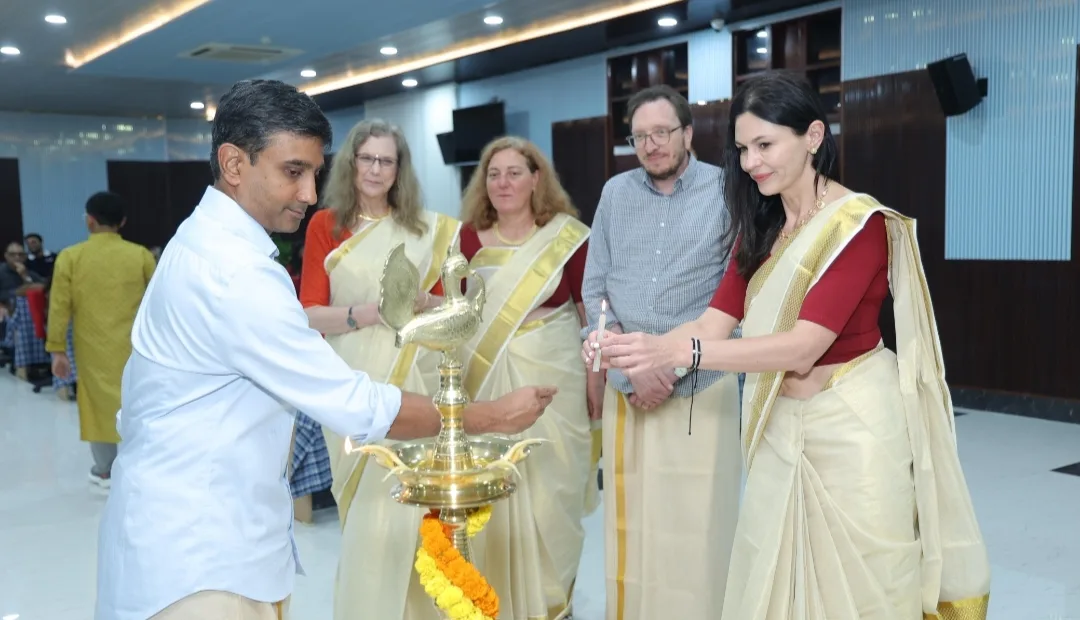
The programme opened with the traditional lighting of the lamp and a prayer song, followed by a formal welcome to the JMS editorial team by XLRI leadership.
XLRI Director Fr Sebastian George, S.J., welcomed Prof Johann Fortwengel, General Editor of the Journal of Management Studies. Dr Fr Donald D’Silva, S.J., Dean (Administration & Finance), welcomed Prof Shameen Prashantham, Co-Editor, while Prof Sanjay Patro, Dean (Academics), welcomed Prof Claudia Gabbioneta, Co-Editor.
On the first day, Prof Fortwengel conducted a session on “Publishing in JMS”, offering scholars insights into editorial expectations, review processes and ways to develop research with strong scholarly and practical impact.
ALSO READ: Gen Alpha wants a walkable road, Palamu DC responds with stone dust
He emphasised the importance of helping authors refine their work and present the strongest possible version of their research.
Prof Gabbioneta led a session on “Crafting a Theoretical Contribution”, highlighting the need for research to go beyond empirical findings and contribute meaningfully to existing knowledge.
She stressed the importance of studies that can change, challenge or substantially advance existing understanding of concepts, relationships and theories.
Researchers discuss revise-and-resubmit process
Prof Prashantham conducted a session on “Navigating the Revise and Resubmission Process”, focusing on how researchers can respond constructively to reviewers’ comments and use feedback to strengthen their papers.
The session underlined that scholarly publishing is an iterative process in which refinement and responsiveness to critical feedback are essential to developing a strong research contribution.
The workshop also featured sessions on academic writing, research presentations and academic wellbeing, along with a scholars’ panel titled “The Hidden Curriculum of a PhD”. The discussion explored the less visible aspects of doctoral education, including experiences, skills and practical lessons beyond formal academic requirements.
Panel explores academic careers and publications
The second day featured a JMS panel discussion on “Career Reflection and Role of Publication”, moderated by Prof Abdul Qadir of XLRI Jamshedpur.
The panel included Prof Fortwengel, Prof Gabbioneta and Prof Prashantham from JMS, along with Prof Munish Kumar Thakur, Dean (Academics), XLRI Delhi-NCR; Prof Sanjeev Varshney, Professor, XLRI Jamshedpur; and Prof Tina K. Stephen, Associate Professor, XLRI Jamshedpur.
The panel examined academic career trajectories, the role of scholarly publications and how research output can influence academic and professional journeys.
AI and the human advantage
Another key session, “The Human Advantage in an AI-Powered Classroom”, was conducted by Amit Siddhartha, Senior Strategic Relationship Manager, Harvard Business Impact.
The session examined the continuing importance of human capabilities, meaningful interaction and effective learning in an educational environment increasingly influenced by artificial intelligence.
The two-day workshop concluded with an emphasis on strengthening the research ecosystem at XLRI and giving doctoral scholars greater exposure to contemporary publishing practices and global academic perspectives.
The programme reinforced XLRI’s focus on nurturing a strong research culture and equipping its doctoral community with the skills and exposure needed to navigate the increasingly competitive world of scholarly publishing.