August 26: The day Tata Steel’s historic journey began
PINAKI MAJUMDAR Jamshedpur, August 26: For Jamshedpur, August 26 is more than a date on the calendar. It marks the beginning of…
PINAKI MAJUMDAR
Jamshedpur, August 26: For Jamshedpur, August 26 is more than a date on the calendar. It marks the beginning of an industrial institution that went on to shape not only the Steel City but also India’s industrial development.
On this day in 1907, Tata Iron and Steel Company (TISCO), now Tata Steel, was formally registered in India, laying the institutional foundation for what would become one of the country’s most iconic industrial enterprises.
The significance of August 26 is therefore deeply intertwined with the history of Jamshedpur, Tata Steel and India’s journey towards becoming a modern industrial nation.
The story began with the extraordinary vision of Jamsetji Nusserwanji Tata, who dreamed of establishing a modern steel industry in India at a time when the country was under British rule and large-scale industrialisation was still in its infancy.
Although Jamsetji Tata did not live to see his dream fully realised, his vision was carried forward by his son, Sir Dorabji Tata, who played a pivotal role in establishing TISCO.

The formal registration of the company on August 26, 1907, marked a decisive step in transforming that ambitious dream into an industrial reality.
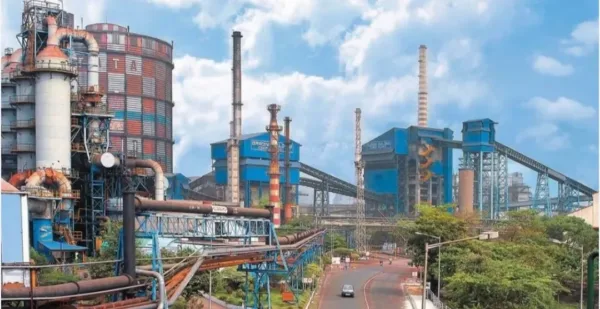
The steel plant was eventually established at Sakchi, a settlement that would later be renamed Jamshedpur in honour of Jamsetji Tata. From the beginning, the enterprise was conceived not merely as a factory but as the nucleus of a planned industrial township.
ALSO READ: Sir Dorabji Tata: The man who built a nation before it was born

From Sakchi to Jamshedpur
The rise of TISCO and the emergence of Jamshedpur became inseparable chapters in the history of Indian industry.
TISCO commenced pig iron production in 1911 and began producing steel in 1912, marking a significant step towards establishing India’s indigenous steel-making capability.
The development of the steel plant transformed the landscape around Sakchi. Infrastructure, housing, civic amenities, healthcare, education and other facilities gradually developed around the industrial establishment, giving shape to one of India’s most distinctive company townships.
Jamshedpur’s identity, therefore, remains closely linked to the steel plant that provided the city’s economic and social foundation.
Steel for a nation at war
The young company soon found itself operating during one of the most turbulent periods of the 20th century.
During the First World War (1914-1918), TISCO continued its operations and supplied steel for the war effort in India.
The period demonstrated the strategic importance of domestic steel production and underscored the significance of the industrial foundation created at Jamshedpur.
Building beyond steel
TISCO’s growth was not confined to steelmaking.
In 1920, the company joined hands with Burmah Shell to establish the Tinplate Company of India Ltd (TCIL) as a joint venture. The enterprise was subsequently associated with the development of Tata Tinplate, adding another important chapter to the industrial ecosystem around Jamshedpur.
By 1939, TISCO had grown to operate what was regarded as the largest steel plant in the British Empire, reflecting the scale achieved by an Indian enterprise within just a few decades of its establishment.
ALSO READ: Dengue under control in Jamshedpur as Tata Steel UISL steps up vigilance
Modernisation fuels a new era
TISCO embarked on a major modernisation and expansion programme in 1951. The programme was subsequently scaled up in 1958, taking the plant’s production capacity to two million metric tonnes per annum.
This phase marked another defining transition in Tata Steel’s history—from a pioneering steel enterprise to a modern, large-scale industrial operation capable of supporting India’s rapidly developing economy.
Over the decades, the company continued to modernise its operations, adopt new technologies and expand its product portfolio, while Jamshedpur evolved into a major industrial and urban centre.
Why August 26 matters
More than a century later, August 26 continues to carry extraordinary significance for Tata Steel and Jamshedpur.
The date represents the formal beginning of an institution built on vision, enterprise, technological ambition and nation-building.
What started as TISCO in 1907 grew into Tata Steel, while the settlement of Sakchi developed into Jamshedpur, one of India’s best-known industrial cities.
The story is also a reminder of the scale of Jamsetji Tata’s vision. At a time when India had limited industrial infrastructure and virtually no indigenous large-scale steel industry, he envisaged an enterprise that could help lay the foundations of a self-reliant economy.
That vision was carried forward by Sir Dorabji Tata and successive generations of Tata leadership, engineers, workers and communities associated with the company.
A legacy cast in steel
For generations of Jamshedpur residents, Tata Steel has been far more than an industrial establishment. It has been closely woven into the city’s identity, institutions, sporting and cultural traditions, and social and economic life.
The glowing furnaces of the Jamshedpur plant have consequently come to symbolise more than steel production. They represent a pioneering chapter in India’s industrial history and the transformation of a bold dream into a living city and a globally recognised enterprise.
August 26, therefore, is not merely Tata Steel’s Foundation Day. It is a reminder of the day when an audacious industrial vision acquired a formal identity—and when the first decisive chapter of Jamshedpur’s remarkable journey began.