Bear attacks on humans continue in Palamu Tiger Reserve; five injured in a week amid monsoon foraging
THE JHARKHAND STORY NETWORK Daltonganj, July 13: Bear attacks on humans in the Palamu Tiger Reserve (PTR) have continued during the monsoon,…
THE JHARKHAND STORY NETWORK
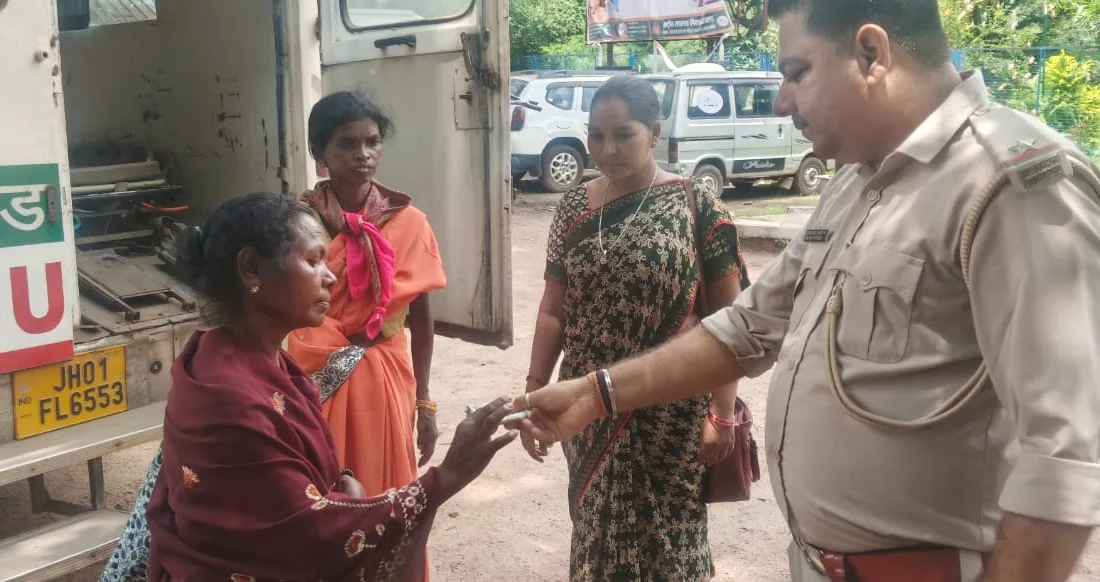
Daltonganj, July 13: Bear attacks on humans in the Palamu Tiger Reserve (PTR) have continued during the monsoon, with five people injured in four incidents over the past seven days. While there has been no fatality so far, all five victims sustained injuries and are undergoing regular treatment and wound dressing.

The recent incidents have raised concerns over increasing encounters between sloth bears and villagers entering forests to collect seasonal produce such as mushrooms, fruits and nuts.
According to forest officials, four people were attacked while collecting wild mushrooms in the forests, while another person was injured during agricultural work near the forest.
Three of the recent incidents occurred within six days in the Mahuadarn range of the Palamu Tiger Reserve.
PTR Field Director S.R. Natesha said the incidents should not be viewed as a conventional human-wildlife conflict similar to the recurring human-elephant conflict.

“It is a seasonal face-off. Both humans and bears enter the forests in search of the same food that they like to consume,” Natesha said.
Monsoon foraging brings humans and bears together
The field director explained that villagers visit forests during the rainy season to collect mushrooms, jackfruit, fruits and nuts, while sloth bears forage for bulbs, tubers, fruits, nuts and insects in the same areas.
“The overlap in resource use leads to these encounters,” he said.

Natesha added that the rainy season increases the availability of insects, an important food source for sloth bears.
“Rains bring plenty of insects, which are a favourite food of bears. They provide fat and protein. Bears are actively searching for food, and the presence of humans during their foraging often results in attacks,” he said.
He described the recent incidents as the outcome of both humans and bears competing for the same natural resources.
Bears attack when threatened, officials say
Forest officials said bears generally do not chase humans over long distances and usually attack only when they feel threatened or cornered.
The recent attacks in the Mahuadarn range reportedly occurred when people came within five to ten metres of the animals.
Wildlife trackers also cautioned that female bears with cubs become particularly aggressive.
“A bear with cubs may charge at people if it perceives a threat to its young,” a wildlife tracker said.
Although many villages lie close to the forests of the Palamu Tiger Reserve, officials said bears enter human habitations less frequently than elephants or deer.
Forest officials advised people to avoid entering forests during late afternoon and early morning, when the risk of bear encounters is considered higher.
Jharkhand government enhances compensation
Natesha said the Jharkhand government has significantly enhanced ex gratia compensation for victims of human-wildlife conflict.
“The Chief Minister was deeply concerned about the issue. Our proposal to enhance ex gratia relief for human-wildlife conflict cases was approved,” he said.
Under the revised compensation policy:
- Injury compensation ranges from ₹35,000 to ₹2 lakh.
- Permanent disability attracts ₹3.5 lakh.
- Compensation in case of death is ₹10 lakh.
“Of the ₹10 lakh compensation, ₹5 lakh will be kept as a fixed or term deposit in the name of the deceased’s next of kin. The remaining ₹5 lakh will be released in two instalments—₹1 lakh initially and ₹4 lakh after submission of the post-mortem report and death certificate,” Natesha said.
Corpus fund for faster relief
Responding to concerns that Divisional Forest Officers often face delays due to a lack of funds, Natesha said a dedicated corpus fund has now been created.
“We have established a corpus fund of ₹10 lakh for each DFO of the territorial and wildlife divisions. It is a standby fund that will allow compensation to be disbursed without delay,” he said.
The field director also said compensation has been introduced for losses caused by smaller carnivores such as wolves and hyenas.
“Compensation is now available for the loss of poultry. It is ₹100 per bird, subject to a maximum of ₹10,000,” he said.
According to the Jharkhand government’s guidelines, in cases of death caused by wildlife, the first instalment of ₹1 lakh should be paid within three days. The remaining ₹4 lakh is to be released after the post-mortem report and death certificate are submitted.
However, obtaining these documents often takes several weeks, resulting in delays in the final disbursement of compensation.