BJP’s Jharkhand reset after poll setbacks: Pawan Sai gets organisational charge after Gajendra Patel’s appointment
SUMAN K SHRIVASTAVA Ranchi, September 24: The Bharatiya Janata Party’s latest organisational changes in Jharkhand signal a renewed focus on a state…
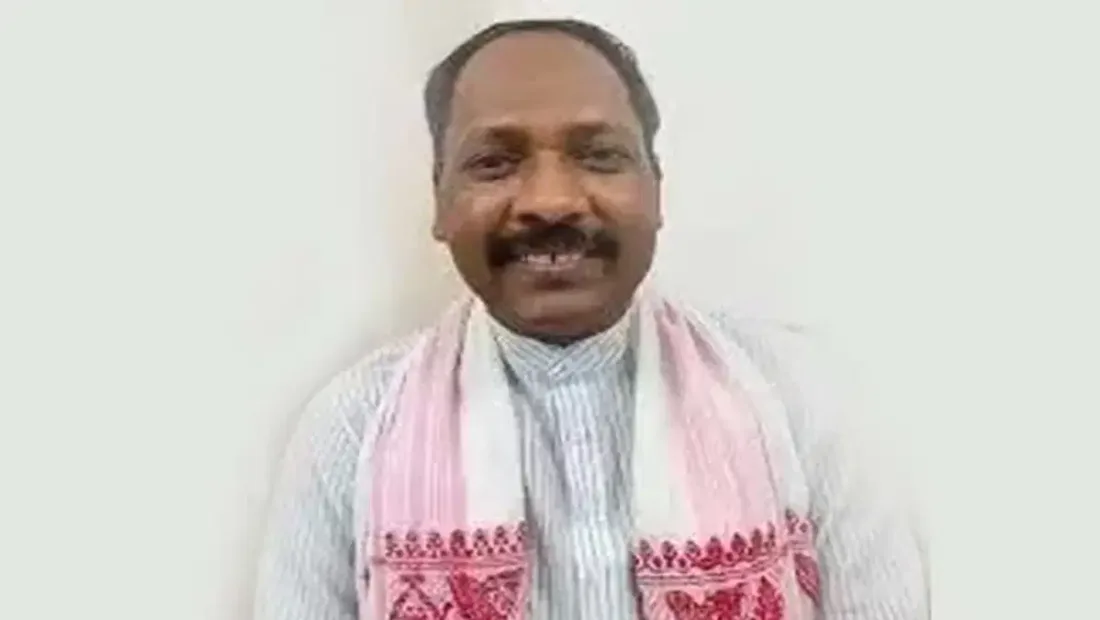
Pawan Sai
SUMAN K SHRIVASTAVA
Ranchi, September 24: The Bharatiya Janata Party’s latest organisational changes in Jharkhand signal a renewed focus on a state where the party has faced setbacks in successive Assembly elections. After appointing tribal leader Gajendra Singh Patel as Jharkhand in-charge, the BJP on Thursday named Pawan Sai as the State General Secretary (Organisation), giving him the key responsibility of running and strengthening the party’s organisational machinery from Ranchi.

The back-to-back appointments suggest a fresh organisational approach in Jharkhand, with the BJP looking to rebuild its grassroots network, address social and tribal outreach and sharpen its political strategy after its 2019 and 2024 Assembly election setbacks.
Pawan Sai gets key organisational responsibility
Pawan Sai will be based in Ranchi and will be responsible for coordinating the BJP’s organisational activities in Jharkhand. His appointment comes as part of a wider restructuring of the party’s state-level organisation.
The move assumes significance because the State General Secretary (Organisation) is central to the BJP’s day-to-day organisational functioning, including coordination with party workers, strengthening the cadre network and implementing the central leadership’s organisational priorities at the state level.
His appointment also comes immediately after the BJP replaced its previous organisational arrangement in Jharkhand, indicating that the central leadership is seeking a fresh organisational push rather than relying solely on its existing structure.

Gajendra Patel appointment puts tribal outreach in focus
The appointment of Gajendra Singh Patel, a tribal leader from Madhya Pradesh and BJP national general secretary, as Jharkhand in-charge has added another dimension to the organisational reset.
Jharkhand’s electoral politics has a substantial tribal component, and the JMM has traditionally maintained a strong political base among tribal voters. The BJP’s decision to put a tribal leader in charge of its Jharkhand affairs therefore assumes significance as the party seeks to strengthen its connect with tribal communities and expand its organisational presence.
The latest changes come against the backdrop of the BJP’s performance in the 2019 and 2024 Jharkhand Assembly elections, when the party was unable to dislodge the JMM-led political formation despite the BJP’s strong national electoral position during these periods.

From Laxmikant Bajpai to Gajendra Patel: a change in approach
The latest restructuring also marks a departure from the BJP’s previous arrangement under Laxmikant Bajpai, whose tenure as Jharkhand in-charge did not translate into a sustained organisational or electoral breakthrough for the party.
The appointment of Gajendra Patel, followed within days by the elevation of Pawan Sai to the organisation’s key state-level post, points to an attempt to bring a different organisational focus to Jharkhand.
The central leadership appears to be placing greater emphasis on tribal outreach, grassroots organisation, social mobilisation and coordination between the state organisation and the central leadership.
Karmveer Singh shifted amid organisational churn
Jharkhand’s incumbent State General Secretary (Organisation), Karmveer Singh, has been shifted to Chhattisgarh with the same organisational responsibility.
The change comes at a time when the Jharkhand BJP organisation has faced controversies and internal political challenges, adding to the significance of the decision to bring in a new organisational face.
With Pawan Sai now taking charge, the BJP has effectively put a new organisational team in place alongside Gajendra Patel.
Saudan Singh’s Jharkhand experience adds another layer
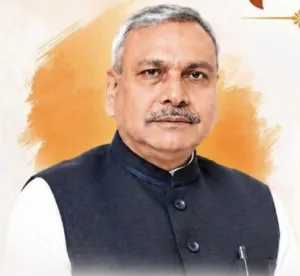
The BJP has also assigned Saudan Singh responsibility for Bihar, Jharkhand, Odisha and West Bengal, with Bhubaneswar as his base.
Saudan Singh has previously been associated with the BJP’s political and organisational affairs in Jharkhand. His return to a role covering the state gives the latest reshuffle an additional layer of continuity and experience.
The combination of Gajendra Patel, Pawan Sai and Saudan Singh brings together fresh organisational responsibility and leaders familiar with the BJP’s political dynamics in eastern India.
BJP faces a difficult social and electoral landscape
The BJP’s organisational reset comes at a time when Jharkhand’s political landscape is witnessing changes in several social constituencies.
The party had counted on its alliance with AJSU Party leader Sudesh Mahto to consolidate support among the Kurmi community. However, the growing political profile of Jairam Mahto has introduced another factor into the state’s evolving social and electoral equations.
Sudesh Mahto has also recently drawn attention by sharing the stage with West Bengal Chief Minister Suvendu Adhikari at a Kurmi community gathering in Purulia, adding another political dimension to the evolving Kurmi discourse in the region.
For the BJP, the challenge is therefore not limited to organisational restructuring. It also involves rebuilding its social coalition and finding a broader political connect across tribal, Kurmi and other influential voter groups.
BJP puts Jharkhand under renewed central focus
The sequence of appointments—from Gajendra Patel as state in-charge to Pawan Sai as State General Secretary (Organisation)—indicates that Jharkhand has received renewed attention from the BJP’s central leadership.
The immediate task for the new team will be to strengthen the party’s organisational network, improve coordination with its grassroots cadre and work out a strategy for expanding its support base in a state where the BJP has struggled to translate its national electoral strength into an Assembly majority.