






THE JHARKHAND STORY NETWORK
Ranchi, April 11: With India pushing ethanol blending in petrol and looking to reduce its dependence on costly crude oil imports, maize is emerging as a key crop in the energy and agriculture mix. Against this backdrop, a three-day national workshop of maize scientists at Birsa Agricultural University (BAU) concluded on Saturday, stressing the need to increase production and develop climate-resilient hybrid varieties.
The workshop, organised under the All India Coordinated Research Project (AICRP) on Maize, focused on strategies to enhance productivity, expand cultivation under changing climatic conditions, and identify high-yielding varieties. Achievements for 2025 were reviewed, and a roadmap for future research was prepared.

ALSO READ: IIT (ISM) Dhanbad trains school students on earthquake safety
Focus on hybrids, climate resilience
In the valedictory session, BAU Vice-Chancellor Dr SC Dubey emphasised the need to intensify research on hybrid maize in collaboration with the private sector. He called for developing varieties that are climate-resilient, disease-resistant, and nutritionally superior, with over 15% protein content, larger grain size, and higher starch levels. He also stressed strengthening quarantine systems to safeguard crops from pests and diseases.
Highlighting maize’s growing importance, Dr Dubey said nearly 50% of the country’s maize output is used as animal feed, while ethanol blending of up to 30% in petrol is now permitted. Increasing maize production, he noted, could significantly reduce the country’s expenditure on crude oil imports. He also pointed out that maize productivity ranges between 2 and 5 quintals per hectare across regions, underlining the need for better technology dissemination to bridge this gap.
New varieties, wider applications
Dr HS Jat, Director of the Indian Institute of Maize Research, said 39 improved maize varieties have been identified for release across different regions, including sweet corn, popcorn, baby corn, biofuel-purpose, and biofortified varieties. Of these, 30 are for the Kharif season. Developed with contributions from 25 centres, these varieties are high-yielding and tolerant to diseases, pests, and moisture stress.
Other experts, including ICAR ADG Dr SK Pradhan, Dr Sain Dass, Dr Sunil Neelam, and organising secretary Dr Manigopa Chakravarti, also addressed the gathering.
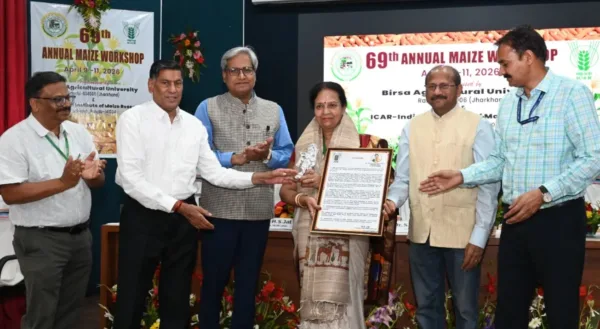
Dr Manigopa Chakraborty of BAU and Dr Aditya Kumar Singh of the Central Soil Salinity Research Institute, Karnal, were honoured for their contributions to maize research. A book on maize by Dr Santosh Kumar, Dr Bhupendra Kumar, and Dr Manigopa Chakraborty was also released.
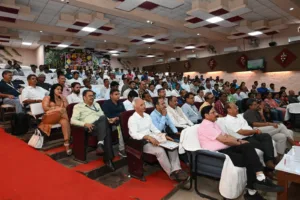
The workshop saw participation from over 250 scientists from 37 agricultural universities and ICAR institutions, along with industry representatives from starch, ethanol, seed, and agro sectors, as well as progressive farmers.