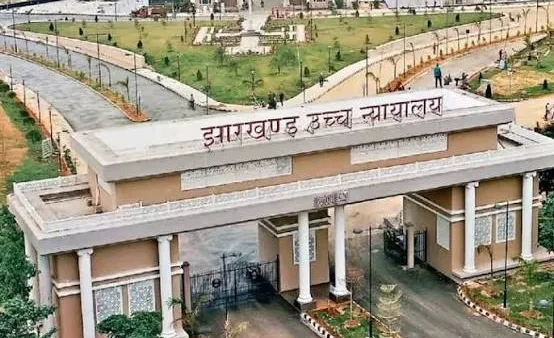
Jharkhand at Davos: How an ancient living heritage shapes a modern growth vision
Ranchi, January 12: As Jharkhand engages with global leaders at the World Economic Forum Annual Meeting 2026 in Davos and deepens cultural…
Ranchi, January 12: As Jharkhand engages with global leaders at the World Economic Forum Annual Meeting 2026 in Davos and deepens cultural exchanges with the United Kingdom, it is presenting an unusual but powerful narrative: one that connects deep planetary time, living indigenous culture, and modern ideas of sustainable development.
An Ancient Land with a Living Past
Jharkhand lies on the Singhbhum Craton, one of the Earth’s oldest stable geological formations, dating back more than 3.3 billion years. On this ancient landmass, human communities have erected megaliths—large stone memorials, monoliths and stone circles—for thousands of years.

What sets Jharkhand apart globally is that this megalithic tradition is still alive.
In most parts of the world—whether in Europe, Africa or the Middle East—megalithic cultures are known only through archaeology. In Jharkhand, however, indigenous communities continue to build and use stone monuments for remembrance, ritual and social identity.
Living Heritage, Not Museum Pieces
At Chokahatu, near Ranchi, members of the Munda tribal community still erect memorial stones for the deceased. Over generations, this has created the largest living megalithic landscape in the Indian subcontinent—a continuously evolving record of ancestry and memory.
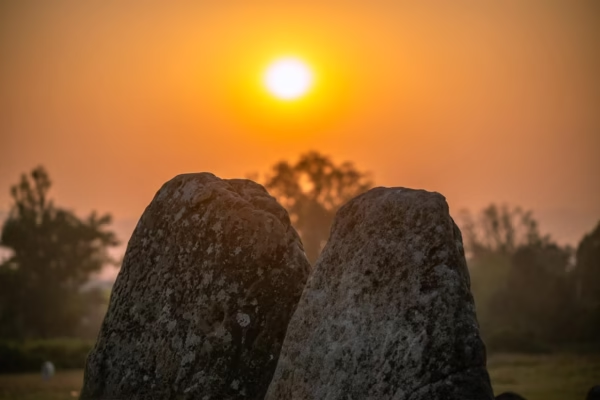
In Pakari Barwadih (Hazaribagh district), carefully aligned stone monoliths track the movement of the sun and the equinox, placing Jharkhand within the global story of prehistoric astronomy. These alignments naturally invite comparison with well-known sites such as Stonehenge in the UK, underscoring shared human impulses across continents to understand time, death and the cosmos.
Together with ancient cave systems like Isko and the fossilised forests of Mandro, Jharkhand represents a rare continuum where geological deep time and living cultural practice coexist in one landscape.

Why This Matters in Global Diplomacy
As climate change, ecological loss and cultural homogenisation dominate global debate, Jharkhand’s heritage offers a different model—one where development is not separated from memory.
By presenting its megalithic landscapes alongside economic priorities at Davos and during official engagements in the UK, Jharkhand is contributing to a broader diplomatic conversation:
that long-term growth must respect ecology, culture and time depth, not just short-term returns.
This approach aligns closely with India–UK cultural cooperation frameworks, which emphasise:
- Ethical and community-based conservation
- Protection of heritage in situ (in its original location)
- Research exchange and shared stewardship rather than extraction
Unlike artefacts housed in distant museums, Jharkhand’s stones remain embedded in living villages and forests, protected not only by law but by tradition.

A Global Lesson from Local Stones
Jharkhand’s megaliths are not remnants of a vanished civilisation.
They are living witnesses—recording ancestry, astronomy, resilience and continuity across millennia.
In a world searching for sustainable models of progress, these landscapes offer a quiet but profound lesson:
that the future is strongest when it remains connected to its deepest past.
As Jharkhand steps onto the global stage, it is not only promoting investment or development—it is sharing a vision of heritage as diplomacy, where stones speak across time, cultures and continents.