







THE JHARKHAND STORY NETWORK
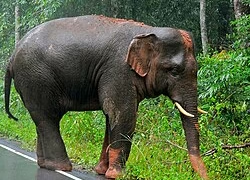
Daltonganj, Nov 7: A juvenile male elephant died of ‘lifestyle’ disease recently in Palamu Tiger Reserve (PTR). It’s gastroenteritis! Its onset is when one goes unmindful of eating or overeating or drinking extremely contaminated water etc.
A juvenile elephant can eat 50 to 100 kgs of feed in 16 hours. The feed is 10 per cent of the body weight. A young and growing elephant has a habit of coprophagy, which is eating the dung of the adult elephant. It’s done to supplement friendly bacteria.

The post mortem report of this 10-year-old male jumbo found it to have died of watery faeces and bleeding from the rectum. The stomach was found bloated.
Unusual Case of a ‘Lifestyle Disease’ in Wildlife
P K Jena, Deputy Director, North Division of PTR, told the Jharkhand Story Network correspondent, “The panel of 3 veterinary doctors, which conducted the post mortem of this elephant, found the cause of death of this elephant to be gastroenteritis.”
Elephants do suffer like humans. They contract viral and bacterial infections. They get injured or limp like humans.
Gastroenteritis parasites have a high prevalence in the elephants. Here in this case, there was a hemorrhagic sign of the rectum.
Also Read- Jharkhand News: 78 live turtles seized from Doon Express at Dhanbad station
Captive elephants are more vulnerable to lifestyle diseases than the wild ones. This 10-year-old male elephant, dying due to a stomach disorder, is simply mind-boggling, said sources in the PTR.
Jena further explained, “Viscera of this elephant has been sent to Ranchi for forensic examination. Let’s wait for the forensic examination report.”
First Known Instance of Its Kind in PTR
Reminded that what the post mortem report referred to, then this is the first instance of its kind in PTR where an elephant died of a stomach ailment, sources said, there have been instances of snake bite leading to the death of an elephant or an elephant electrocuted by 12 volt power or by poisoning, or by poaching for tusks or revenge killing of an elephant for rampaging standing crop or food grains stored in barns or for killing humans etc, but never ever heard of an elephant dying of gastroenteritis.
There have been instances where the trunk of the elephant came in contact with the sagging electricity wires, only to die burning instantly.
Asked if, as a senior PTR officer and known as a staunch crusader of wildlife, he is satisfied with the findings of the post-mortem report of this elephant, to which he said very calmly, “The three vet experts say it’s gastroenteritis, so it is then. We wait for the forensic examination report of the viscera.”
Viscera examination is a mandated affair, he reminded.
Also Read- Supreme Court orders relocation of stray dogs from institutions to shelters
No Evidence of Human-Elephant Conflict
Again asked the carcass of this elephant was found in the standing paddy crop field at Lukum Kharn on November 5 under the Betla range of the Palamu Tiger Reserve (PTR) which is bound to raise fingers towards elephant-human conflict, to which Jena said, “We know the site where the carcass was. We are on it. The elephant-human conflict angle, we want to rule out.”
“For us, this is not a closed chapter. Our men are out. We want to know how this happened to a juvenile but robust male elephant. We are sure saner elements of the society will lend us their support,” reiterated Jena.
