Jharkhand: Palamu JSLPS expands layer bird farming to boost SHG women’s income
Daltonganj, May 8: Palamu district JSLPS (Jharkhand State Livelihood Promotion Society) is breaking new ground through integrated farming clusters aimed at enhancing…
Daltonganj, May 8: Palamu district JSLPS (Jharkhand State Livelihood Promotion Society) is breaking new ground through integrated farming clusters aimed at enhancing the livelihood and income of women members of self-help groups (SHGs).
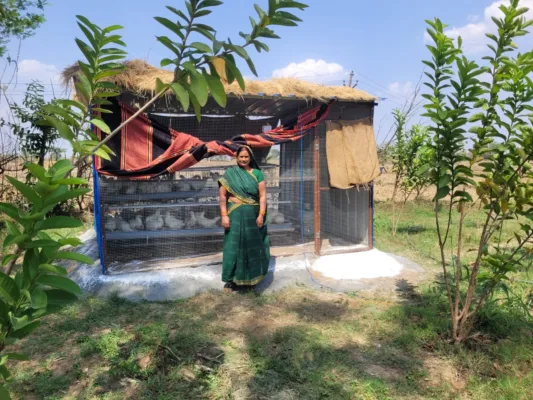
After starting ‘layer bird farming’ in Manatu block, the livestock section of JSLPS has expanded the initiative to five more blocks — Lesliganj, Bishrampur, Chainpur, Satbarwa and Ramgarh. In each block, one Didi from a Sakhi Mandal is running a layer bird kiosk.
District Programme Manager of JSLPS in Daltonganj, Anita C Kerketta, said, “The layer bird farming began first in Manatu. It’s now in 5 more blocks. Right now, we have 38 such units combine in 6 blocks.”
“It’s a high-quality egg production. Its commercial value is high. Such egg production is augmenting the income of Didis,” added Anita.
Commercial Egg Production Supporting Rural Livelihoods
Layer birds are different from broiler birds, which are reared mainly for meat. Layer birds are raised for egg production.
Programme Manager of Livestock, Shekhar Lal, said Palamu’s layer bird farming produces white eggs, not brown eggs. The birds used in the project belong to the BV 300 variety.

The feed given to layer birds is also different from broiler feed. It is softer and less coarse, with each bird receiving around 100–110 grams of feed daily.
One unit consists of 100-layer birds supplied by empanelled vendors. A Didi running a layer bird kiosk contributes a security deposit of Rs 21,000 for a unit, while government fiscal support for each unit is Rs 1.8 lakh.
On replacement of birds in case of mortality, Shekhar Lal said, “If the fatality occurs within 15 days of the induction of the unit, the vendor may be liberal with replacement; otherwise, the Didi has to bear the brunt of it.”

ALSO READ: Thunderstorms, rain and hailstorms forecast in Jharkhand extended till May 14
Climate-Sensitive Farming and Bird Care
According to officials, the mortality rate among layer birds is around 5 per cent per hundred birds, depending on weather conditions, temperature, feed and climate.
The birds are also vulnerable to bird flu. JSLPS teams train the Didis to manage the risk with symptomatic medicines, while deworming is also carried out regularly.
Officials explained that a unit of 100 layer birds does not necessarily produce 100 eggs every day, as each bird has its own off-laying cycle. On average, a unit produces around 80 eggs a day.
How Didis Earn Through Layer Bird Farming
The income model is based on the sale of eggs. Demand for eggs is generally higher during winter, while production and sales decline during summer due to heat.
Layer birds are highly climate-sensitive. During winter, overhead lights are used to generate heat, while in summer, water-soaked jackets are placed around cages to reduce heat stress. Cleanliness and hygiene are considered crucial for maintaining healthy birds.
A layer bird usually retires from egg production 17–18 months after induction. Though it stops laying eggs, its meat value remains intact.
Officials said a Didi can sell nearly 80 eggs daily at Rs 7–8 per egg, generating a maximum daily income of around Rs 640. After deducting expenses on feed, medicines and maintenance, the estimated net profit is around Rs 500 per day.
The cages used for layer bird farming are reptile-proof and protected against theft, ensuring better security for the birds.