Jharkhand to frame language education policy promoting mother tongue, Hindi and English: Hemant Soren
THE JHARKHAND STORY NETWORK Ranchi, November 4: Jharkhand Chief Minister Hemant Soren has directed officials to frame the state’s language education policy,…
THE JHARKHAND STORY NETWORK
Ranchi, November 4: Jharkhand Chief Minister Hemant Soren has directed officials to frame the state’s language education policy, keeping in mind its linguistic, cultural and social diversity. He said the policy should respect students’ mother tongues while strengthening their knowledge, skills and ability to express themselves.
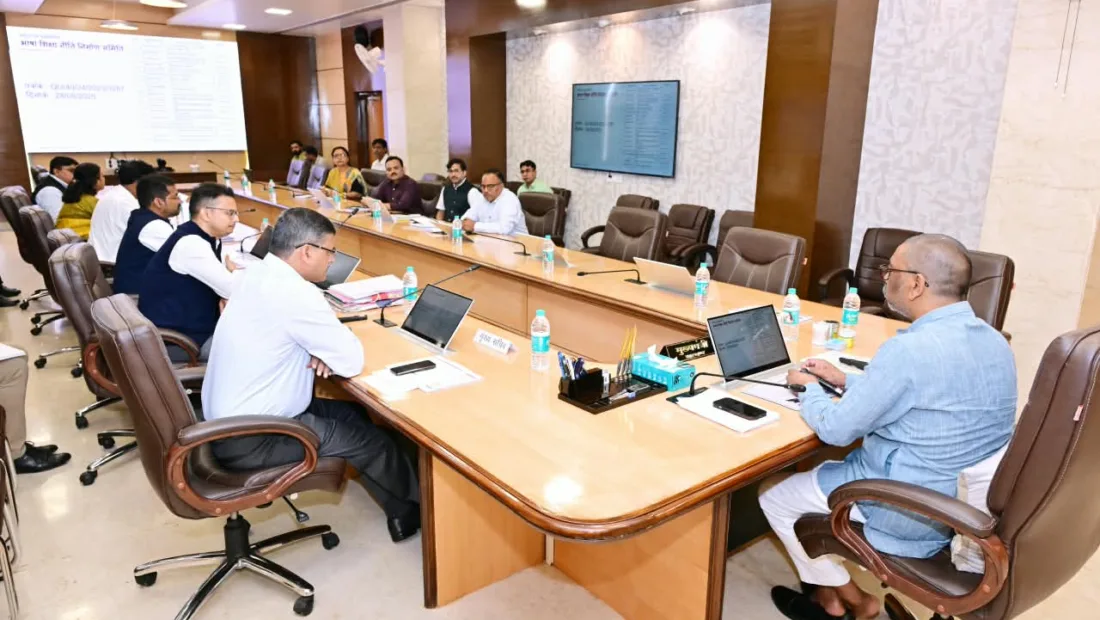
The Chief Minister was chairing a meeting at Jharkhand Mantralaya on Wednesday to review the draft of the Jharkhand State Language Education Policy, prepared by the School Education and Literacy Department.
He said the objective of education should not be limited to completing the syllabus but should also be to prepare students to face future challenges with competence, confidence and a competitive edge.
Mother-tongue education to make learning easier
The Chief Minister said Jharkhand has considerable linguistic, cultural and social diversity. Children in the state use their mother tongues and local languages at home and within their communities, while classroom teaching is generally conducted in Hindi or English.
He said this linguistic difference should not affect children’s understanding, expression, participation or pace of learning, particularly in the early years of schooling. The proposed language education policy is being prepared to address this challenge.

He said Jharkhand’s linguistic diversity is an important part of its rich cultural identity. The education system should incorporate this diversity and develop methods that enable students to learn comfortably in their own languages while encouraging innovative educational practices.
Hockey to be considered under skill-based education
The Chief Minister stressed the need to connect students with skill-based education, saying that their interests, talents and practical abilities should be developed alongside academic learning.
He directed officials to consider including hockey under skill-based education. He said children from Jharkhand have been consistently performing well in hockey and that skill-based education could provide them with better opportunities to develop their talent and progress in the sport.

Spoken English classes before Class 12
The Chief Minister also emphasised the need to organise spoken English classes for students.
He said students often have to travel to different parts of the country for higher education, employment, competitive examinations and sports competitions. Confidence in speaking and communicating in English would prove beneficial in such situations.
He directed officials to ensure that adequate spoken English facilities are available to students before they complete Class 12, enabling them to become linguistically proficient and confident.
Focus on digital proficiency and competitive examinations
The Chief Minister stressed the need to equip students with digital skills and ensure that they are prepared for both present and future challenges.
He directed officials to frame the policy by considering classroom teaching requirements as well as the needs of competitive examinations.
Mother tongue, Hindi and English to be treated as complementary languages
The Chief Minister said the policy should be based on the principle of additive multilingualism, under which students are introduced to additional languages without replacing their first language.
He directed officials to develop the policy by treating the mother tongue, Hindi and English as complementary languages, ensuring that students can learn and develop proficiency in all three.
Draft covers three educational stages
During the meeting, officials informed the Chief Minister that a Language Education Policy Formulation Committee was constituted in 2025 to prepare the policy. The committee studied education systems in Jharkhand and other states before drafting the proposed policy.
The draft covers three major educational stages: early childhood education to Class 2, Classes 3 to 5, and Classes 6 to 12.
Special emphasis has been placed on integrating students’ mother tongues and local languages into school education across all three stages, enabling children to learn comfortably in their own languages and achieve better academic outcomes.
Officials said the policy would help ensure the preservation, promotion and wider use of local languages in the state. It would also make the learning process more accessible and effective while giving a new direction to the use of local languages in education.
The meeting also witnessed detailed discussions on various provisions and aspects of the draft policy.
Officials present at the meeting
Chief Secretary Avinash Kumar, School Education and Literacy Department Secretary Umashankar Singh, Jharkhand Education Project Council State Project Director Shashi Ranjan, Tribal Research Institute Director Alok Shikari Kachhap, JAC Secretary S.D. Tigga and other senior officials attended the meeting.