MMDR Act notified, Jharkhand braces for legal and political fight
SUMAN K SHRIVASTAVA Ranchi, August 23: The Centre has brought the Mines and Minerals (Development and Regulation) Amendment Act, 2026 into force,…
SUMAN K SHRIVASTAVA
Ranchi, August 23: The Centre has brought the Mines and Minerals (Development and Regulation) Amendment Act, 2026 into force, setting the stage for a fresh political and constitutional confrontation with mineral-rich states, including Jharkhand.

The Act was notified on August 22, days after Parliament passed it during the Monsoon Session. The Lok Sabha cleared the legislation on August 12 and the Rajya Sabha on August 13.
The amended law restricts the power of state governments to impose taxes, cesses or other levies on mineral rights and mineral-bearing land, except subject to conditions or restrictions prescribed by the Centre.
Jharkhand Chief Minister Hemant Soren has strongly opposed the legislation and has indicated that the state will pursue democratic, constitutional and legal means against it. Karnataka, Kerala and Telangana are also considering challenging the legislation in the Supreme Court.
Centre says Act will create stable tax regime
The Centre has defended the legislation as an attempt to rationalise the tax structure in the mining sector and prevent multiple levies imposed by states from increasing the cost of minerals.

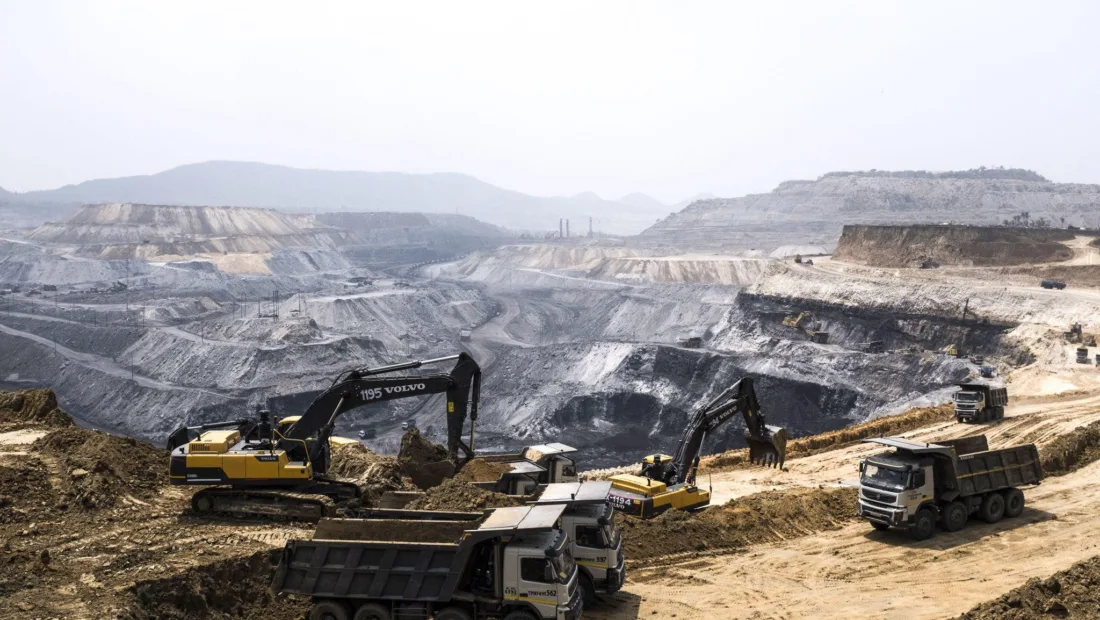
According to the Union government, states currently impose around 14 different taxes, charges, fees and other levies in the mining sector, including royalty, auction premium, dead rent, District Mineral Foundation payments, GST and transit fees.
The Centre has argued that additional taxes on mineral-bearing land can increase costs for mining companies and government-owned enterprises and create a cascading impact on industries dependent on minerals.

It has said the new framework will provide a more stable and predictable regime, encourage investment, increase production of critical minerals and reduce India’s dependence on imports.
The government has also rejected the allegation that the legislation favours any particular corporation, stressing that mineral blocks are now allocated through competitive e-auctions.
It said around 725 mineral blocks have been auctioned, of which 105 are operational, while 141 coal mines have been successfully auctioned, with 23 currently operational.
Sanjay Seth: ‘90% of mineral revenue will go to states’
Defending the legislation in Ranchi, Union Minister of State for Defence Sanjay Seth described the MMDR Amendment Act as a historic step that could change the fortunes of mineral-rich states such as Jharkhand.
Seth rejected the Opposition’s contention that the legislation would weaken the financial interests of states, saying nearly 90% of mineral revenue would continue to go to the states.
He said the amended law would also help curb illegal mining and mineral theft through a zero-tolerance approach, while a transparent and stable tax regime would encourage investment, production and employment.
Seth claimed that Jharkhand’s mineral revenue had increased from around Rs 4,662 crore before 2014 to nearly Rs 33,494 crore in 2025-26, an increase of about 618%.
He also argued that faster exploitation of India’s coal resources, prevention of illegal mining and simpler procedures would help reduce imports and strengthen the country’s self-reliance.
Soren: Jharkhand’s mineral rights cannot be diluted
Soren has taken the opposite view, arguing that the amended law raises serious constitutional, fiscal, developmental and federal concerns.
He has questioned the Centre’s attempt to restrict states’ powers over mineral-bearing land, particularly after the Supreme Court’s 2024 Constitution Bench judgment recognised the legislative competence of states to tax mineral-bearing lands.
“Minerals belong to Jharkhand, land belongs to Jharkhand, so why should Delhi decide on our rights and entitlements?” Soren has said, describing the legislation as a “black bill”.
The Chief Minister has also urged Prime Minister Narendra Modi and President Droupadi Murmu to reconsider the legislation. He has maintained that Jharkhand will pursue appropriate constitutional and legal remedies if the Centre does not reconsider the provisions.
Jharkhand fears revenue hit
The financial implications are at the heart of Jharkhand’s opposition.
Soren has pointed out that mining revenue accounted for 84.9% of Jharkhand’s own non-tax revenue in 2024-25, according to the State Economic Survey 2025-26.
He has also warned that restrictions on mineral-related levies could significantly reduce the state’s fiscal space. The Mineral Bearing Land Cess introduced by Jharkhand was expected to generate substantial additional revenue for the state.
Soren has argued that mineral-related revenues are not merely government receipts but help fund roads, drinking water, healthcare, education, livelihoods, rural infrastructure, rehabilitation and social security in mining-affected areas.
He has also highlighted the wider costs of mining, including displacement, land alienation, environmental degradation, pollution and disruption of traditional social and cultural systems.
JMM takes fight to grassroots
With the Act now notified, the JMM has decided to intensify its political campaign against the legislation.
An office order issued by the JMM Central Committee on August 22 directed party units to organise a Jan-Jagran Abhiyan across all 24 districts until August 31, followed by a one-day dharna at every block headquarters on September 7.
The campaign will seek to explain to people what the party considers the adverse implications of the amended mining law for Jharkhand and its mineral resources.
The JMM has directed its district, municipal and local-level functionaries to ensure effective implementation of both programmes.
‘Issue is about federalism, not just revenue’
For Soren and the JMM, the dispute goes beyond the question of how much revenue the state receives from mining.
The Chief Minister has argued that Jharkhand is a mineral-rich state that has contributed significantly to India’s industrialisation and energy security, while its people have borne the social and environmental consequences of mining.
He has therefore demanded greater consultation with mineral-producing states before the Centre imposes restrictions on their fiscal powers.
Soren has also proposed a mechanism similar to the GST Council for consultation between the Centre and mineral-producing states on such issues.
Centre-Jharkhand confrontation likely to intensify
The notification of the Act is likely to sharpen the political confrontation in Jharkhand.
While the Centre maintains that the new law will rationalise mining taxation, curb illegal mining, attract investment and reduce mineral costs, the JMM-led state government sees it as an intrusion into the financial and constitutional powers of mineral-rich states.
With the JMM’s statewide awareness campaign beginning immediately and block-level protests scheduled from September 7, the MMDR Amendment Act is set to become a major political issue in Jharkhand.
The possibility of a legal challenge in the Supreme Court could take the dispute beyond politics and into the constitutional arena, particularly over the balance of powers between the Centre and states in relation to mineral-bearing land and taxation.