Samrat Choudhary takes oath as Bihar CM, Nitish Kumar era ends
Patna, April 15: Senior BJP leader Samrat Choudhary on Wednesday took oath as the 21st Chief Minister of Bihar, signalling a…
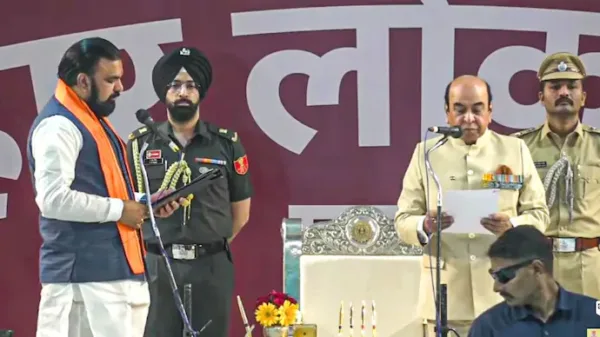
Patna, April 15: Senior BJP leader Samrat Choudhary on Wednesday took oath as the 21st Chief Minister of Bihar, signalling a major political shift in the state with the BJP forming its first-ever government.
Governor Syed Ata Hasnain administered the oath of office to Choudhary at Lok Bhavan in the presence of senior BJP leaders and alliance partners.
End of Nitish Kumar’s Two-Decade Dominance
The development comes a day after JD(U) chief Nitish Kumar resigned as Chief Minister and dissolved his Cabinet. Kumar, now a Rajya Sabha MP, served as Bihar’s central political figure for nearly two decades.
A ten-time Chief Minister since 2005, Nitish Kumar was known for his governance reforms and welfare initiatives, along with his strong support base among Extremely Backward Classes (EBCs) and marginalised communities. However, his tenure was also marked by frequent shifts in alliances between the NDA and the Mahagathbandhan.
BJP Takes Direct Control in Bihar
Choudhary’s elevation marks the BJP’s first direct leadership of the Bihar government. The party is currently the single largest in the 243-member Assembly, with 89 MLAs.

He was elected leader of the BJP legislative party on Tuesday. Earlier, he served as Deputy Chief Minister and held the crucial Home portfolio, making him a key figure in the state administration.
ALSO READ: SC stays Telangana HC anticipatory bail to Pawan Khera, questions jurisdiction
Samrat Choudhary’s Political Journey
The 57-year-old leader joined the BJP in 2017 and quickly rose through the ranks, becoming a prominent OBC face from the influential Koeri community.

Choudhary began his political career in 1999 when he was inducted into Rabri Devi’s Cabinet, though his tenure was cut short due to eligibility issues. He later returned to active politics, winning elections and serving in key roles, including as RJD chief whip.
After briefly distancing himself from the RJD, his move to the BJP in 2017 proved decisive. He rose from state vice president to Bihar BJP chief and later became Deputy Chief Minister in 2024.
Caste and Political Significance
Choudhary’s appointment also carries caste significance in Bihar’s complex political landscape. He is only the second leader from the Koeri community to become Chief Minister, after Satish Prasad Singh in 1968.
He also joins a select group of leaders, including Karpoori Thakur, who have held both the posts of Deputy Chief Minister and Chief Minister in Bihar.
A Political Turning Point
Once a vocal critic of Nitish Kumar, Choudhary later became a key NDA ally. His symbolic vow to remove his trademark turban only after unseating Nitish Kumar has now gained political significance.
Backed by the BJP leadership, including Union Home Minister Amit Shah, Choudhary’s rise reflects the party’s growing dominance in the Hindi heartland.