







THE JHARKHAND STORY NETWORK
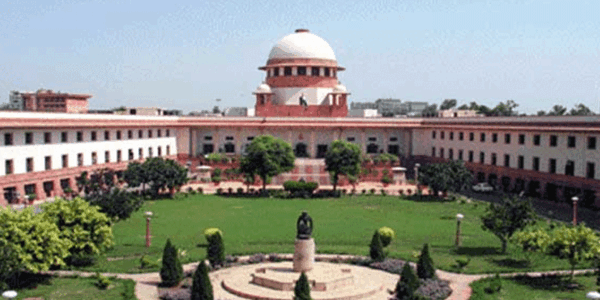
New Delhi, July 16: The Supreme Court on Monday issued a notice to the Jharkhand High Court following a petition filed by ten convicts—six of them on death row—raising concerns over prolonged delays in the pronouncement of verdicts in their appeals. The convicts argue that the delay violates their fundamental rights under the Constitution, particularly the right to life and dignity.
Years-Long Wait for Judgments
According to the petition, judgments in eight of the ten criminal appeals were reserved more than three years ago, with no verdicts delivered since. In the remaining two cases, hearings concluded over two years ago, yet decisions are still pending.

The petitioners, who include convicts sentenced to death for rape and murder, contend that such delays cause extreme mental agony and uncertainty. Some have been in jail for more than 15 years. The longest-serving petitioner has been incarcerated since 2008 and filed his appeal in 2013.
Top Court Steps In
A Supreme Court bench led by Justice Surya Kant took serious note of the matter and sought a response from the Jharkhand High Court. The bench also directed the High Court Registrar General to provide a detailed report on the status of such delayed cases, if any.
Also Read: Ranchi Sadar Hospital becomes Jharkhand’s 1st to launch plastic surgery OPD
This is not the first time that convicts from Jharkhand have approached the top court over delayed appeals. In a previous instance, four convicts had filed writ petitions under Article 32 of the Constitution. Following the Supreme Court’s intervention at that time, the High Court promptly delivered judgments in all four cases—acquitting three and releasing the fourth on bail.
Right to Timely Justice
The current petition argues that delays in adjudicating appeals, especially those involving capital punishment, are not just procedural lapses but breaches of statutory and Constitutional obligations. Under Jharkhand High Court rules, a verdict should ideally be delivered within six weeks of the conclusion of arguments. If not announced within three months, the Chief Justice is required to reassign the case or ensure judgment is pronounced in open court.
In rape-related convictions, the Criminal Law (Amendment) Act of 2018 mandates that appeals must be resolved within six months. The petition claims that these statutory provisions have been ignored, further compounding the harm to the convicts.
Mental Agony and Legal Gaps
The petition also highlights a perceived gap in judicial interpretation. While the Supreme Court has previously commuted death sentences due to delays in the President or Governor deciding mercy petitions, it has not similarly acknowledged the mental anguish caused by prolonged judicial proceedings.
“Mere availability of legal remedies does not negate the mental trauma faced by death row convicts awaiting the outcome of their appeals,” the petition states. It further adds that the uncertainty of their fate amounts to psychological punishment, keeping them in a state of “suspended animation.”
Legal Representation and Prior Appeals
The petition was filed through the Supreme Court Legal Services Committee (SCLSC) and argued by advocate Fauzia Shakil. Prior to approaching the apex court, the convicts and their families had reached out to multiple authorities—including the Jharkhand High Court Chief Justice, the Chief Minister’s office, and legal aid bodies such as NALSA—but received no relief.
All 14 appeal cases from Jharkhand that have now reached the Supreme Court were heard by a division bench led by Justice Rongon Mukopadhyay. Incidentally, Justice Mukopadhyay also heads the Jharkhand High Court Services Legal Committee, which provides legal aid to the underprivileged.
