Supreme Court orders crackdown on helmet violations, wrong-lane driving & dazzling headlights
THE JHARKHAND STORY NETWORK New Delhi, Oct 8: The Supreme Court on October 7 issued a series of significant directions aimed…

THE JHARKHAND STORY NETWORK
New Delhi, Oct 8: The Supreme Court on October 7 issued a series of significant directions aimed at improving road safety and reducing traffic-related deaths across the country.
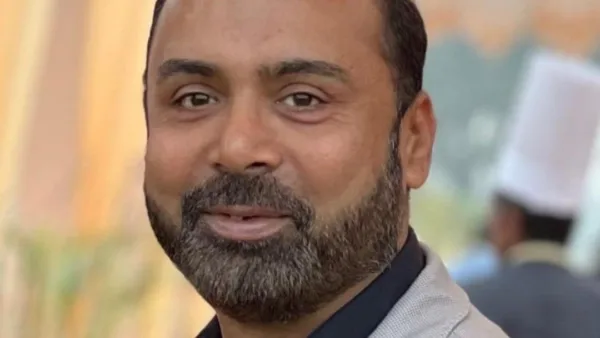
The order was issued in a public interest writ petition filed in 2012 by Dr S. Rajaseekaran, a leading orthopaedic surgeon and road safety advocate. The Court directed the strict enforcement of helmet laws, measures to curb wrong-lane driving, unsafe overtaking, and the use of dazzling LED headlights, along with a complete ban on unauthorised red–blue strobe lights and hooters.
The directions were passed by a Bench of Justice J.B. Pardiwala and Justice K.V. Viswanathan, taking note of alarming official statistics on road fatalities.
Over 1.7 Lakh Road Deaths in 2023, Court Cites Government Data
Referring to the ‘Road Accidents in India 2023’ report published by the Ministry of Road Transport and Highways (MoRTH), the Court observed that 1,72,890 people lost their lives in road accidents in 2023.

Of these, more than 35,000 pedestrians and over 54,000 two-wheeler riders and passengers were killed, many due to non-compliance with helmet laws. The Court said these figures reflect a “continuing and distressing trend” in India’s road safety record.
ALSO READ: ED launches QR code-based summons to prevent impersonation scams
The Bench directed that the matter be listed again after seven months to review compliance by the Centre and state authorities.

Helmet Use: States, UTs, and NHAI Directed to Enforce Strict Compliance
The Supreme Court directed all State Governments, Union Territories, and the National Highways Authority of India (NHAI) to strictly implement helmet-use laws for both drivers and pillion riders.
It emphasised the use of e-enforcement mechanisms, such as CCTV cameras and automated systems, to detect violations and ensure accountability.
Authorities have also been directed to furnish details before the Court regarding:
The number of violators penalised;
The total fines collected, and
The number of driving licences suspended for non-compliance.
Lane Discipline: Tech-Driven Enforcement to Curb Wrong-Lane Driving
To address the growing menace of wrong-lane driving, the Court instructed state transport departments, traffic police, and urban local bodies to implement lane discipline measures.
These include:
Automated camera-based enforcement;
Graduated fines for repeat offenders;
Coloured and textured lane markings (for bus and cycle lanes);
Dynamic lighting, rumble strips, and tyre killers at conflict points.
The Bench also suggested developing real-time dashboards to monitor lane violations, raise public awareness, and improve compliance.
Crackdown on Dazzling Headlights, Flashing Strobe Lights, and Illegal Hooters
The Court directed MoRTH, state transport authorities, and traffic police to set maximum permissible luminance and beam angles for vehicle headlights, and ensure compliance during PUC testing and vehicle fitness certification.
It further ordered:
A complete ban on unauthorised red–blue flashing lights and hooters,
Seizure and market crackdowns on illegal modifications, and
Targeted penalties against violators.
In addition, nationwide public awareness campaigns will be carried out by MoRTH and state transport departments to educate drivers and pedestrians about the dangers posed by dazzling headlights and unauthorised strobe lights.
Court’s Message: Road Safety Is a Shared Responsibility
By issuing these directions, the Supreme Court has emphasised that road safety enforcement must be systematic, data-driven, and uniform nationwide.
With this order, the Court aims to ensure that legal mandates — such as wearing helmets, following lane discipline, and using standard vehicle lighting — are not merely advisory, but actively enforced to save lives.