Tata Steel accelerates green steel transition, reaffirms net-zero goal for 2045
Jamshedpur, June 4: On World Environment Day, Tata Steel reaffirmed its commitment to sustainable steelmaking, highlighting major progress in its decarbonisation journey…
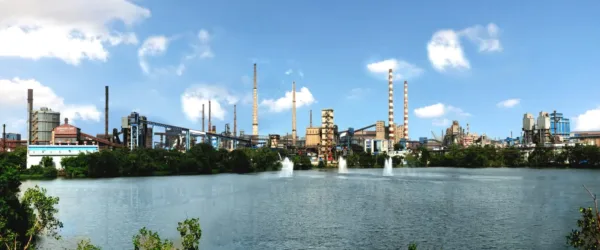
Jamshedpur, June 4: On World Environment Day, Tata Steel reaffirmed its commitment to sustainable steelmaking, highlighting major progress in its decarbonisation journey and its goal of achieving Net Zero carbon emissions by 2045.
The company said its long-term strategy focuses on reducing emissions, increasing renewable energy use and investing in innovative technologies aimed at transforming one of the world’s most carbon-intensive industries.
Focus on Low-Carbon Steel Production
At the heart of Tata Steel’s sustainability roadmap is a comprehensive decarbonisation plan covering its operations in India, the United Kingdom and the Netherlands.
The company aims to reduce emission intensity in India by 10-15 per cent by 2030, while targeting a 43 per cent reduction in carbon dioxide emissions in the Netherlands.
In the UK, Tata Steel is transitioning to Electric Arc Furnace (EAF)-based steelmaking, a move expected to reduce direct emissions by nearly 90 per cent.
India’s First Tata Steel EAF Operational in Ludhiana
A major milestone in this transition has been the commissioning of Tata Steel’s first Electric Arc Furnace in India at Ludhiana.
The facility operates entirely on recycled steel scrap and derives nearly half of its energy requirements from renewable sources. According to the company, the plant has an emission intensity of less than 0.3 tonnes of CO₂ per tonne of steel, making it a benchmark for low-carbon steel production in India.
Major Green Steel Investments Underway
In the UK, Tata Steel’s Port Talbot EAF project, supported by a £1.25 billion investment including a £500 million grant from the British government, is expected to reduce emissions by 50 million tonnes over the next decade.
Meanwhile, Tata Steel Nederland is advancing its Green Steel Plan, which involves replacing conventional blast furnace operations with Direct Reduced Iron (DRI) and EAF-based steelmaking technologies.

Jamshedpur to Host HIsarna Technology Demonstration
Innovation remains a key pillar of Tata Steel’s climate strategy.
The company is preparing to demonstrate its pioneering HIsarna technology at a scale of one million tonnes per annum in Jamshedpur.
The technology eliminates several energy-intensive stages of conventional steelmaking and has the potential to significantly reduce carbon emissions. Tata Steel is also exploring hydrogen-based steel production and carbon capture technologies as part of its future decarbonisation efforts.
Tata Steel has strengthened its renewable energy portfolio through a 379 MW power purchase agreement with Tata Power Renewable Energy Limited.
The company said clean energy accounted for 6.4 per cent of its overall energy mix by the end of FY 2025-26.
It has also expanded circular economy initiatives through steel scrap recycling, zero-effluent discharge systems and complete utilisation of solid waste at select facilities.
Ninth Consecutive Sustainability Recognition
Tata Steel has been recognised as a World Steel Sustainability Champion for the ninth consecutive year.
The company said its sustainability strategy is guided by a vision that balances industrial growth, environmental responsibility and community well-being.
As global industries face increasing pressure to reduce emissions, Tata Steel said innovation-driven, low-carbon manufacturing will be central to the future of steel production.