BAU should develop high-protein, climate-resilient crop varieties, says former ICAR official
Ranchi, July 10: Former Indian Council of Agricultural Research (ICAR) Deputy Director General (Crop Science) T.R. Sharma on Thursday called for the…
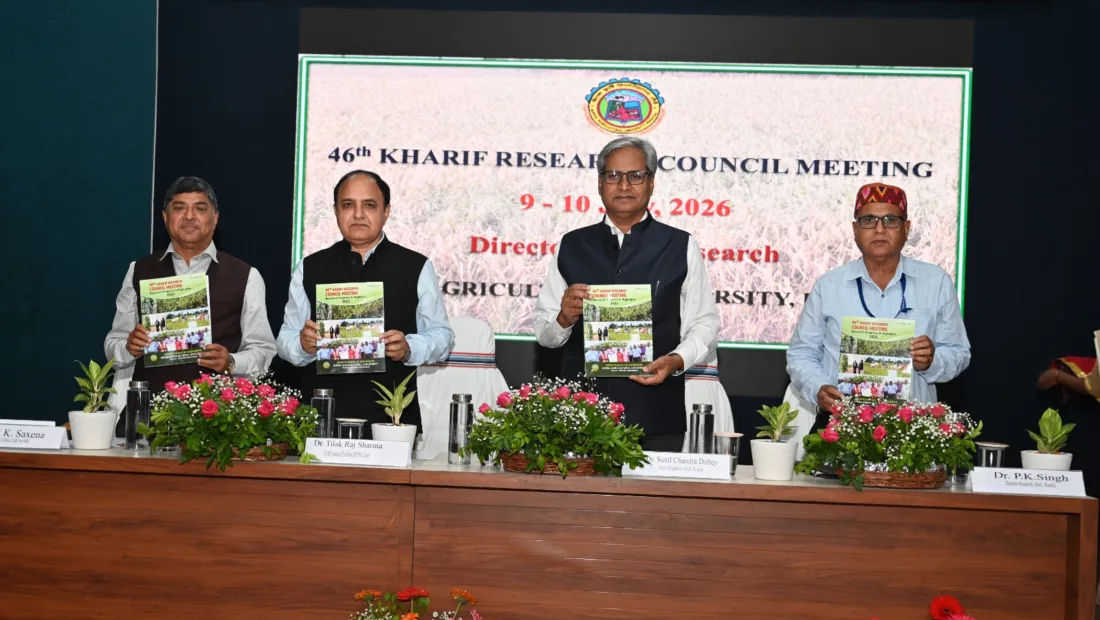
Ranchi, July 10: Former Indian Council of Agricultural Research (ICAR) Deputy Director General (Crop Science) T.R. Sharma on Thursday called for the development of high-yielding, drought-tolerant and disease-resistant crop varieties with higher protein and micronutrient content to meet changing market demand.
Addressing the 46th Kharif Research Council meeting of Birsa Agricultural University (BAU), Sharma said sustained and planned efforts were needed to identify and utilise useful genes from crop wild relatives for future breeding programmes.

Focus on climate-resilient crops
Sharma stressed that pre-breeding should form an integral part of crop improvement programmes, noting that developing varieties with desirable traits often takes more than a decade.
Referring to the shortage of scientists and faculty members in agricultural universities, he suggested that postgraduate and Ph.D. students should be actively involved in research under the supervision of experienced scientists.
Livestock and poultry sector
Former ICAR Assistant Director General (Animal Production and Breeding) V.K. Saxena emphasised the need to characterise and register indigenous livestock breeds with the National Bureau of Animal Genetic Resources (NBAGR), Karnal. He said only 26 indigenous breeds had been registered during the past four to five years.

Saxena also highlighted the importance of developing low-cost fodder and feed, noting that feeding accounts for nearly 70% of the cost of animal production.
He said the poultry sector, which has been growing at an annual rate of 6% to 7%, offered significant opportunities for Jharkhand and should be developed further.
Support for resource-poor farmers
BAU Vice-Chancellor S.C. Dubey stressed the need to develop cost-effective and system-responsive technologies suited to the requirements of resource-deficient farmers in Jharkhand.

He also called for strengthening diagnostic and vaccination facilities for livestock and poultry to improve productivity in the animal husbandry sector.
Director of Research P.K. Singh presented the university’s research achievements for the previous year and an action taken report. A document highlighting BAU’s 2025 kharif research achievements was released during the programme.
The university also honoured faculty members M.S. Malik, M.K. Gupta, P.B. Saha and K.S. Mohan for their contributions to the institution. Progressive farmer Shailendra Kumar Bhagat of Sisai in Gumla district was also felicitated.
Former BAU Vice-Chancellor G.S. Dubey, IIAB Director Sujay Rakshit, ICAR Research Complex Head Awani Kumar Singh and several former university officials attended the meeting.