






SUBHASH MISHRA
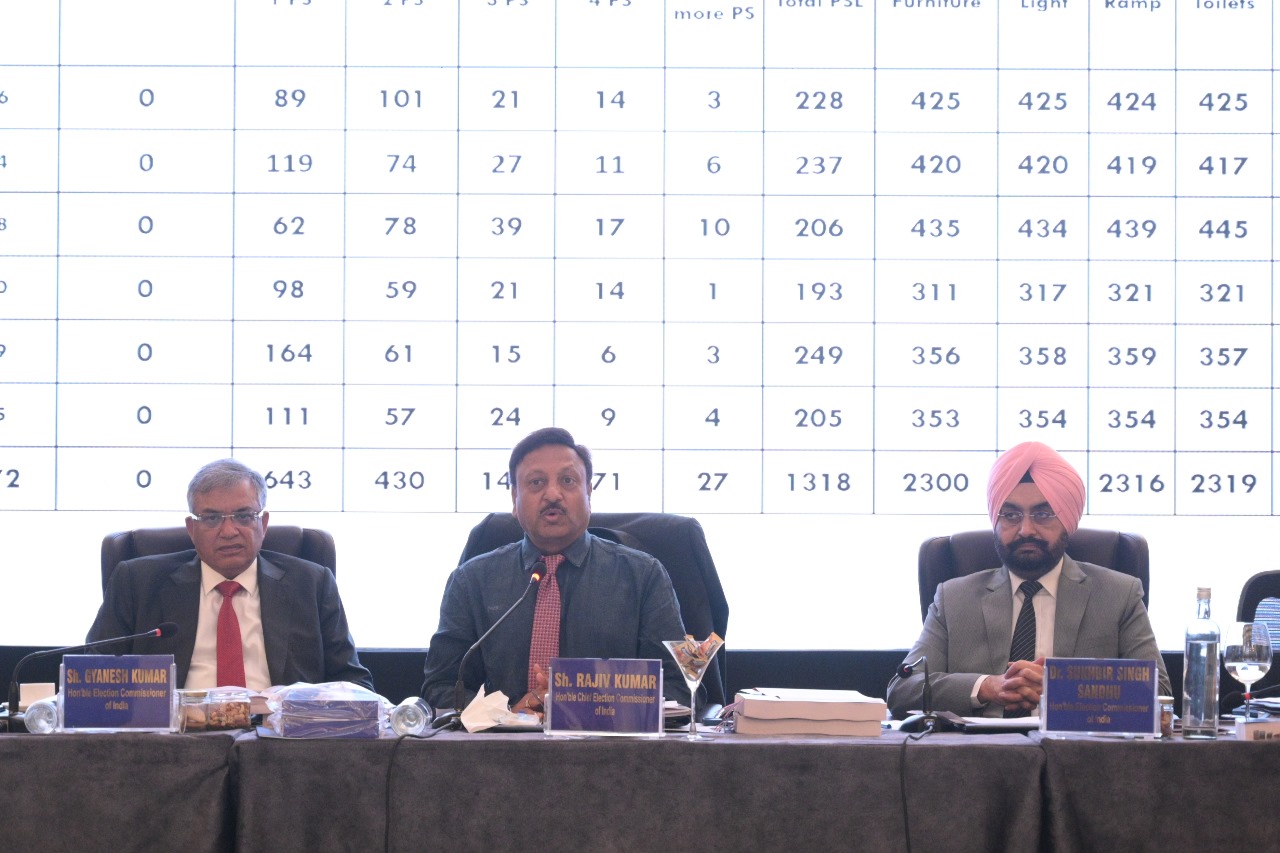
Ranchi, Sept 24: Chief Election Commissioner (CEC) Rajiv Kumar, along with Election Commission members Gyanesh Kumar and Dr. S.S. Sandhu, conducted a thorough review of the preparations for the upcoming Jharkhand Assembly elections.
During a two-day visit to the state, the CEC engaged with election officials before departing for Delhi today.

Key discussions with election officials
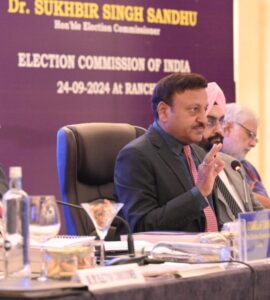
On the second day, CEC Rajiv Kumar held in-depth discussions with District Election Officers (DEOs), Superintendents of Police (SPs), Divisional Commissioners, and other officials.
He addressed concerns raised by political parties during earlier meetings.
The CEC underscored the importance of ensuring free and fair elections, urging all DEOs and SPs to uphold the highest standards of impartiality and create a level playing field for all candidates.
He emphasised that the district administration needs to conduct a festive and comfortable voting experience for voters.
Also Read- Jharkhand News: Ranchi to host national sub-junior badminton championship after 18 years
Focus on voter engagement
Rajiv Kumar stressed the need for an inclusive voting experience, encouraging voter participation through innovative awareness campaigns.
He directed DEOs to enhance voter outreach, particularly through SVEEP activities and ones that incorporate local culture, such as archery and hockey, as well as painting competitions featuring tribal themes.
He also recommended engaging local influencers to promote awareness, and urged intensified efforts to address voter apathy in urban areas like Bokaro, Dhanbad, and Ranchi.
Social media monitoring was another key point, with DEOs and SPs instructed to respond swiftly to fake news and, if necessary, take legal action.
Overview of polling stations
During the review, the Chief Electoral Officer (CEO) of Jharkhand, K Ravi Kumar, provided details on polling station arrangements for the assembly elections. A total of 29,562 polling stations will be set up across 20,276 locations. Of these, 24,520 will be in rural areas and 5,042 in urban areas, with an average of 872 voters per polling station.
Special provisions include 1,271 polling stations managed exclusively by women, 139 by young employees, and 48 by persons with disabilities, to encourage participation from key demographic groups.
Also Read- Jharkhand News: Teachers of four universities demand payment for evaluation remuneration
Inclusive and accessible voting
For the first time in Jharkhand Assembly elections, voters aged 85 and above, as well as persons with disabilities (PwDs) with a 40% benchmark disability, will be given the option to vote from home. This home-voting facility is optional, and voters who wish to cast their ballot in person will receive necessary assistance at polling stations.
Political parties raise concerns
During the review meeting, political parties voiced concerns regarding the election schedule, requesting that festivities such as Durga Puja, Diwali, and Chhath in October and November be considered before finalizing the dates.
Many parties also requested that the election be held in a single phase to streamline the process.