
Jharkhand: A nursery where ‘jungle jalebis’ are grown, hundreds of saplings ready for plantation
Daltonganj, June 22: A nursery where Jalebis are grown may sound unusual, but such a place exists in Jharkhand. It is the…
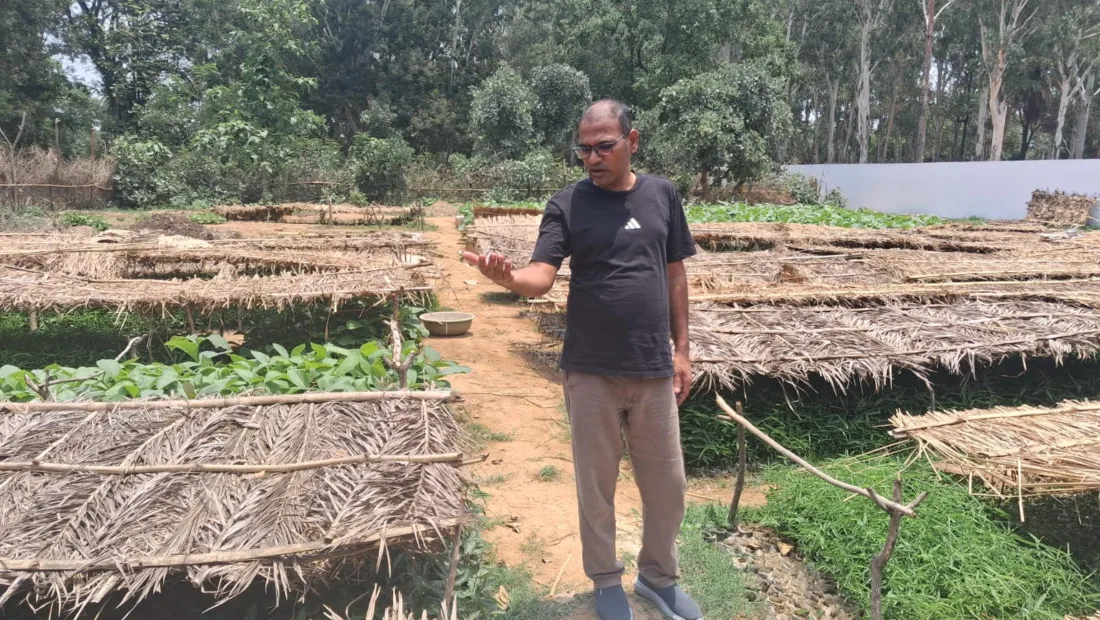
DFO Medininagar forest division Satyam Kumar inspecting the nursery at Sevti under the Manatu forest range.
Daltonganj, June 22: A nursery where Jalebis are grown may sound unusual, but such a place exists in Jharkhand. It is the Sevti Nursery under the Manatu Forest Range of the Medininagar Forest Division.
The “Jalebis” grown here are known as Jungle Jalebis, and hundreds of their saplings are being prepared for plantation during the upcoming rainy season.
Jungle Jalebis Once Abundant in Palamu Forests
Jungle Jalebis are also known as Madras Thorn and Manila Tamarind. There was a time when these trees were found in abundance across the forests of Palamu.
Divisional Forest Officer (DFO) Satyam Kumar is particularly passionate about promoting the species. Jungle Jalebis are a favourite wild fruit of several birds and animals, including crows, bulbuls, parakeets, mynas, squirrels and monkeys.
A Favourite Fruit of Monkeys
According to local observations, where there are Jungle Jalebi trees, monkeys are usually not far away. The sweet fruit is considered a natural attraction for monkeys and may help keep them from straying into human habitations.
Speaking to The Jharkhand Story Network, Satyam Kumar said, “We are going for Jungle Jalebis this rainy season. This nursery has a large number of its saplings. Its plantation will be done in all seriousness.”

Beneficial for Wildlife
Monkeys are known to pluck leaves from trees and drop them to the ground, benefiting deer that feed on them. As a result, deer are often found beneath Jungle Jalebi trees.
The species plays a role in supporting local wildlife by providing food to a range of animals and birds.
Jungle Jalebis can also be consumed by humans, but with caution. The outer pod should be discarded, while the fleshy pulp inside is edible.

However, pregnant women are advised to avoid consuming this wild fruit.