Jharkhand health deptt mulls MoU with private blood centres to modernise ageing facilities
Daltonganj, Oct 27: The Jharkhand Health Department is exploring the possibility of signing Memorandums of Understanding (MoUs) with privately licensed blood…
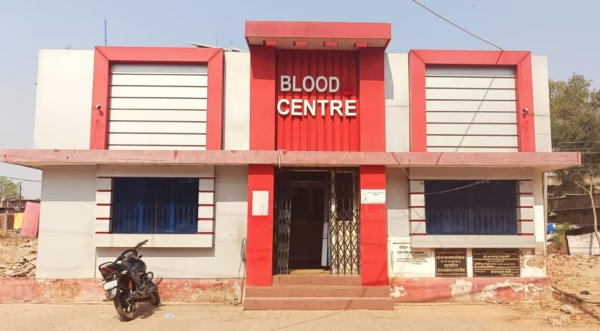
Blood Centre at Medinirai Medical College Hospital, Daltonganj
Daltonganj, Oct 27: The Jharkhand Health Department is exploring the possibility of signing Memorandums of Understanding (MoUs) with privately licensed blood centres to give a new lease of life to ageing government-run blood banks that are lagging in technology and infrastructure.

Several government blood centres across the state are over four decades old and lack modern equipment for blood testing and component separation. Officials said the proposed initiative aims to make these centres more patient-friendly and efficient, ensuring safe and timely blood availability rather than functioning merely as collection and distribution points.
Focus on technology, not just infrastructure
The government’s plan is not limited to refurbishing buildings or installing air conditioners. The focus, officials said, is on introducing component separation machines — crucial for modern blood transfusion services.
At present, this facility is available at only three centres in Jharkhand — Ranchi, Dhanbad and Jamshedpur.
The government-licensed blood centre at Medinirai Medical College Hospital (MMCH) in Daltonganj, which has been operational for more than 40 years, does not have this facility.
“We don’t have a component machine in our blood centre. We cannot separate components of blood and therefore provide only whole blood,” said Dr Anil Kumar Sriwastwa, Civil Surgeon of Palamu.

Without this facility, centres cannot provide platelets, plasma, or red blood cells (RBCs) separately, which are vital for critical care and emergency cases.
Private centres show the way
In contrast, the licensed private blood centre at Shree Narayan Hospital, Daltonganj, is equipped with modern infrastructure and trained personnel.
“We have a state-of-the-art blood centre with skilled technicians, a supervisor and a counsellor. We conduct both ELISA and rapid tests, strictly following protocol,” said Dr Rahul Agrawal, Doctor-in-Chief and one of the hospital’s directors.
Dr Agrawal welcomed the idea of an MoU between the government and private blood centres.
“It’s a good move. It will benefit society at large. However, the MoU should take into account the high operational costs involved in running component machines,” he said, adding that trained and skilled staff must also be adequately compensated under such partnerships.

Upgradation poses multiple challenges
Officials admit that upgrading existing government blood centres is a complex and time-consuming task. The Daltonganj centre, for instance, faces severe infrastructural issues such as leaking roofs, damp walls and space constraints, which make it difficult to install sophisticated machines.
“The situation becomes worse during monsoon as rainwater often seeps through the roof,” said a staff member.
The MMCH campus itself has more buildings demolished or under renovation than those in use, further limiting the scope for expansion.
Past lapses underline the urgency
The Chaibasa blood transfusion incident, in which five children were affected, has been a wake-up call for the state’s health authorities. It underscored the urgent need to modernise blood banks and ensure strict adherence to safety and quality standards.
The government has already set a precedent for public–private collaboration by partnering with a private facilitator to set up a ₹2.5 crore COVID-19 virology laboratory at Daltonganj. Health officials believe a similar approach could help fast-track the modernisation of blood services.
Towards safer and reliable blood services
The Health Department is also looking to introduce Truenat machines and component separation facilities in government-run blood centres across Jharkhand. However, officials concede that issues of funding, manpower and space continue to hinder progress.
Given these challenges, a time-bound MoU with private licensed centres appears to be the most practical way forward.
“If executed effectively, such partnerships can ensure safer, faster and more reliable blood supply for patients in need,” said a senior health department official.