Jharkhand News: Dhanbad DLSA forms committee for Project SAATHI
SUBHASH MISHRA Dhanbad, May 26: Virendra Kumar Tiwari, Principal District and Sessions Judge and Chairman of the District Legal Services Authority…
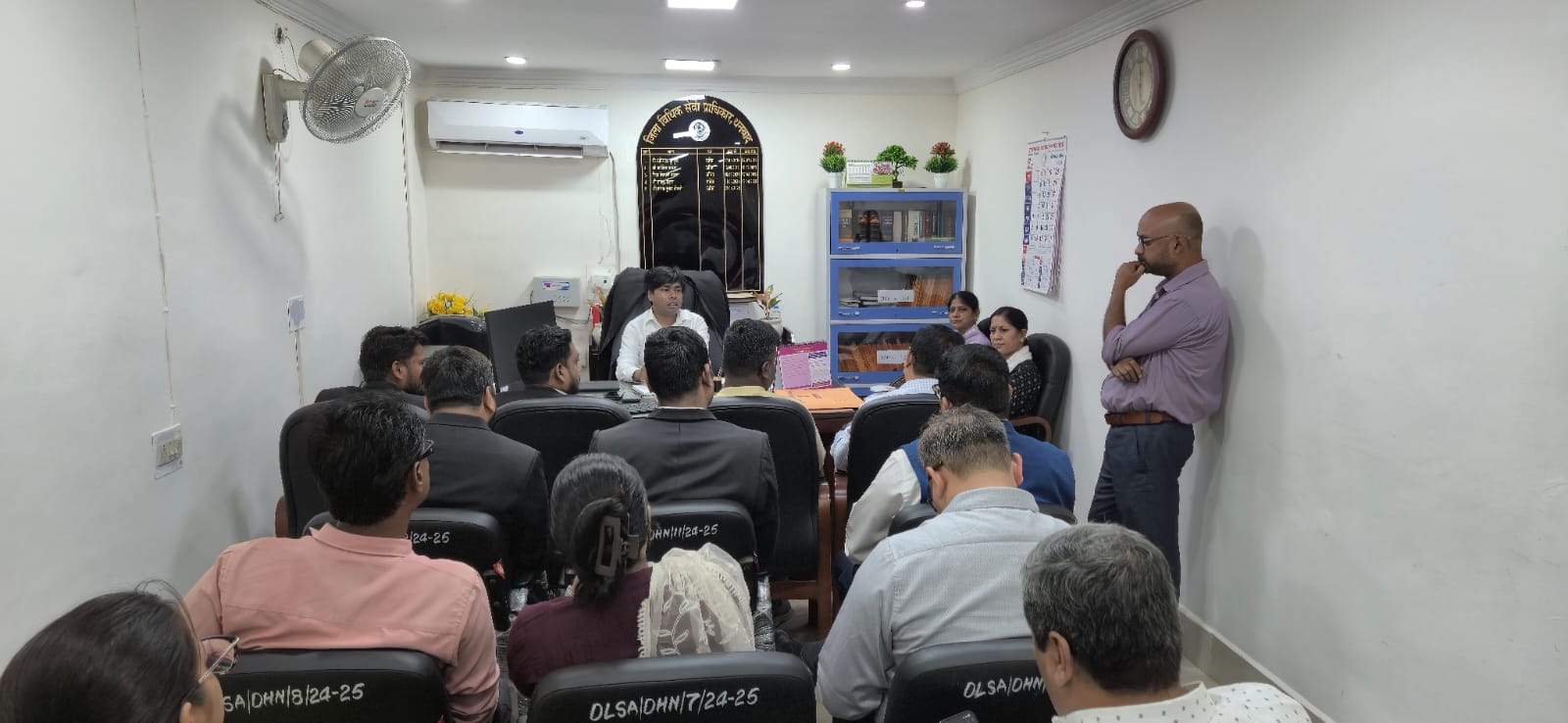
DLSA Secretary holds meeting with committee members of Project SAATHI
SUBHASH MISHRA
Dhanbad, May 26: Virendra Kumar Tiwari, Principal District and Sessions Judge and Chairman of the District Legal Services Authority (DLSA) of Dhanbad, has formed an eight-member high-level committee to oversee the implementation of Project SAATHI.
This initiative is part of a broader campaign launched by the National Legal Services Authority (NALSA) aimed at identifying and providing support to destitute children.
Project SAATHI is an ambitious scheme introduced by NALSA to ensure that destitute children are identified and covered under various government welfare programs.
Also Read- ED seizes cash, documents during raids on real estate firms
On May 13, NALSA directed all state and district legal service bodies to establish their own committees to facilitate the project’s execution at the local level.

Following this directive from NALSA and the Jharkhand Legal Services Authority (JLSA), the Dhanbad DLSA chairman promptly constituted the committee to drive the initiative forward.
Committee Members
The committee includes Dhanbad Social Welfare Officer Anita Kujur, Assistant Director of Social Security Cell Niyaz Ahmed, District Education Officer Abhishek Jha, District Child Support Officer Sadhna Kumari, Medical Officer Dr. Rajiv Kumar Singh, Aadhaar UID Coordinator Amit Kumar Singh, and Para Legal Volunteer Pradeep Kumar.
After forming the committee, Sub Judge and DLSA Secretary Mayank Tushar Topno convened a meeting with members to strategize the execution plan for Project SAATHI.

Also Read- India reports over 1,000 Covid-19 cases
Goals and Implementation Strategy
DLSA Secretary Mayank Tushar Topno explained that the primary goal is to identify destitute children and facilitate the creation of their Aadhaar cards to enable access to government welfare schemes. “Our aim is to integrate these children into the mainstream of society so they do not feel isolated,” he said.
To achieve this, a 15-member team has been formed to locate orphaned children living in shelter homes or on the streets across various blocks in the district. Once identified, these children will be enrolled under the government-sponsored welfare schemes to ensure their protection and development.