Delhi HC tells Meta, Google, LinkedIn and X to act swiftly against unlawful content
New Delhi, June 10: In a significant ruling on the responsibilities of digital intermediaries, the Delhi High Court has underscored that platforms…
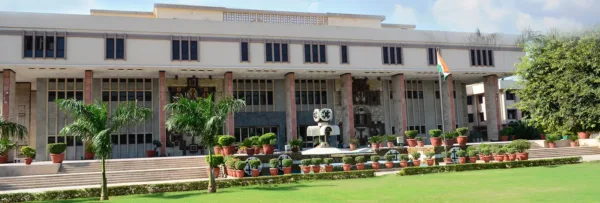
New Delhi, June 10: In a significant ruling on the responsibilities of digital intermediaries, the Delhi High Court has underscored that platforms such as Meta, Google, LinkedIn and X are required to act swiftly when unlawful content comes to their notice and cannot remain “silent spectators” awaiting court intervention. The court observed it while directing social media platforms to remove content alleged to be contemptuous of the judiciary, holding that intermediary protection under the Information Technology Act, 2000, carries with it a corresponding obligation to expeditiously disable access to unlawful material.
Court Emphasises Responsibility of Digital Platforms
A Division Bench of Justice Neena Bansal Krishna and Justice Madhu Jain made the observations while hearing a criminal contempt petition filed by the Delhi High Court Bar Association against Dr. Kapil Kakar and others.
The petition alleged that videos and posts circulated across social media platforms contained scandalous allegations against a sitting judge of the Delhi High Court and the institution of the judiciary. It further sought directions for the removal of the content and the initiation of contempt proceedings.
While considering interim relief, the court focused on the role of intermediaries in preventing the continued dissemination of content that may facilitate unlawful acts.
‘Intermediaries Cannot Be Silent Spectators’
The court observed that while individuals responsible for publishing unlawful or contemptuous content must be dealt with in accordance with law, intermediaries also have an independent responsibility once such material comes to their attention.
“Intermediaries can also not be a silent spectator and wait for the directions from the Courts,” the bench observed, stressing that platforms cannot remain passive when content hosted on their services is being used for unlawful purposes.

The court noted that social media platforms play an important role in enabling the rapid exchange of information, but the same tools cannot be permitted to be used to undermine institutions, interfere with the independence of the judiciary, or cause harm to society.
Reliance on Section 79 of the IT Act
The bench referred to Section 79 of the Information Technology Act, 2000, which grants intermediaries protection from liability in specified circumstances.
However, the court highlighted that the statutory protection is not absolute. Referring to Section 79(3)(b), it observed that once an intermediary receives actual knowledge, or is notified that information hosted on its platform is being used to commit an unlawful act, it is required to act expeditiously to remove or disable access to the content without compromising evidence.

According to the court, the provision imposes a clear legal obligation on intermediaries to respond promptly after gaining knowledge of unlawful content.
Platforms Undertake Immediate Takedown
During the proceedings, counsel appearing for Meta Platforms, Google LLC and LinkedIn informed the court that the identified videos, posts, clips and related material would be removed immediately from their respective platforms.
The court recorded the undertakings and directed the intermediary platforms to remove the content and ensure that identical or substantially similar material is not reposted.
The court also directed the platforms to block the accounts and handles associated with the primary respondent pending further orders.
Directions for Disclosure and Preservation of Data
In addition to ordering the removal of the content, the court directed the platforms to preserve relevant records and furnish subscriber information connected to the accounts responsible for uploading and disseminating the material.
The information to be submitted includes names, email addresses, contact details, IP logs and registration information, which are to be provided in a sealed cover or password-protected format within seven days.
The platforms were also directed to remove any future URLs containing identical or substantially similar content within 24 hours of being notified by the Registrar General of the Delhi High Court.
Wider Implications for Intermediary Liability
The observations are likely to be closely watched in ongoing debates around intermediary liability and platform accountability in India. The court’s remarks reinforce that safe harbour protections under the IT Act do not absolve intermediaries of their responsibility to act once unlawful content comes to their notice.
The matter has been listed before the roster bench on July 9, 2026, for further proceedings.