Amit Shah’s Birsa Munda tribute puts religious conversion debate back at centre of Jharkhand politics
Ranchi, June 9: Union Home Minister Amit Shah’s tribute to tribal icon Bhagwan Birsa Munda on his martyrdom day has once again…
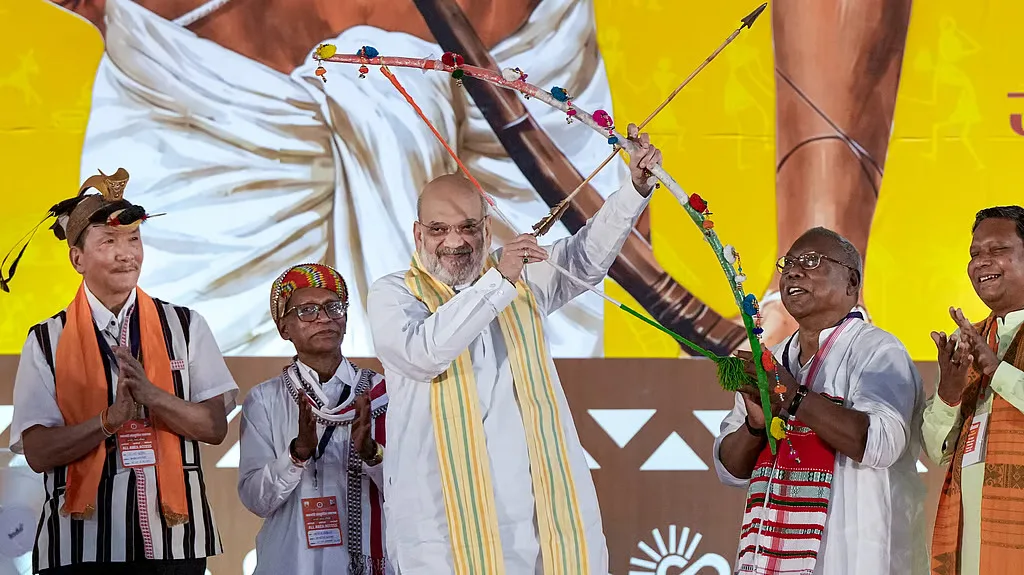
Ranchi, June 9: Union Home Minister Amit Shah’s tribute to tribal icon Bhagwan Birsa Munda on his martyrdom day has once again brought the sensitive issue of religious conversion into the political spotlight, potentially setting the stage for a major ideological battle in Jharkhand over tribal identity, faith and constitutional rights.
While paying homage to Birsa Munda, Shah highlighted the tribal leader’s struggle to protect jal, jangal aur zameen (water, forests and land) and his resistance to religious conversions during British rule. Political observers view the emphasis as significant at a time when debates around tribal faith, the Sarna religion code and the demand for delisting converted Christians from the Scheduled Tribe category are gaining momentum in Jharkhand.
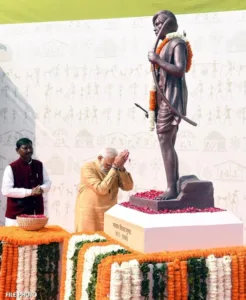 Prime Minister Narendra Modi, in his tribute, adopted a different emphasis. Remembering Birsa Munda as a defender of tribal rights and identity, Modi said his entire life was dedicated to safeguarding the dignity, culture, identity and rights of the tribal community and that the nation would always remember his sacrifice for the motherland and society. Unlike Shah, the Prime Minister did not refer to religious conversions.
Delhi Tribal Meeting Provides Context
Shah’s remarks come close on the heels of his address at a major tribal gathering in Delhi organised by an RSS-backed organisation, where he spoke strongly against religious conversions in tribal areas.
Addressing tribal representatives, Shah said no individual should be induced to change religion through temptation or incentives.
“Our Constitution makers gave every individual the right to live with dignity according to their original faith and traditions. No greed, temptation or inducement should be used to change anyone’s religion,” Shah said.

He also underlined the connection between tribal communities and traditional belief systems.
“Those who are trying to create divisions should understand that today’s gathering of tribal communities sends a very strong message to them,” he said, adding that tribal communities have remained deeply connected to nature worship and traditional traditions.
While Shah himself did not explicitly raise the issue of delisting at the Delhi event, several other speakers strongly backed the demand, reflecting a growing campaign within sections of the Sangh Parivar and tribal organisations.

Birsa Munda and the Conversion Question
The political significance of Shah’s remarks lies in the historical legacy of Birsa Munda himself.
Towards the end of the nineteenth century, Birsa emerged as a powerful tribal leader who challenged British colonial authority, exploitative landlordism and missionary influence among tribal communities. Historical accounts indicate that he became increasingly critical of Christian missionary activities, which he viewed as weakening traditional tribal belief systems and social structures.
During the Ulgulan, or Great Tumult, Birsa’s followers targeted institutions associated with colonial authority. Historical records refer to attacks on churches and missionary establishments, and accounts from the period mention arrows being fired at church personnel and missionaries during the rebellion.
Historians, however, caution against viewing Birsa’s movement solely through the lens of religion. They argue that his struggle was fundamentally about tribal self-rule, cultural assertion, land rights and resistance to colonial domination.
Delisting Demand Gains Ground
Shah’s renewed emphasis on conversion is likely to strengthen the ongoing debate over “delisting” — the demand that Scheduled Tribe members who have converted to Christianity should no longer receive reservation and other constitutional benefits available to tribal communities.
The issue has gained visibility in Jharkhand in recent months. Supporters of delisting argue that constitutional safeguards intended for tribal communities should benefit only those who continue to follow indigenous tribal traditions.
Several organisations have also sought to link tribal identity with broader Hindu civilisational traditions, arguing that Sarna and Sanatan traditions share common cultural roots.
Sarna Code Remains JMM-Congress Plank
The ruling Jharkhand Mukti Morcha (JMM) and Congress, however, continue to champion the demand for a separate Sarna religious code.
They argue that tribal faith traditions represent a distinct religious identity and should receive separate recognition in the Census rather than being categorised under existing religious groups.
The alliance has repeatedly accused the BJP of attempting to politically appropriate tribal icons and symbols while opposing the separate Sarna code demand.
The debate has sharpened in recent years, with supporters of the Sarna code insisting that tribal religious practices are unique and deserve constitutional recognition independent of both Hinduism and Christianity.
A New Political Flashpoint
With tribal voters playing a decisive role in Jharkhand politics, Shah’s remarks suggest that questions surrounding religious conversion, tribal identity and constitutional entitlements may increasingly shape the state’s political discourse.
For the BJP, invoking Birsa Munda’s opposition to missionary influence fits into a broader narrative centred on cultural preservation and indigenous traditions. For the JMM-Congress alliance, the focus remains on tribal autonomy and recognition of a separate Sarna identity.
As competing political narratives increasingly seek legitimacy through Birsa Munda’s legacy, the tribal freedom fighter’s memory is once again emerging as a central battleground in Jharkhand politics.